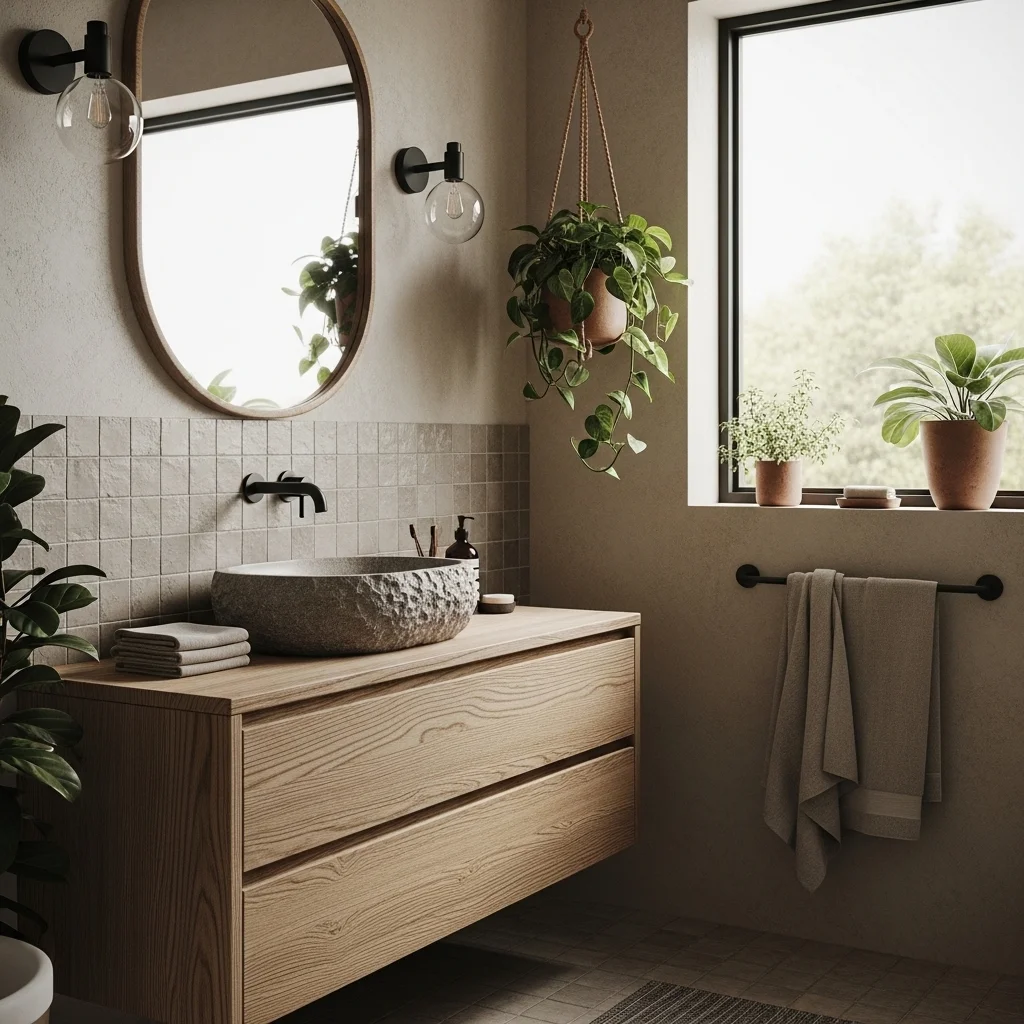
In a world filled with polished perfection and fast trends, the wabi sabi bathroom offers something refreshingly different. Rooted in traditional Japanese philosophy, wabi sabi celebrates imperfection, simplicity, and the quiet beauty of natural materials. Instead of glossy finishes and dramatic statements, this design approach embraces subtle textures, muted tones, and objects that age gracefully.
Creating a wabi sabi bathroom is not about copying a trend. It is about cultivating a feeling. The goal is to design a space that feels grounded, peaceful, and deeply personal. From stone sinks and raw wood vanities to lime plaster walls and soft lighting, each element works together to create natural calm. Here are 22 inspiring ideas to help you design a wabi sabi bathroom that feels timeless and serene.
What Is a Wabi Sabi Bathroom
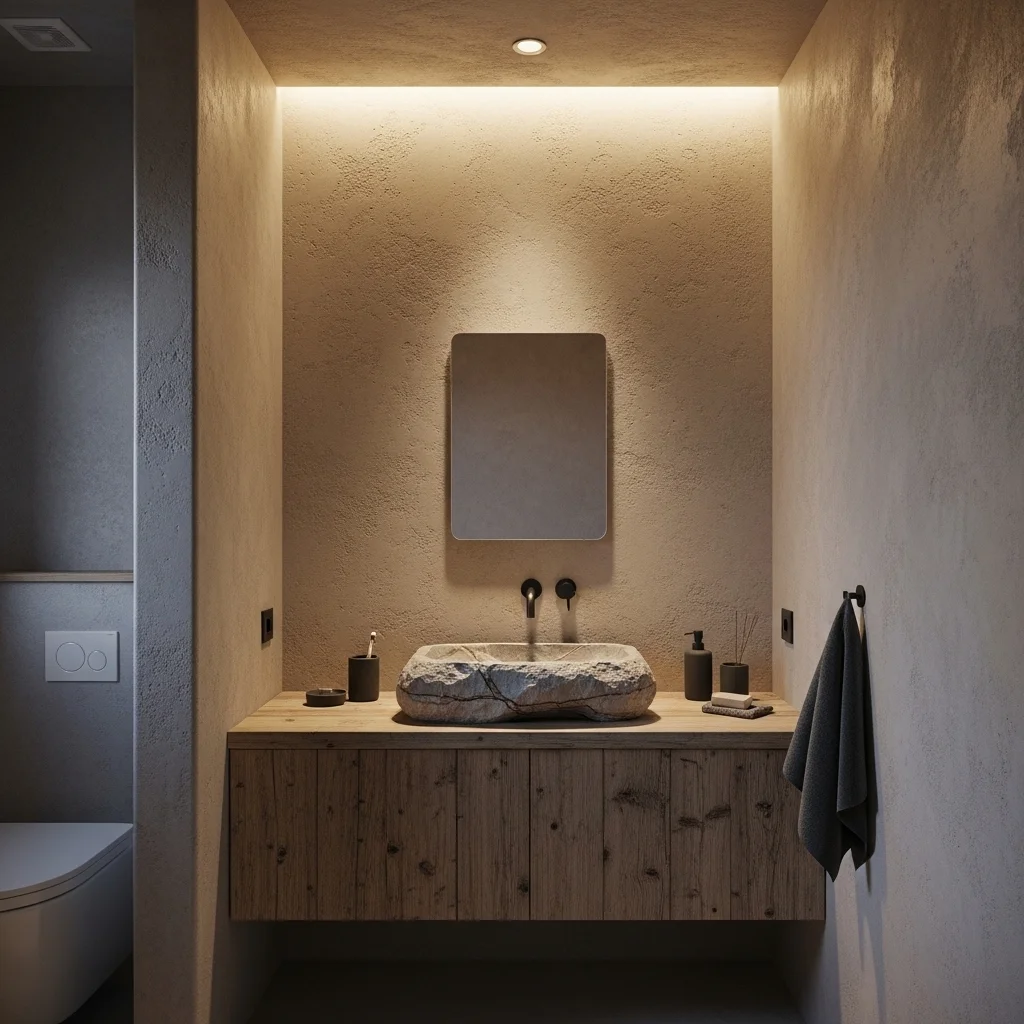
A wabi sabi bathroom is inspired by the Japanese philosophy of finding beauty in imperfection and impermanence. It values authenticity over polish and simplicity over excess. In practical terms, this means choosing materials that show texture, variation, and natural wear rather than flawless, factory perfect finishes.
In bathroom design, this philosophy translates into organic materials, earthy colors, and a calm, uncluttered layout. Instead of hiding cracks, knots, and uneven textures, a wabi sabi space highlights them. The result is a bathroom that feels warm, lived in, and connected to nature.
Embrace Natural Materials
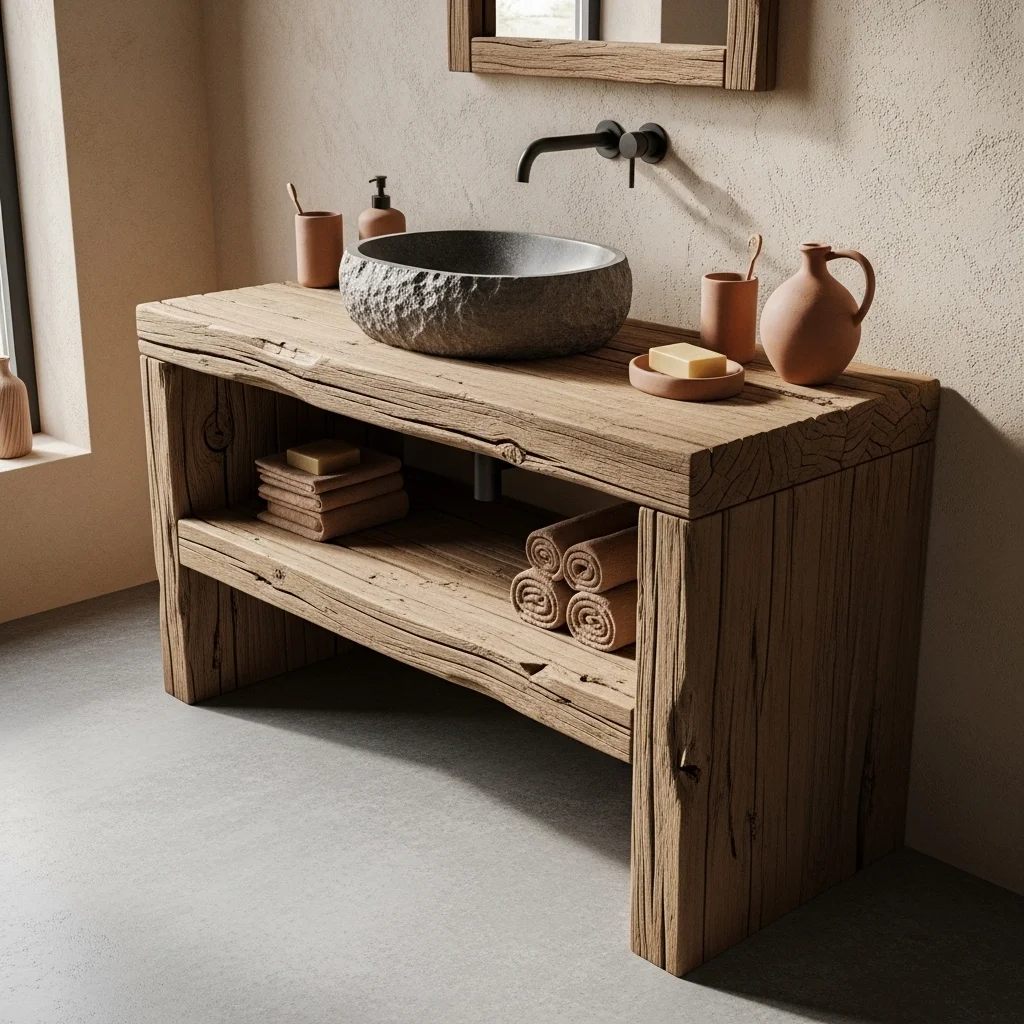
Natural materials are the foundation of any wabi sabi bathroom. Stone, wood, clay, and concrete bring organic depth and character to the space. A stone basin with visible veins or a wooden vanity with knots and grain patterns instantly adds authenticity.
Rather than heavily treated surfaces, choose finishes that allow materials to breathe. Untreated wood that develops patina over time or textured plaster walls that reveal subtle irregularities create a sense of history and honesty in the room.
Choose an Earthy Color Palette
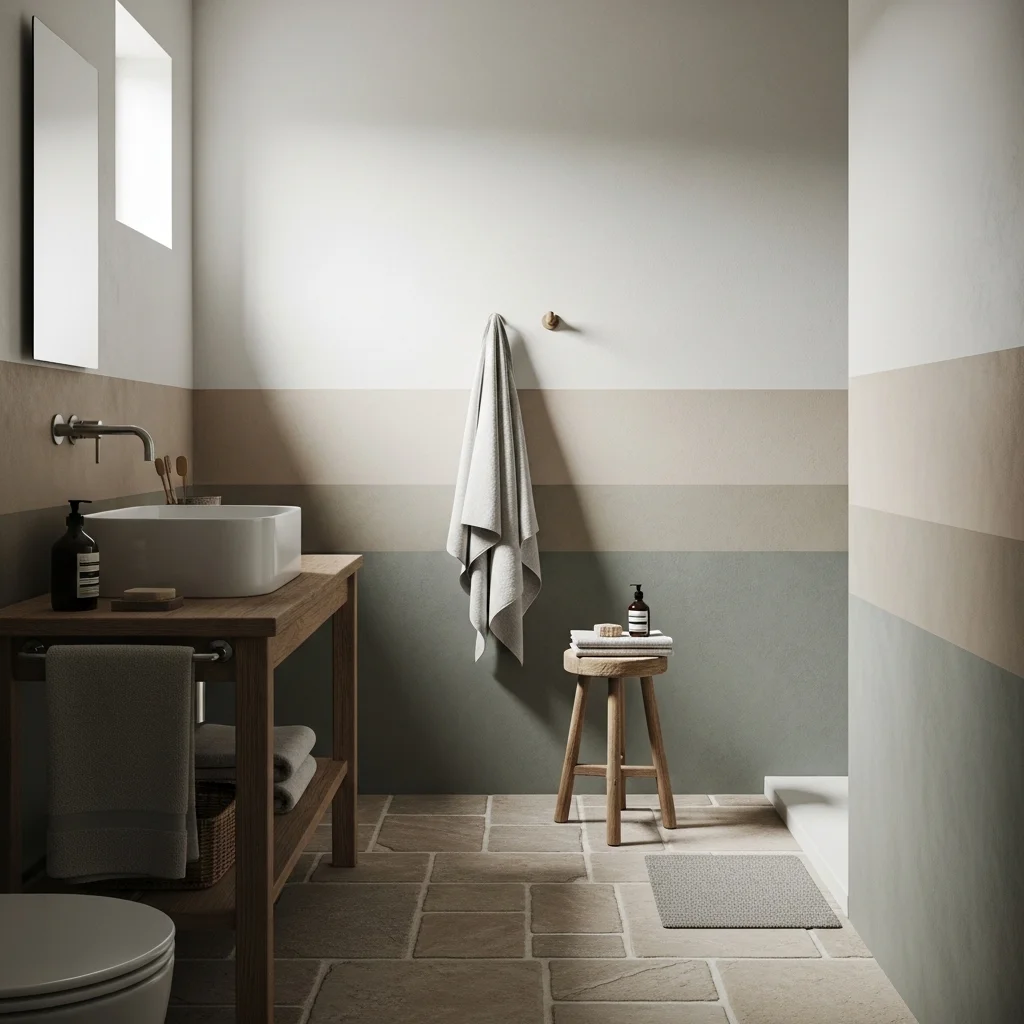
The color palette in a wabi sabi bathroom is soft and grounded. Think warm whites, beige, taupe, clay, sand, muted gray, and subtle greens. These tones mimic nature and create a soothing backdrop for daily routines.
Avoid bright, high contrast colors. Instead, layer different shades of neutrals to add depth. A warm off white wall paired with a sandy stone floor and a soft gray concrete sink creates harmony without overwhelming the senses.
Incorporate Organic Textures
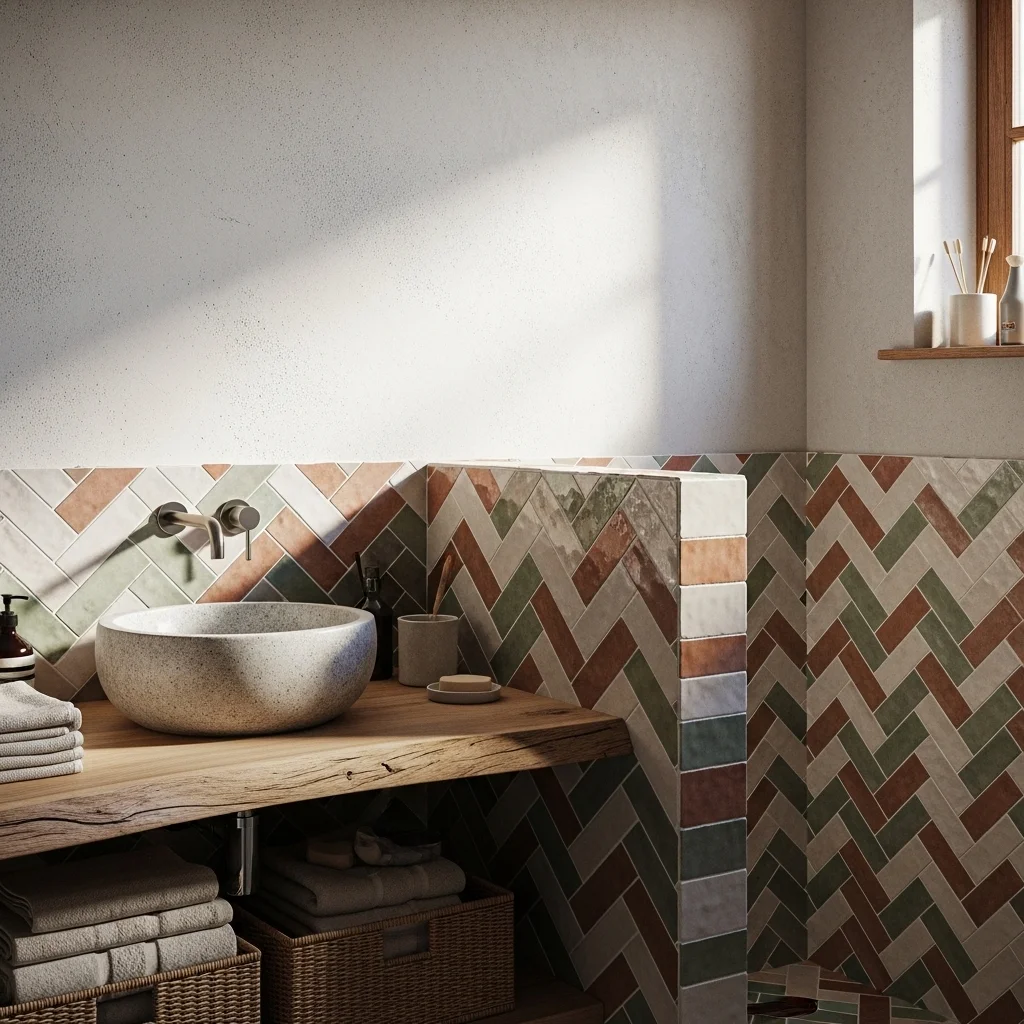
Texture is more important than pattern in wabi sabi design. Rough plaster, brushed wood, hand formed tiles, and woven textiles add tactile interest without visual clutter. These textures make the bathroom feel inviting and real.
For example, a slightly uneven ceramic tile wall behind the vanity can add charm and character. Paired with a linen hand towel and a natural fiber bath mat, the space feels layered and thoughtfully curated.
Opt for a Minimalist Layout
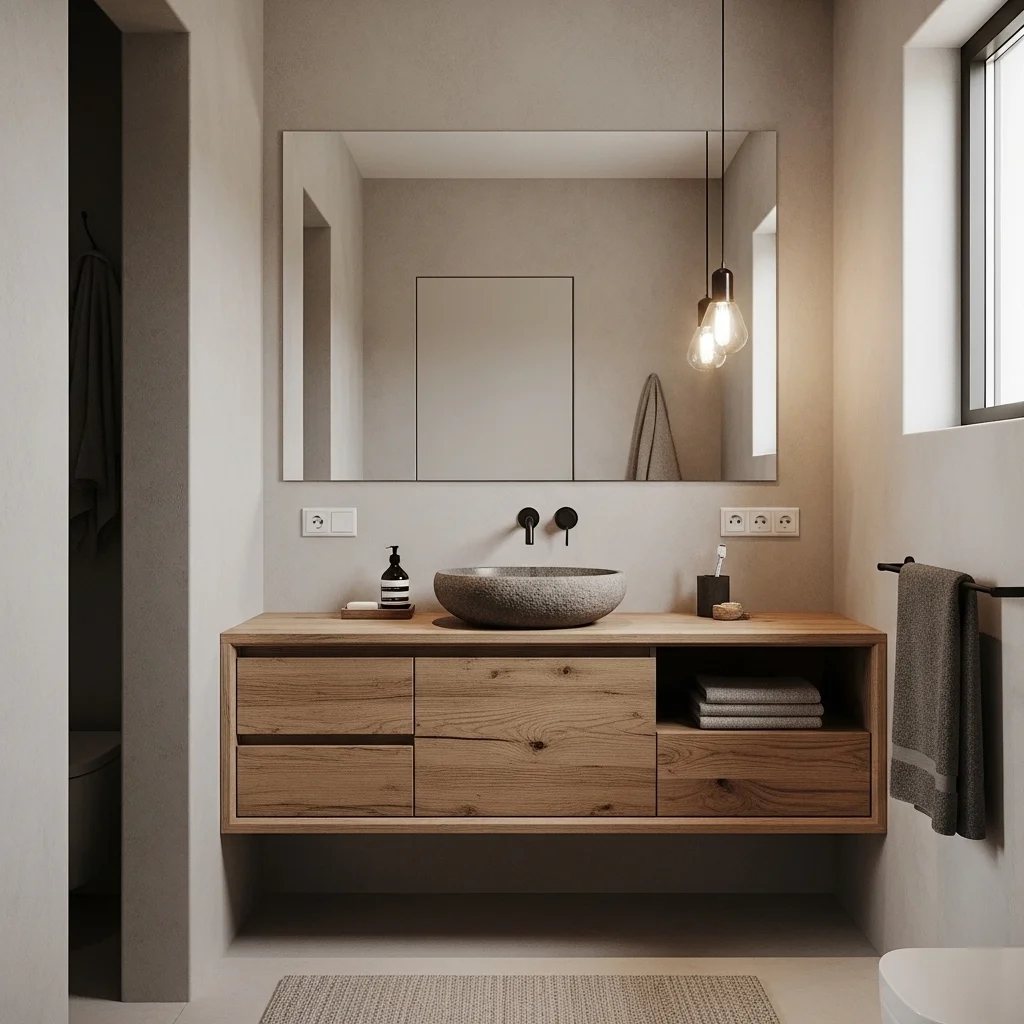
Clutter disrupts calm. A wabi sabi bathroom thrives on simplicity and intentional design. Keep the layout clean and functional with only essential fixtures and decor. This does not mean the space must feel empty, but rather balanced and purposeful.
Floating vanities, open shelving with minimal items, and concealed storage help maintain visual peace. Each object should have a reason to be there, contributing either function or quiet beauty.
Install a Stone or Concrete Sink
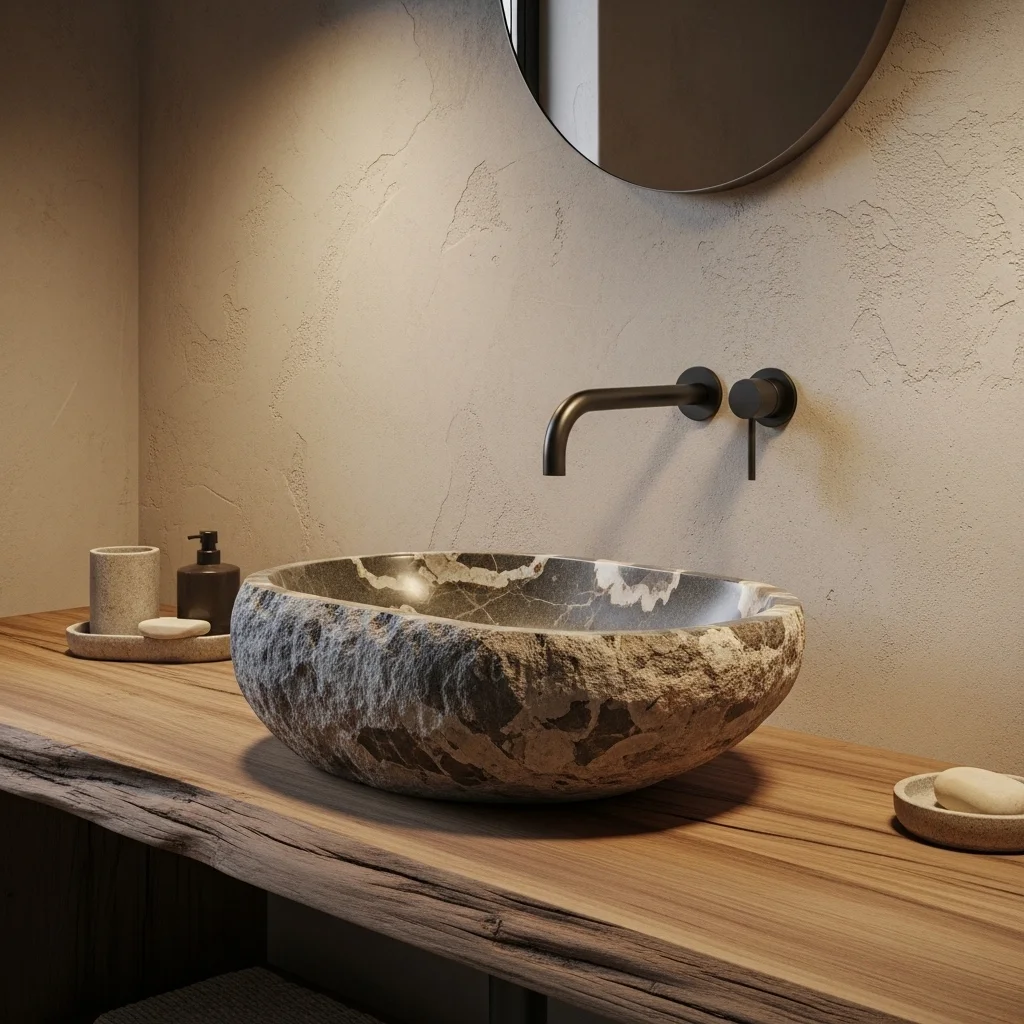
A stone or concrete sink becomes a sculptural focal point in a wabi sabi bathroom. The natural variation in stone or the subtle imperfections in hand cast concrete reflect the philosophy of imperfect beauty.
These sinks pair beautifully with simple wall mounted faucets in brushed metal finishes. Over time, small marks and changes in texture add character rather than detract from the design.
Use Lime Plaster or Textured Walls
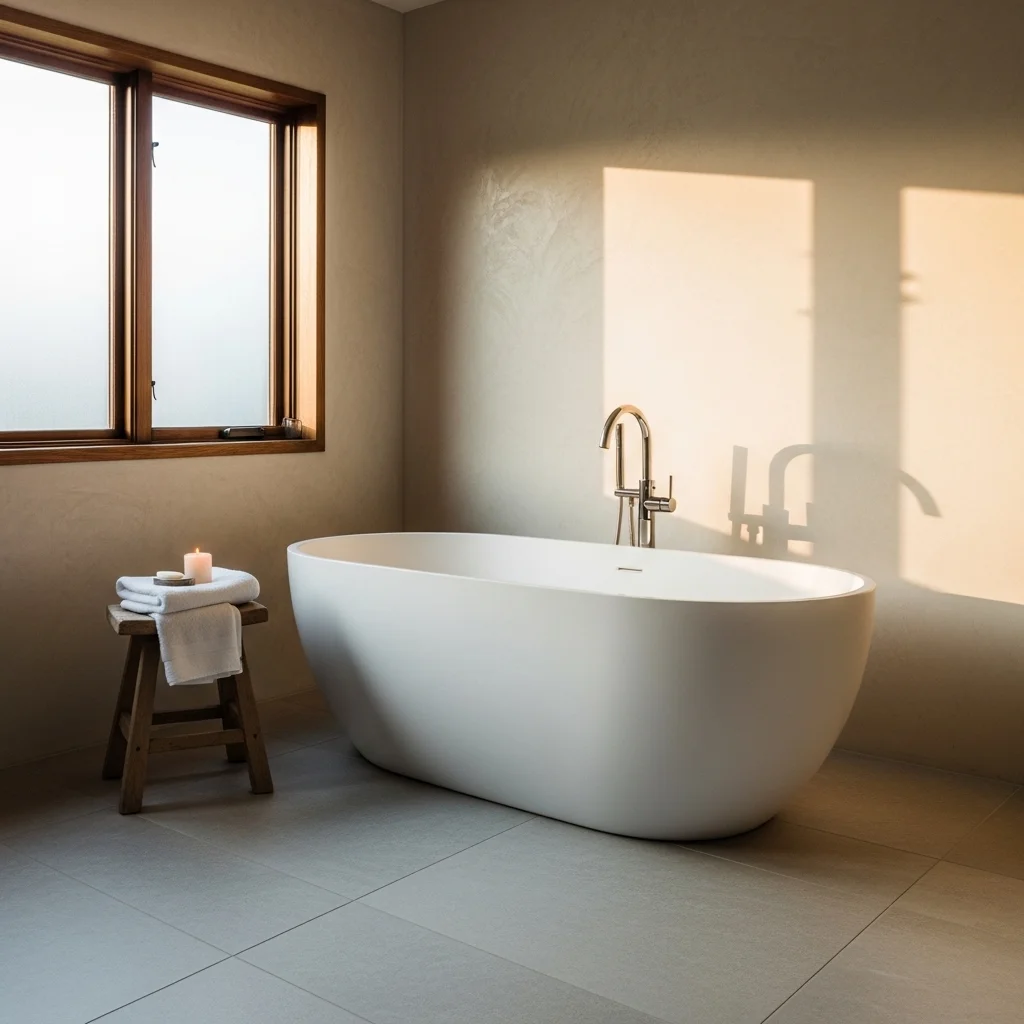
Lime plaster walls bring depth and movement to a bathroom. Their soft, matte finish absorbs light gently, creating a warm and calming atmosphere. Unlike flat paint, plaster reveals slight variations in tone and texture.
This finish works especially well in neutral shades. A soft beige or warm white plaster wall behind a wooden vanity adds dimension without the need for bold decoration.
Add a Wooden Vanity with Character
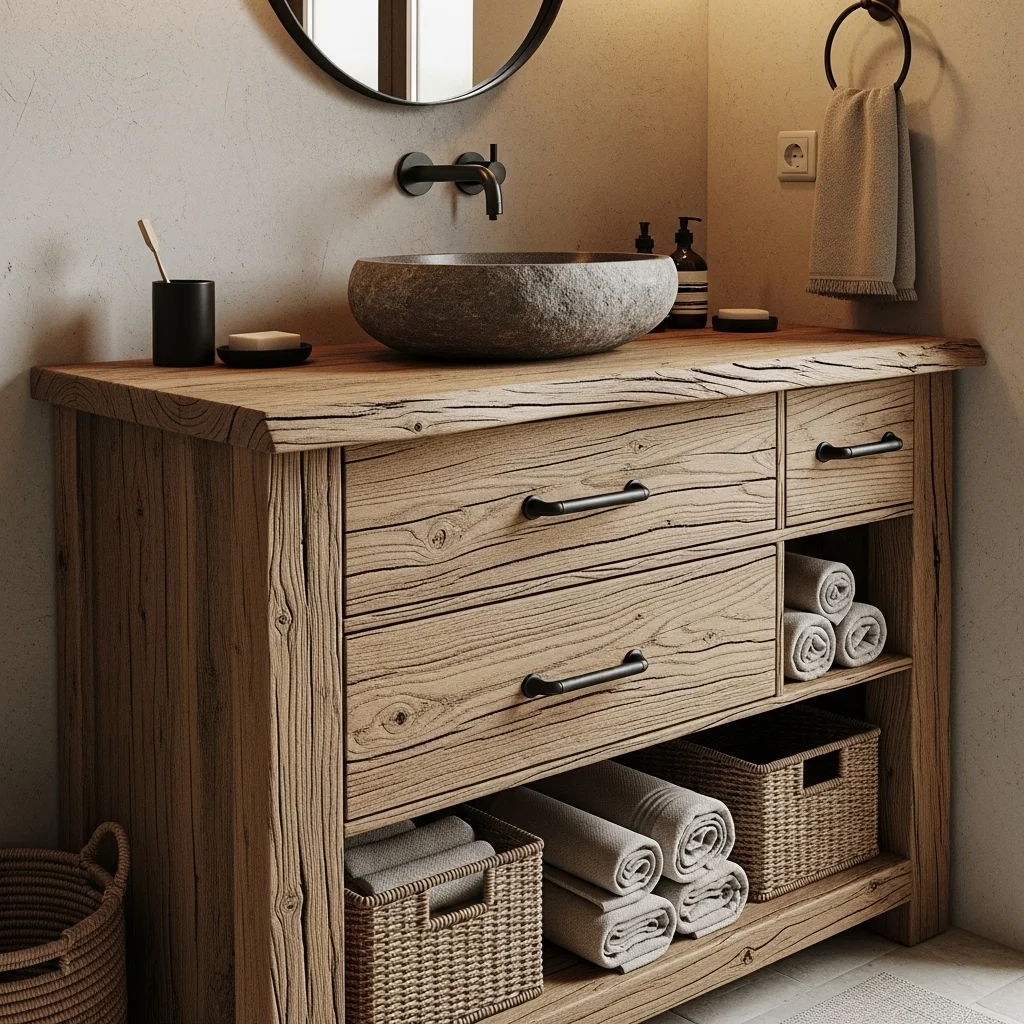
A wooden vanity with visible grain, knots, or even slight imperfections embodies wabi sabi style. Reclaimed wood pieces are especially fitting, as they carry history and individuality.
Instead of glossy finishes, opt for matte or lightly oiled surfaces. The natural aging process enhances the look over time, reinforcing the idea that beauty evolves rather than fades.
Focus on Soft, Natural Lighting
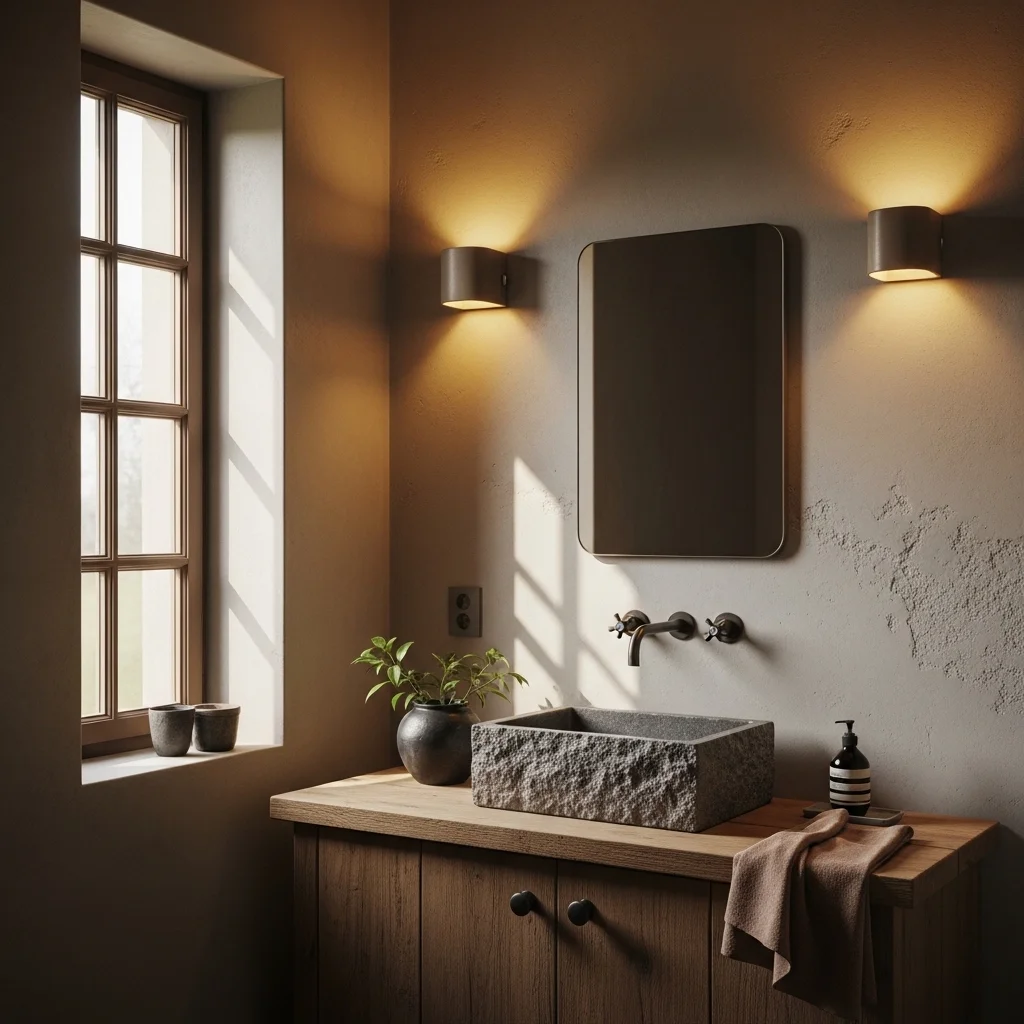
Lighting in a wabi sabi bathroom should feel gentle and calming. Soft white bulbs, diffused sconces, and indirect lighting create a spa like ambiance. Harsh overhead lighting can disrupt the serene mood.
Consider wall mounted fixtures with simple ceramic or metal shades. Natural light is even better, so if possible, allow sunlight to filter through sheer curtains or frosted windows.
Introduce Handmade Elements
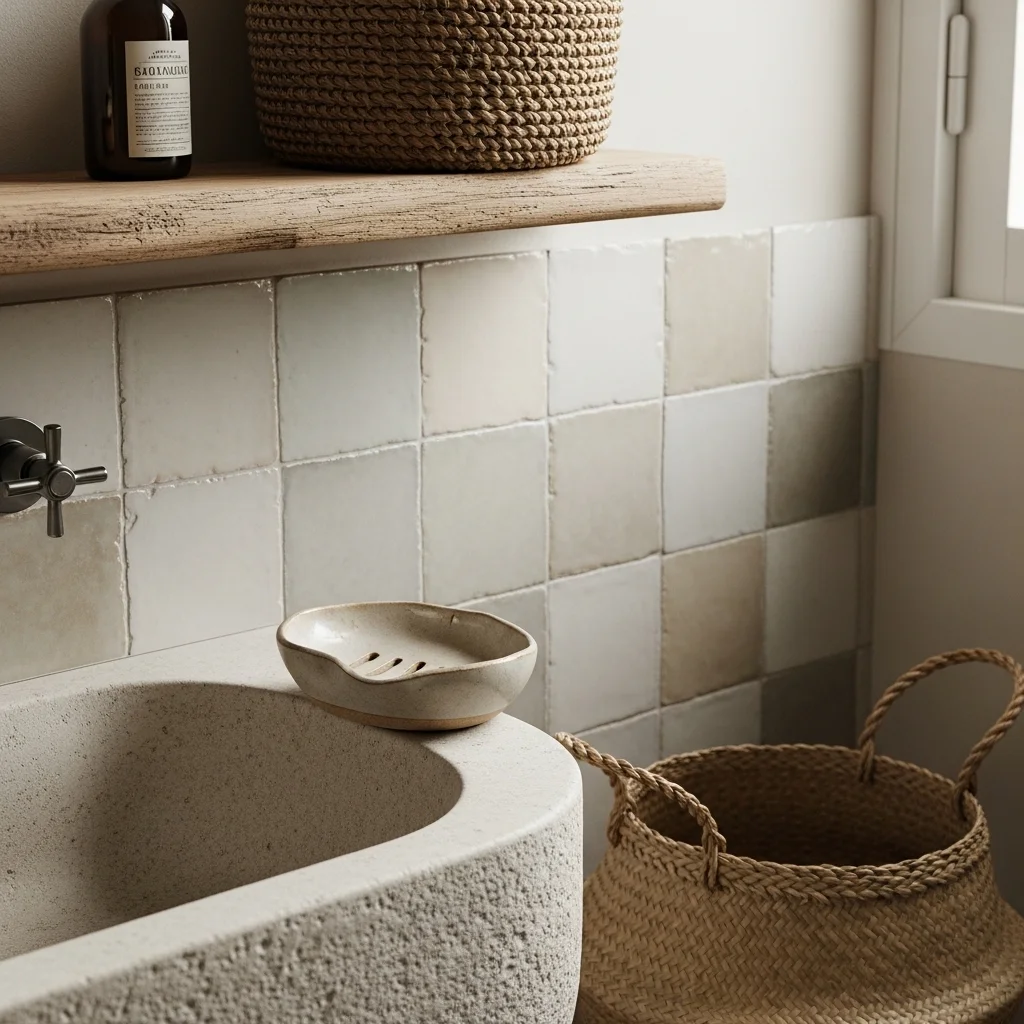
Handmade items add soul to a wabi sabi bathroom. A hand thrown ceramic soap dish, a woven basket, or artisanal tiles create subtle uniqueness. These pieces celebrate craftsmanship and human touch.
Because each handmade item has slight variations, the bathroom feels authentic and personal. This individuality is central to the wabi sabi aesthetic.
Keep Decor Simple and Intentional
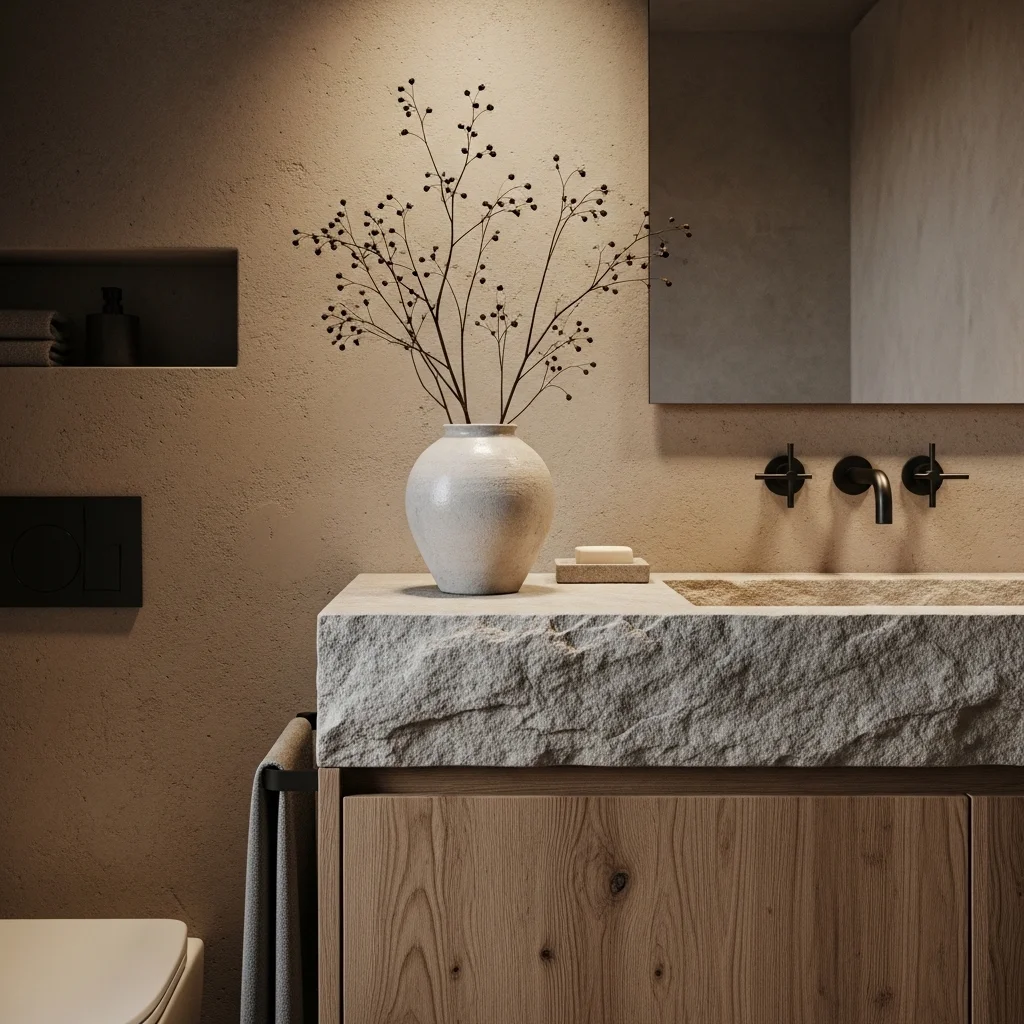
Decor in a wabi sabi bathroom should be minimal yet meaningful. A single ceramic vase with a dried branch or a small stone sculpture can be enough. Avoid overcrowding surfaces with multiple accessories.
Open shelves should display only a few carefully chosen objects. By limiting decor, the textures and materials of the room take center stage.
Bring Nature Indoors
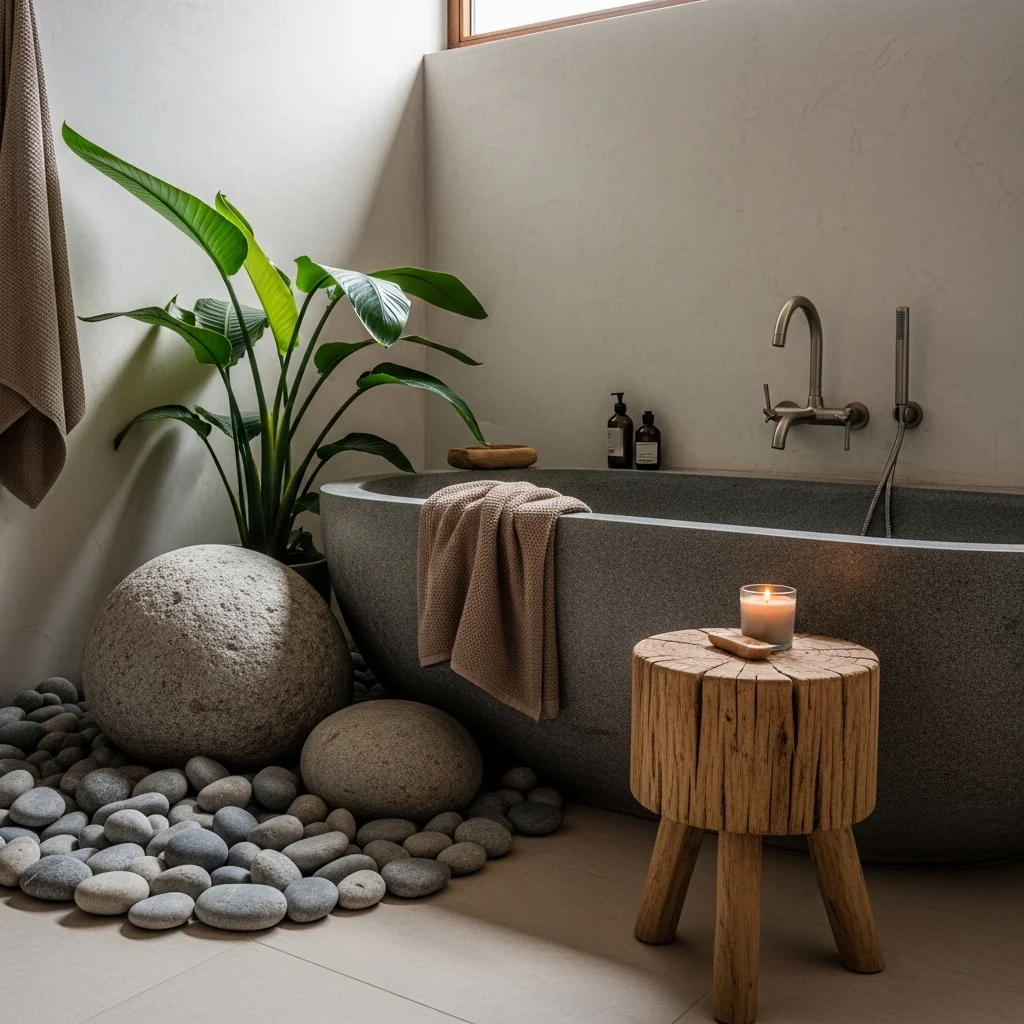
Nature is at the heart of wabi sabi design. Incorporate elements like potted plants, smooth river stones, or wooden stools. Even a small plant placed near the sink can soften the space.
Choose plants that thrive in humidity, such as ferns or small indoor trees. Their organic shapes contrast beautifully with structured fixtures, enhancing the sense of calm.
Use Open Shelving Thoughtfully
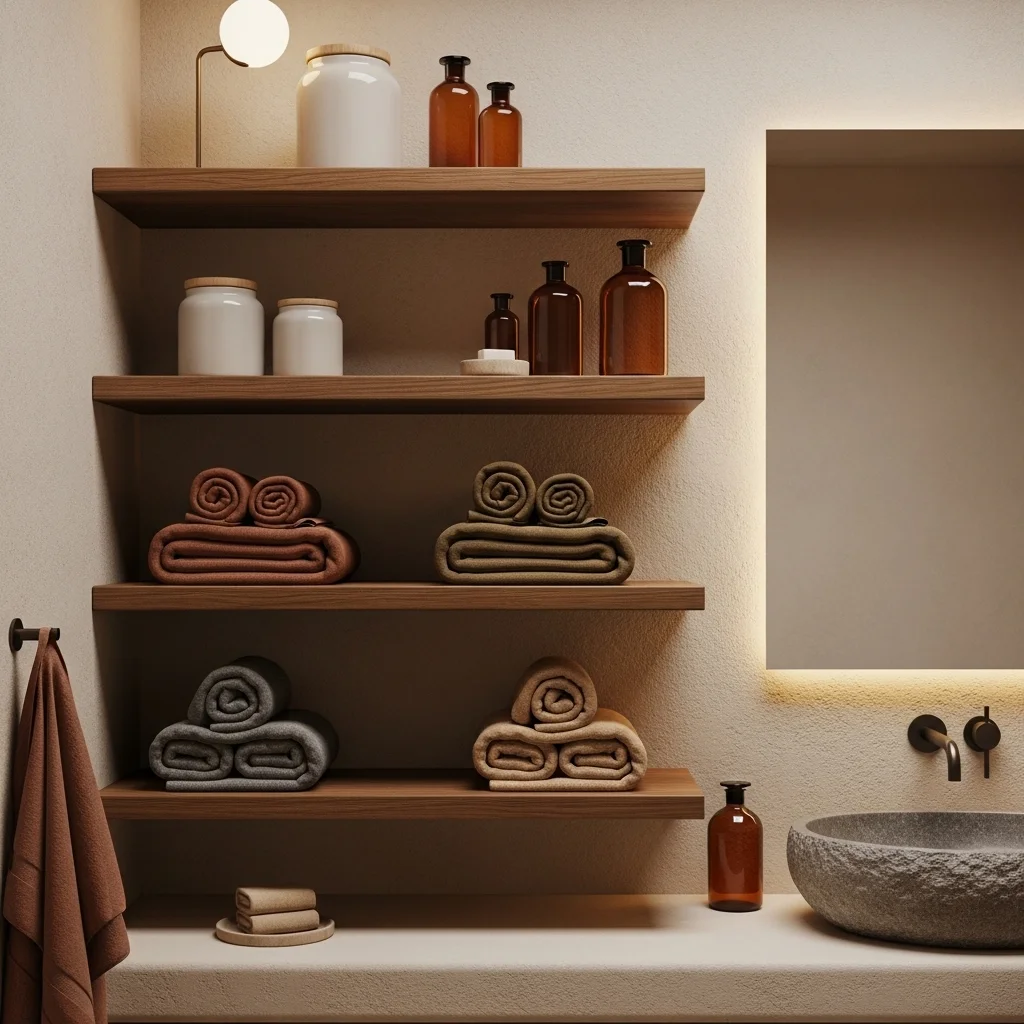
Open shelving can work well in a wabi sabi bathroom when styled minimally. Wooden shelves with visible grain add warmth and functionality.
Display rolled linen towels, ceramic jars, or simple glass bottles. Leave breathing room between items to maintain a sense of openness and tranquility.
Choose Matte and Aged Finishes
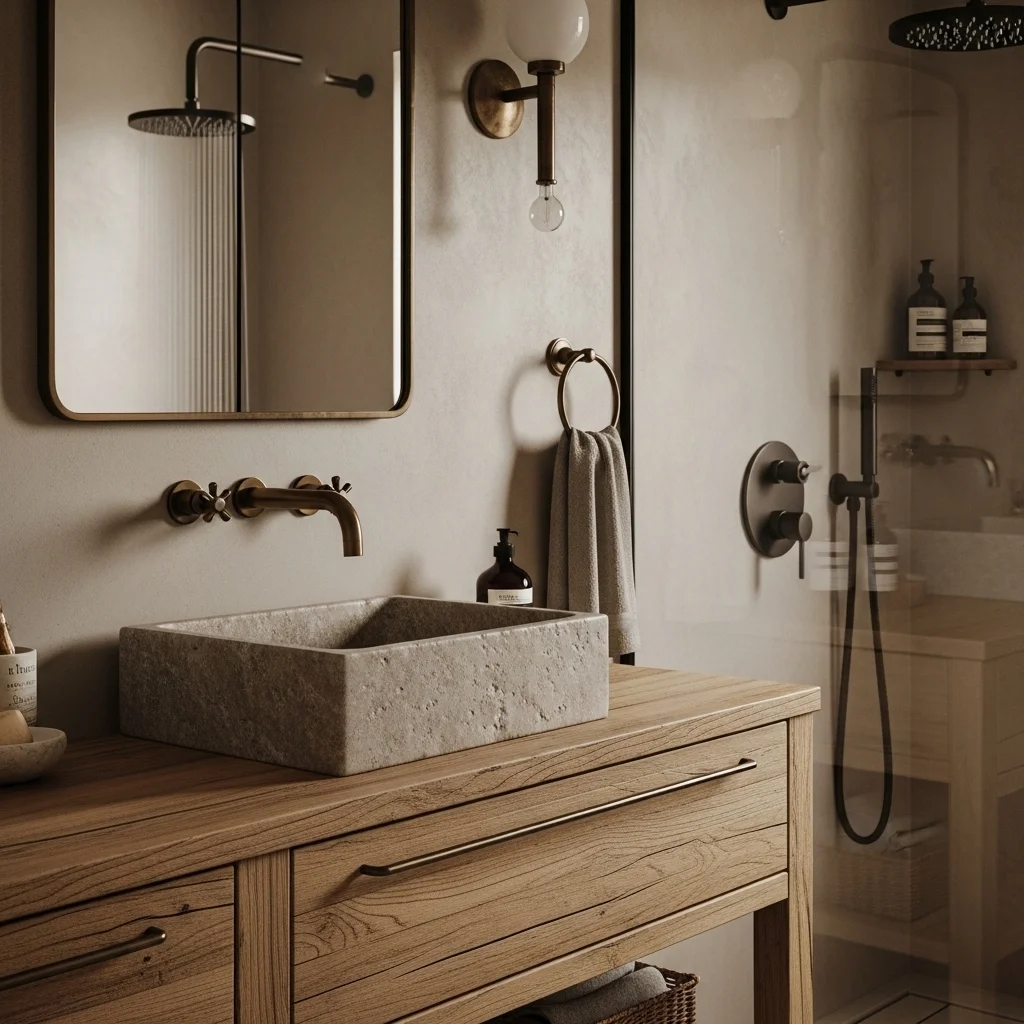
Glossy surfaces can feel too polished for wabi sabi style. Matte finishes in metal fixtures, tiles, and countertops align better with the philosophy. Brushed brass, aged bronze, or matte black hardware adds subtle depth.
These finishes develop character over time. Instead of striving for pristine shine, they embrace the beauty of gentle wear and natural patina.
Design a Spa Like Atmosphere
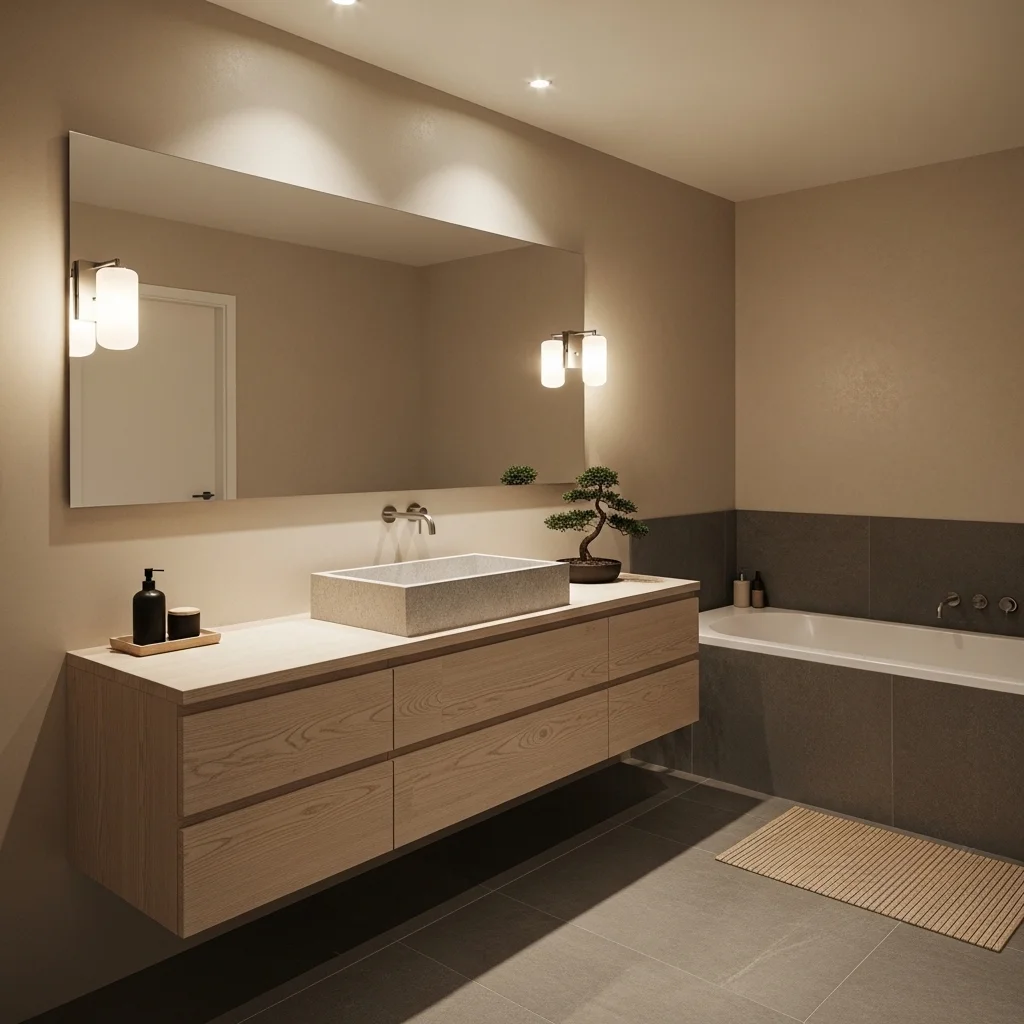
A wabi sabi bathroom often feels like a private retreat. Deep soaking tubs, simple wooden stools, and plush yet neutral textiles contribute to a spa inspired environment.
Keep the design understated. A freestanding tub against a textured plaster wall with soft lighting can create a deeply relaxing experience without elaborate decoration.
Incorporate Japandi Influences
Japandi design blends Japanese minimalism with Scandinavian warmth, making it a natural companion to wabi sabi. Clean lines combined with natural materials create balance and harmony.
In a bathroom, this might mean pairing a sleek floating vanity with rustic wooden accessories. The contrast between simplicity and texture keeps the space modern yet soulful.
Experiment with Asymmetry
Wabi sabi embraces asymmetry as a reflection of nature. Instead of perfectly centered decor, try placing a mirror slightly off center or arranging shelves in an irregular pattern.
This subtle imbalance creates visual interest while maintaining calm. The key is to keep the composition intentional rather than chaotic.
Add Subtle Textiles
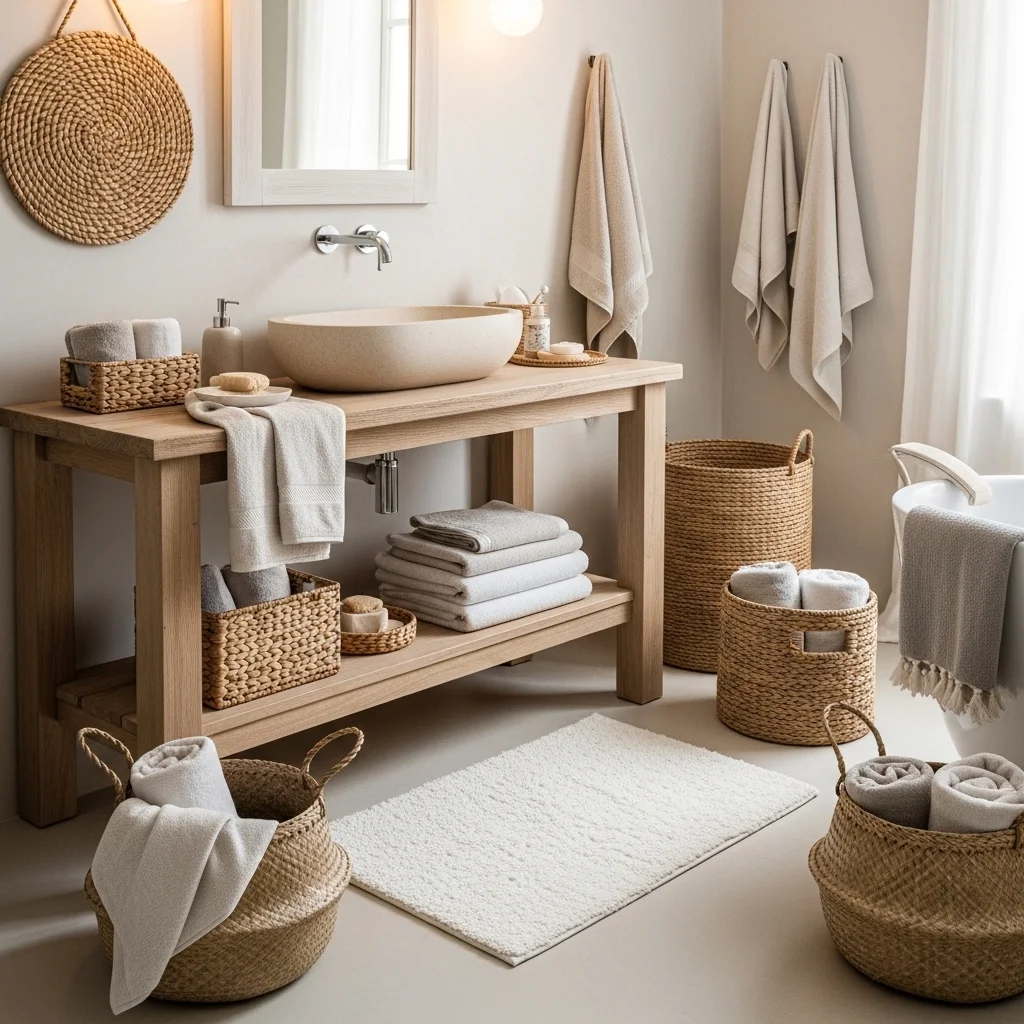
Textiles should feel soft and natural. Linen towels, cotton bath mats, and woven baskets introduce warmth and comfort. Stick to neutral shades that blend seamlessly with the overall palette.
Layering textures through fabric enhances the cozy atmosphere without adding visual clutter. The effect is inviting and serene.
Highlight Imperfect Tiles
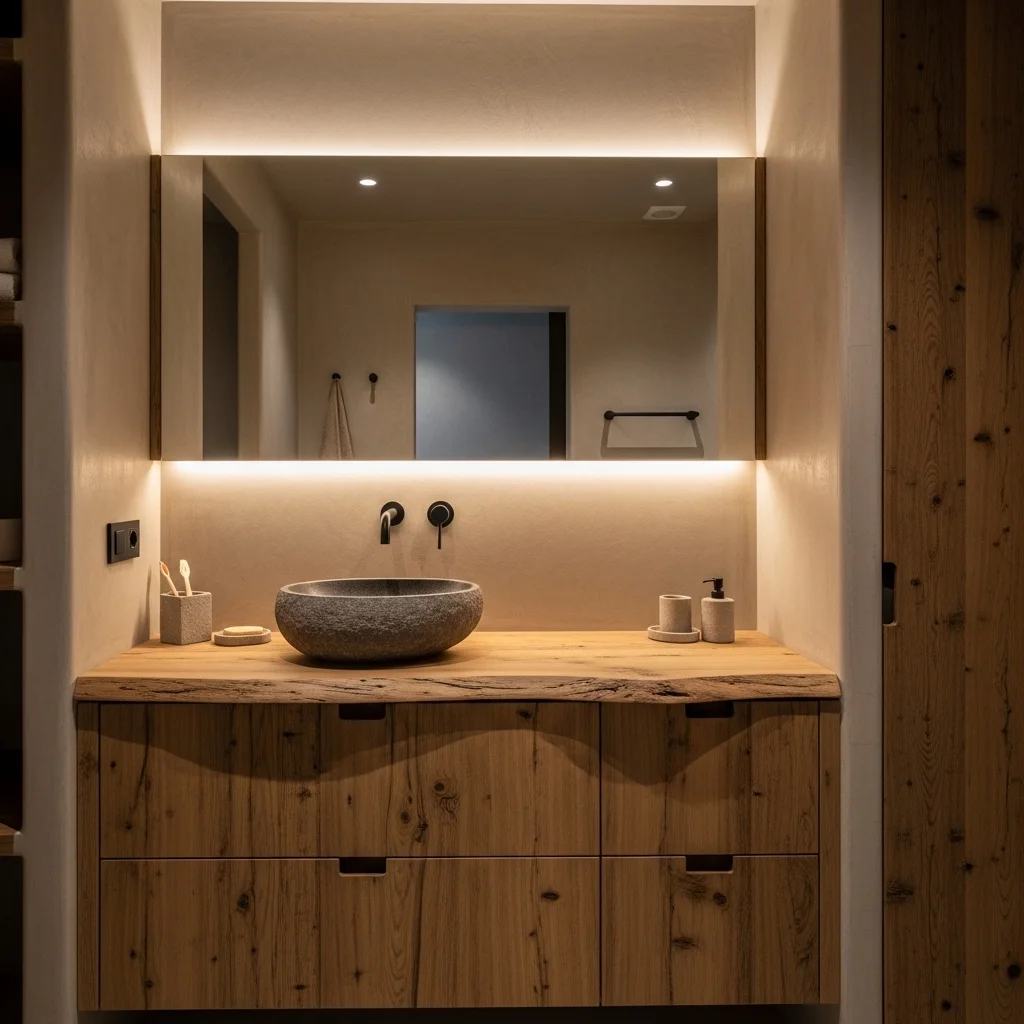
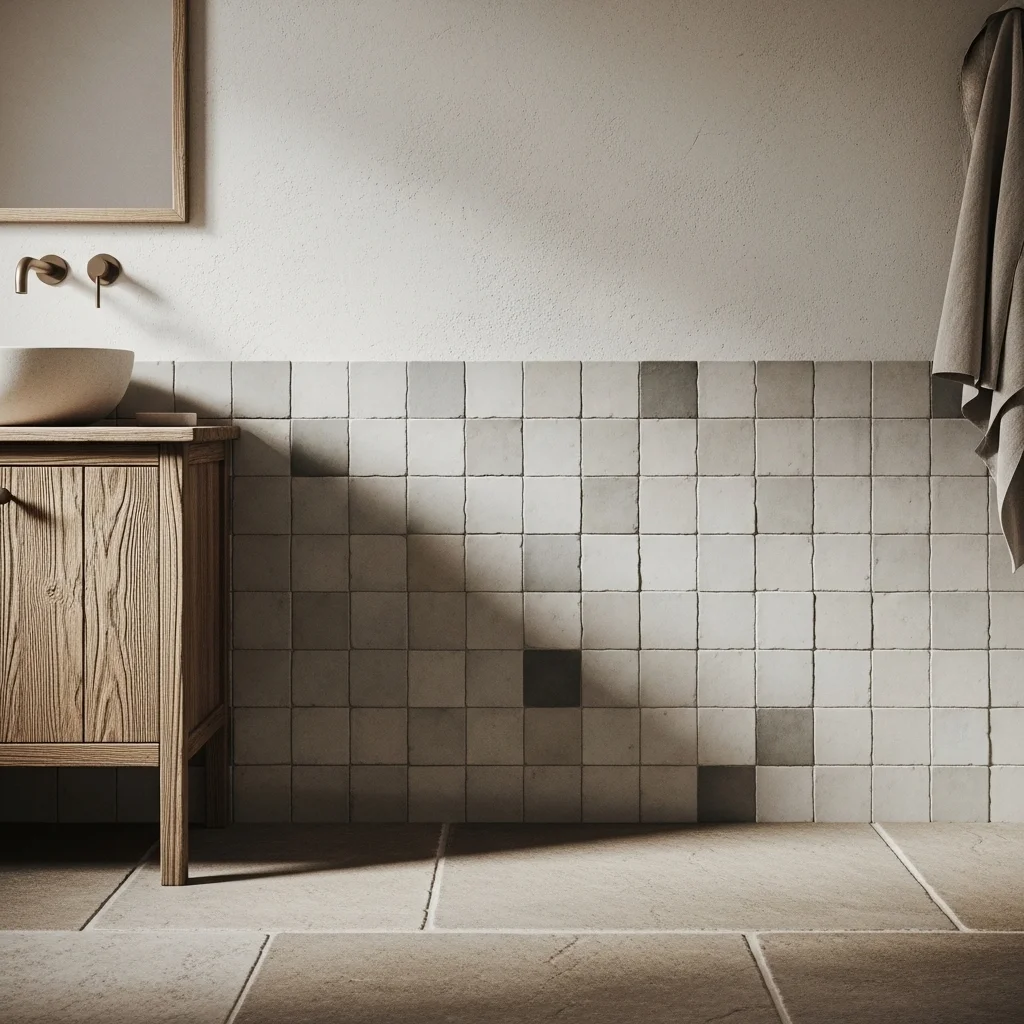
Handmade or slightly irregular tiles bring charm to a wabi sabi bathroom. Variations in color, glaze, and shape create a dynamic yet understated surface.
Use these tiles for a backsplash or shower wall to add character. Their imperfections tell a story and reinforce the authenticity of the space.
Keep Storage Hidden but Accessible
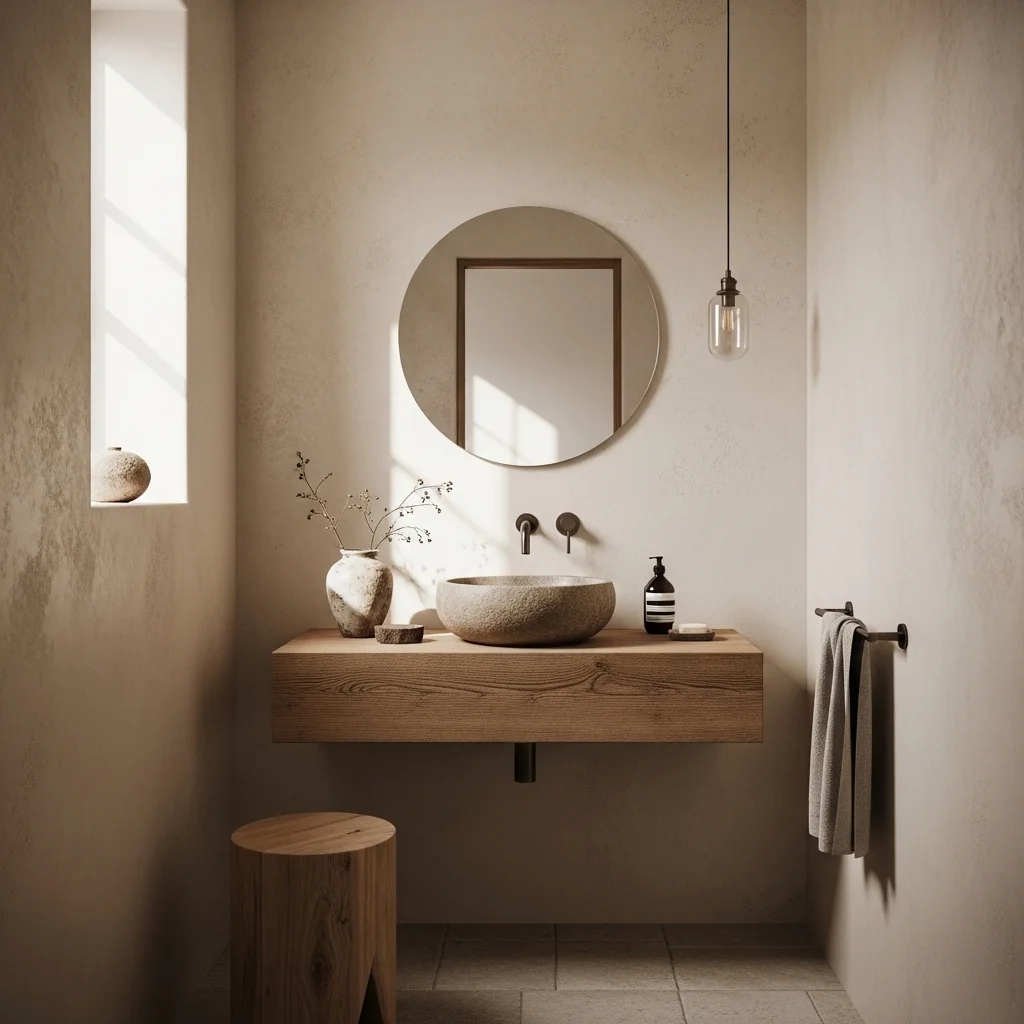
Practical storage is essential, but it should not overwhelm the design. Built in cabinets or baskets tucked under a vanity keep essentials organized while preserving visual simplicity.
When storage is thoughtfully integrated, the bathroom remains calm and clutter free, supporting the overall philosophy of mindful living.
Blend Modern Fixtures with Rustic Materials
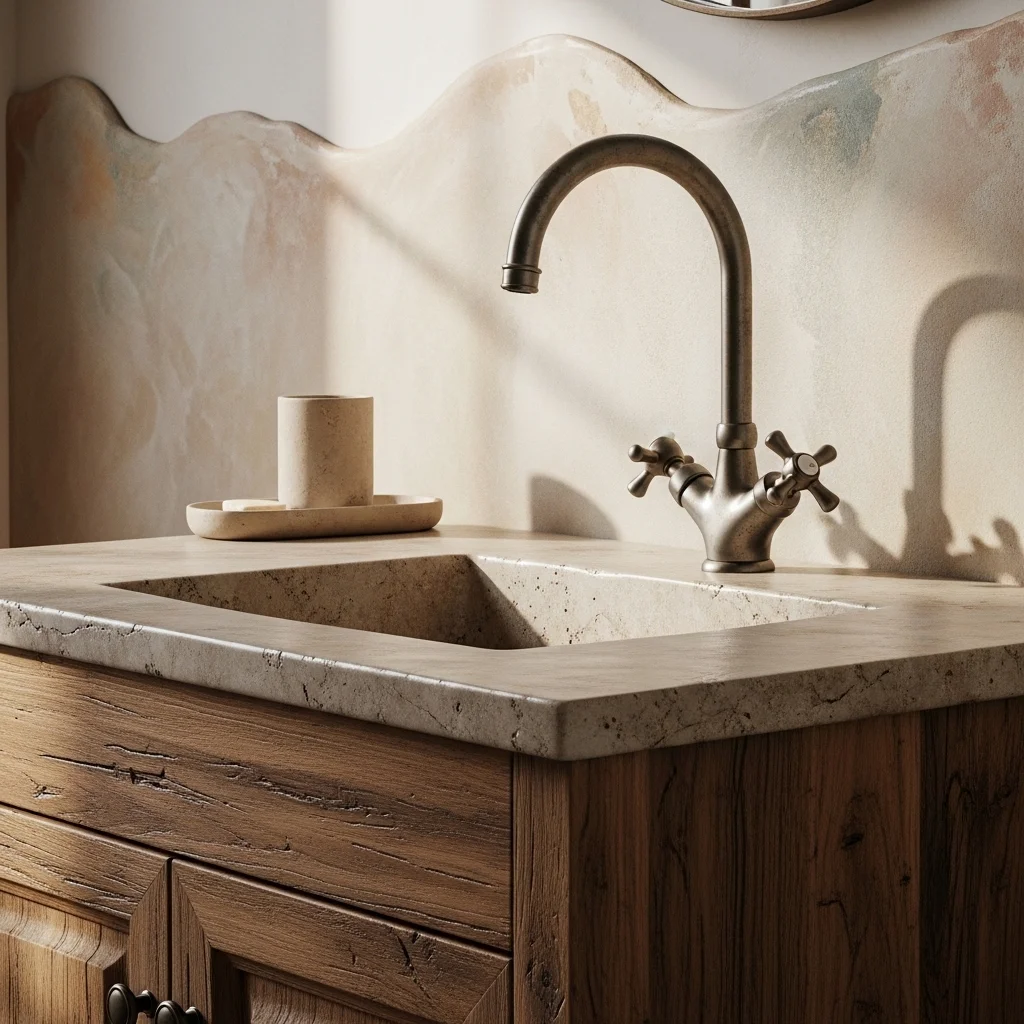
A wabi sabi bathroom can successfully combine contemporary fixtures with rustic textures. A sleek faucet paired with a rough stone basin creates a balanced contrast.
This blend ensures the space feels current yet grounded. The juxtaposition of refined and raw elements reflects the harmony found in nature.
Create a Small Wabi Sabi Bathroom
Even compact bathrooms can embody wabi sabi style. Focus on a few key materials such as wood and stone, and keep the layout simple. Light neutral colors help small spaces feel open.A single statement piece, such as a textured wall or a handcrafted sink, can define the design without overwhelming limited square footage.
FAQs
-
What defines a wabi sabi bathroom
A wabi sabi bathroom is defined by natural materials, earthy colors, organic textures, and a focus on imperfection and simplicity inspired by Japanese philosophy. -
Can I create a wabi sabi bathroom on a budget
Yes, you can focus on small changes such as neutral paint, natural textiles, simple decor, and adding plants to achieve the look without major renovations. -
Is wabi sabi the same as minimalism
While both emphasize simplicity, wabi sabi focuses more on natural textures and imperfection, whereas minimalism often highlights clean lines and flawless finishes. -
What materials work best in a wabi sabi bathroom
Stone, wood, concrete, clay, lime plaster, and natural fibers work best because they bring warmth, texture, and authenticity. -
How do I keep a wabi sabi bathroom from looking unfinished
Balance is key. Combine raw textures with thoughtful lighting, functional layout, and intentional decor to create a space that feels serene rather than incomplete.
Conclusions
Designing a wabi sabi bathroom is ultimately about creating a sanctuary that feels honest, grounded, and deeply calming. In a time when many interiors focus on perfection and constant updates, this approach encourages you to slow down and appreciate subtle beauty. Through natural materials, muted colors, organic textures, and thoughtful simplicity, a wabi sabi bathroom becomes more than a functional space. It transforms into a daily retreat where you can reset both physically and mentally.
The true strength of wabi sabi lies in its acceptance of change. Wood that develops character, stone that softens with use, and metals that form a gentle patina all contribute to a space that grows more beautiful over time. Instead of chasing flawless finishes, you embrace authenticity and craftsmanship. By incorporating even a few of these principles, whether through textured walls, handmade decor, or soft lighting, you can cultivate a bathroom that feels timeless and restorative. A wabi sabi bathroom is not about achieving perfection. It is about finding peace in simplicity and lasting comfort in the natural world.