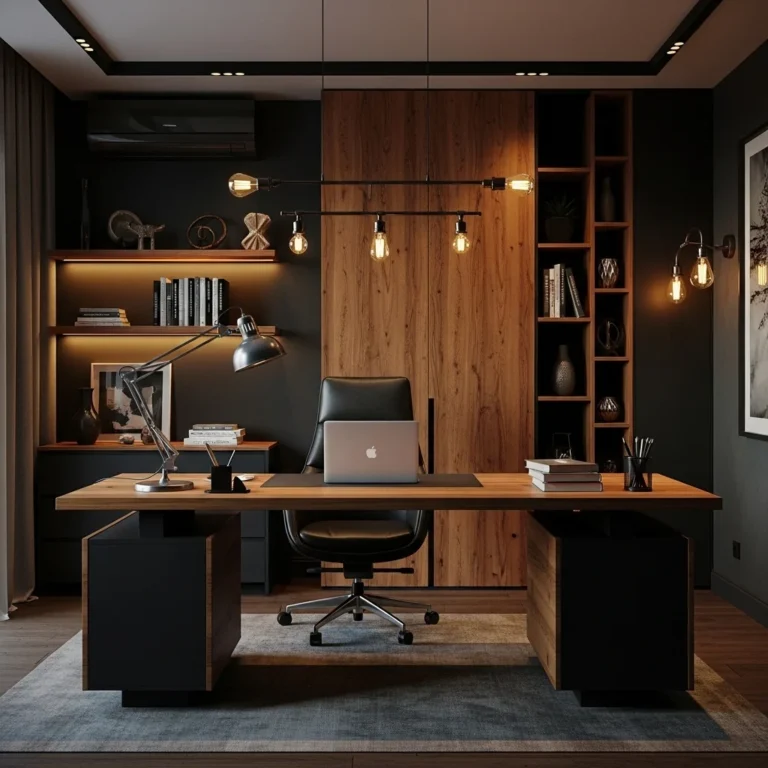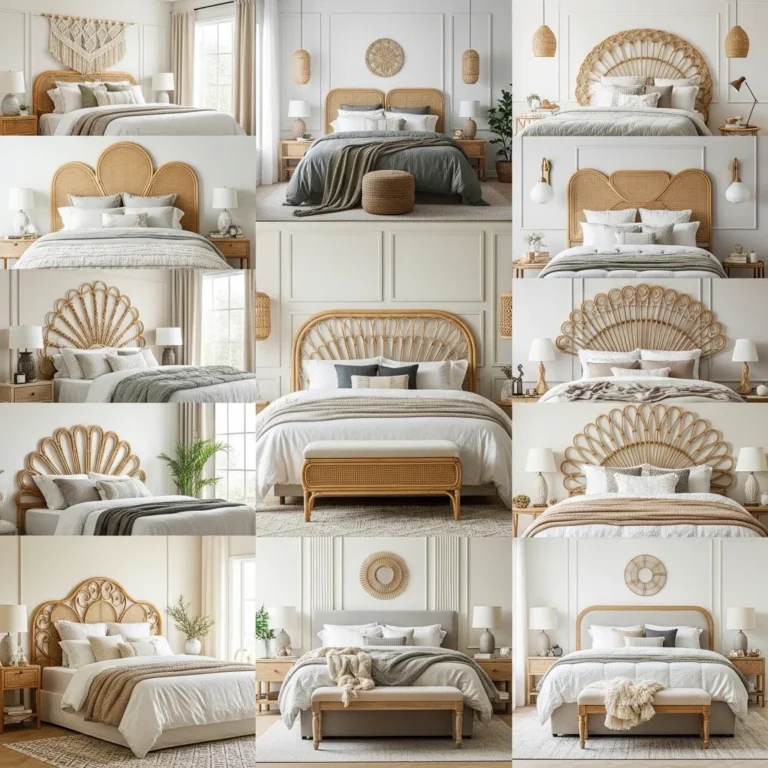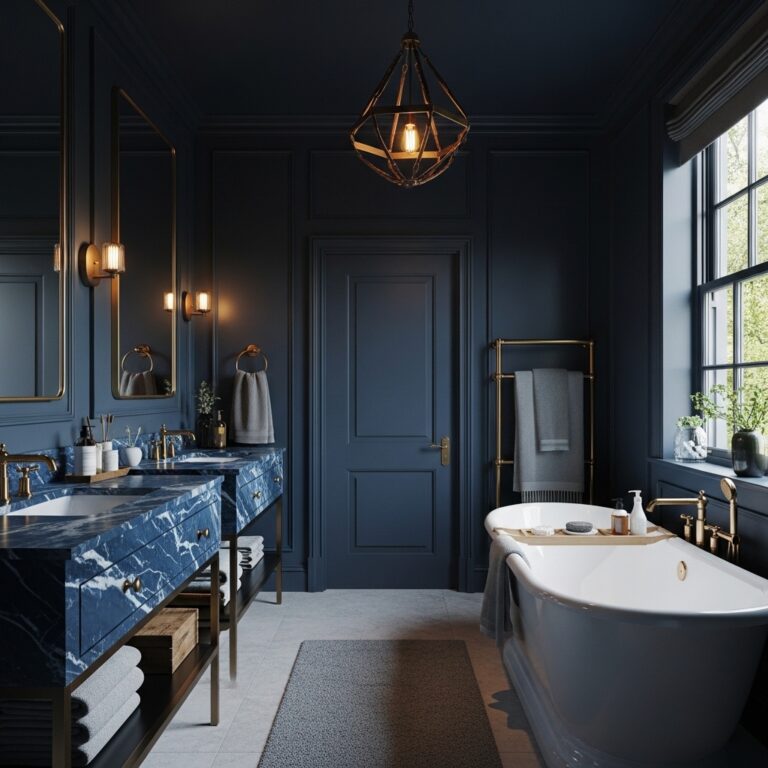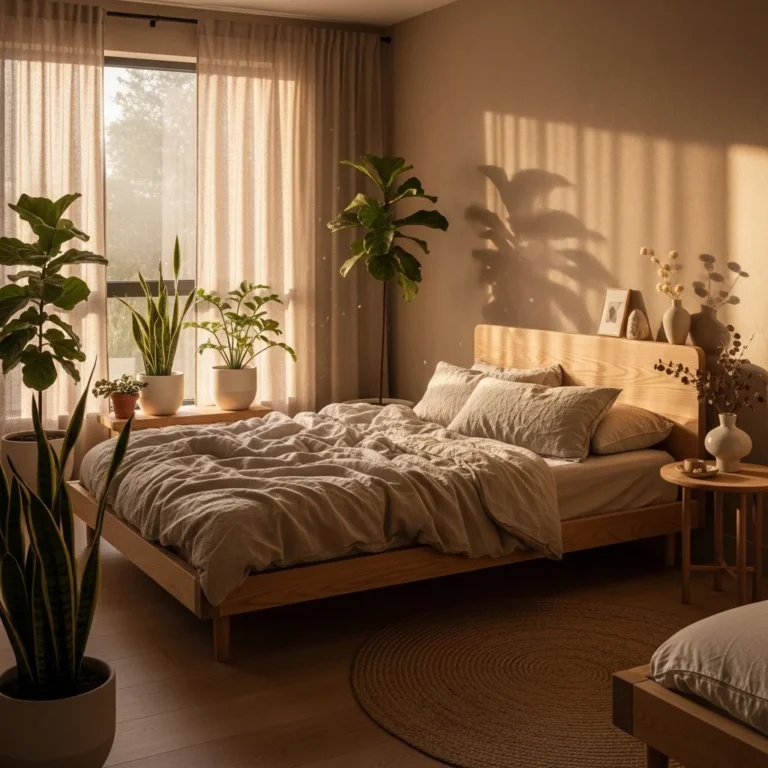
Embrace a Soft Neutral Color Palette
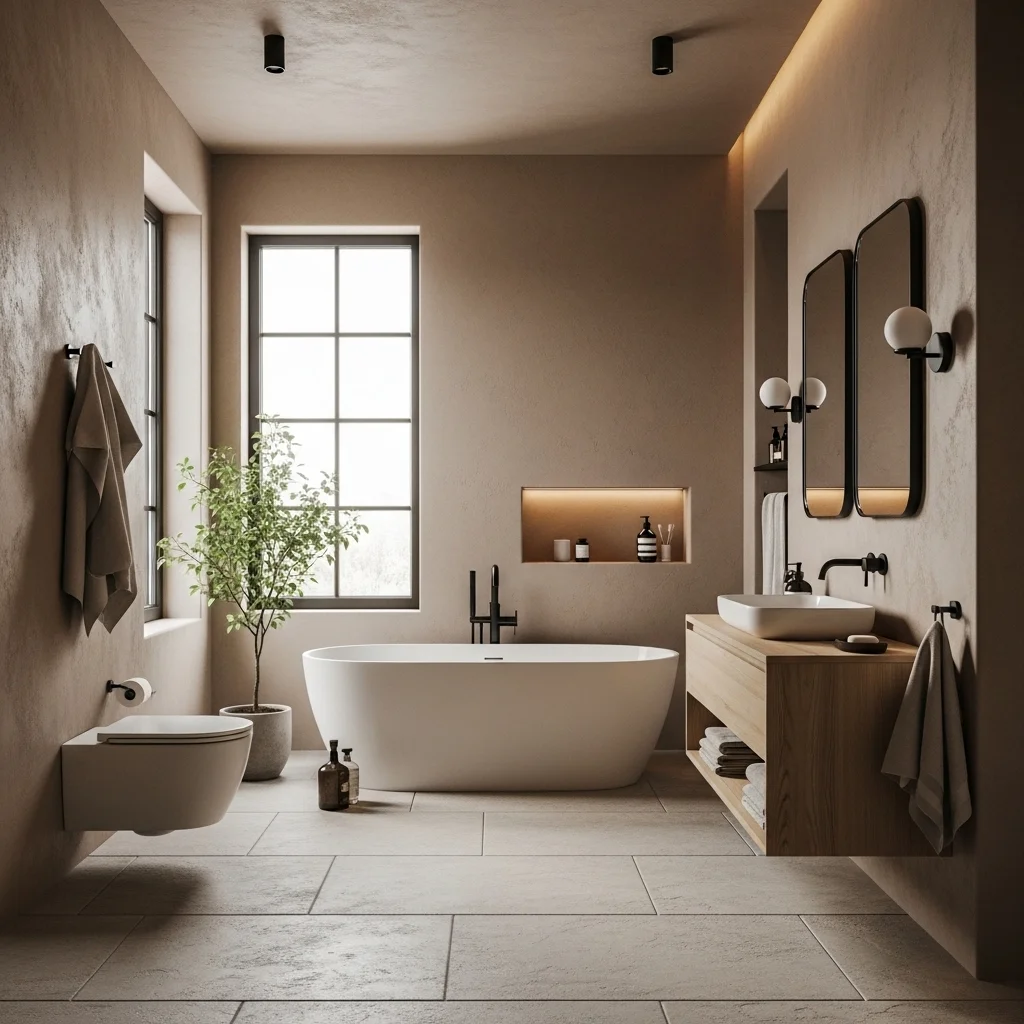
Color sets the emotional tone of any space. In Japandi bathrooms, soft neutral hues dominate, creating a calming atmosphere. Think warm whites, creamy beiges, soft taupes, and gentle grays. Using a consistent palette across walls, tiles, cabinetry, and textiles ensures visual cohesion. Subtle tonal variations rather than sharp contrasts provide depth without visual chaos. For instance, pairing a light beige wall with a slightly darker taupe floor creates understated layers that make the space feel warm and inviting. Neutral tones also allow natural wood and stone elements to take center stage, reinforcing the connection to nature, a key principle of Japandi design.
Introduce Natural Wood Elements
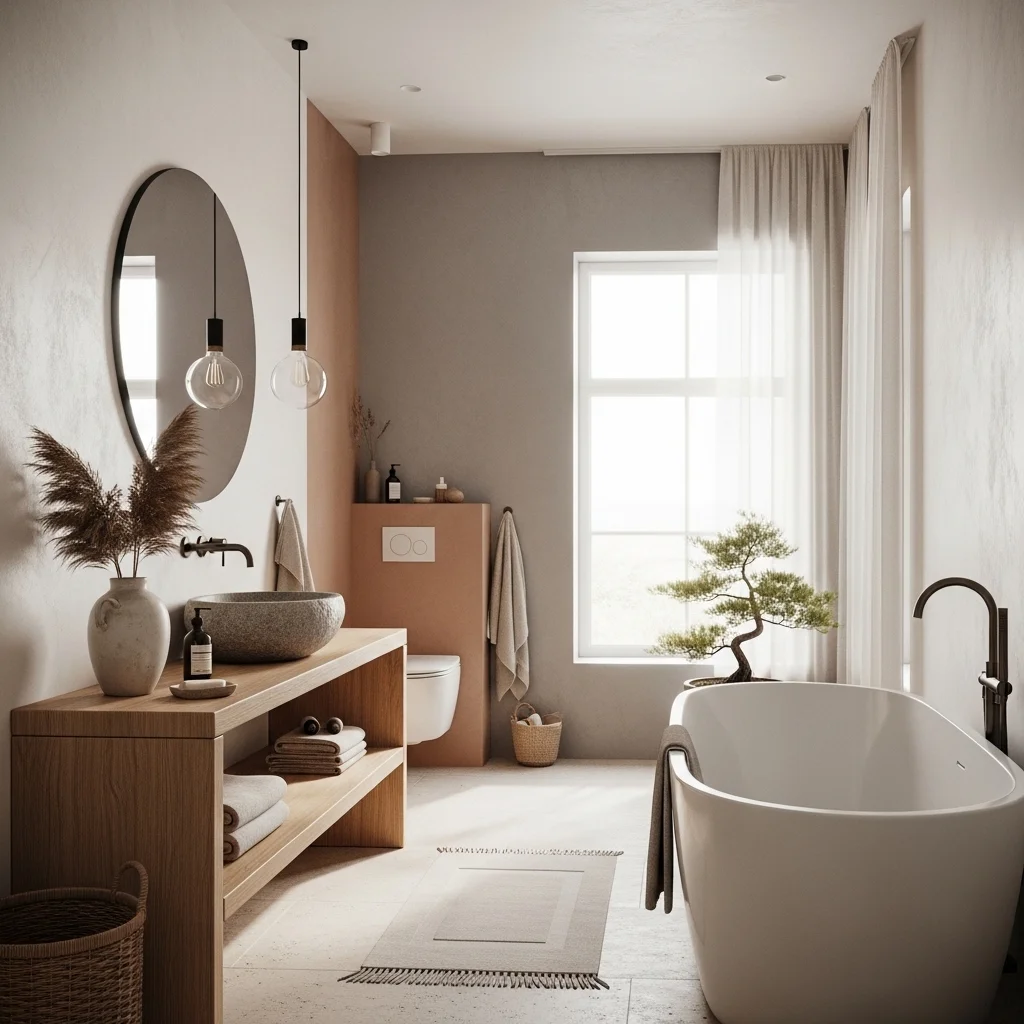
Wood is fundamental to Japandi aesthetics, providing warmth and texture in an otherwise minimal setting. Light oak, ash, or bamboo are ideal choices. Vanities, shelving, and ceiling accents made from natural wood instantly create a sense of comfort and sophistication. Wood not only enhances the visual appeal but also connects the space to nature, a central tenet of Japanese design. To ensure durability in humid bathroom conditions, always select treated or water-resistant wood finishes. Integrating wooden accents around mirrors or as floorboards can soften hard surfaces like stone or concrete, balancing the space.
Install a Freestanding Soaking Tub
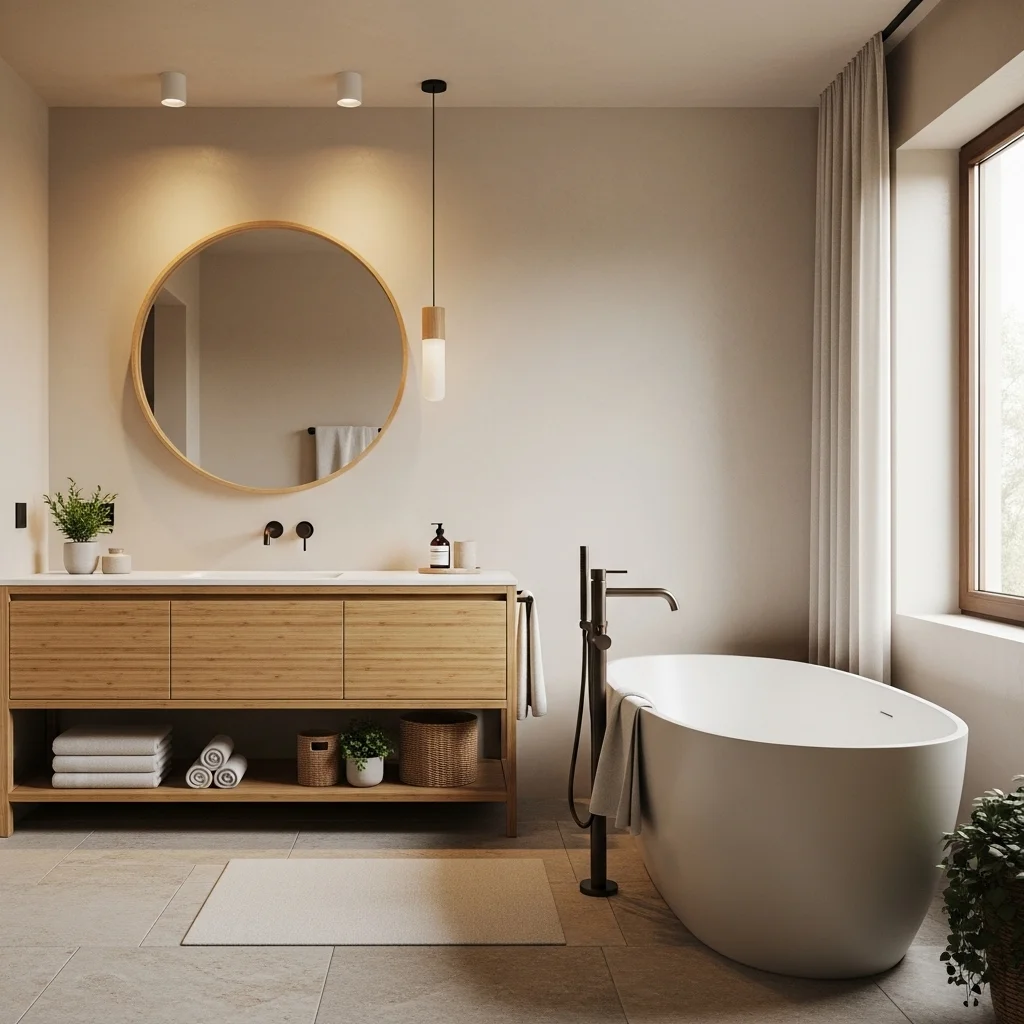
The freestanding soaking tub is a hallmark of Japandi bathrooms. More than just a functional element, it serves as a focal point and a symbol of mindful bathing. Choose a simple, sculptural design in matte white, stone, or a natural ceramic finish. Placing the tub near a window enhances the connection to the outdoors and allows natural light to illuminate the space. For smaller bathrooms, consider compact freestanding tubs or minimalist Japanese ofuro-inspired designs that maintain the meditative essence without overwhelming the room.
Choose a Floating Vanity
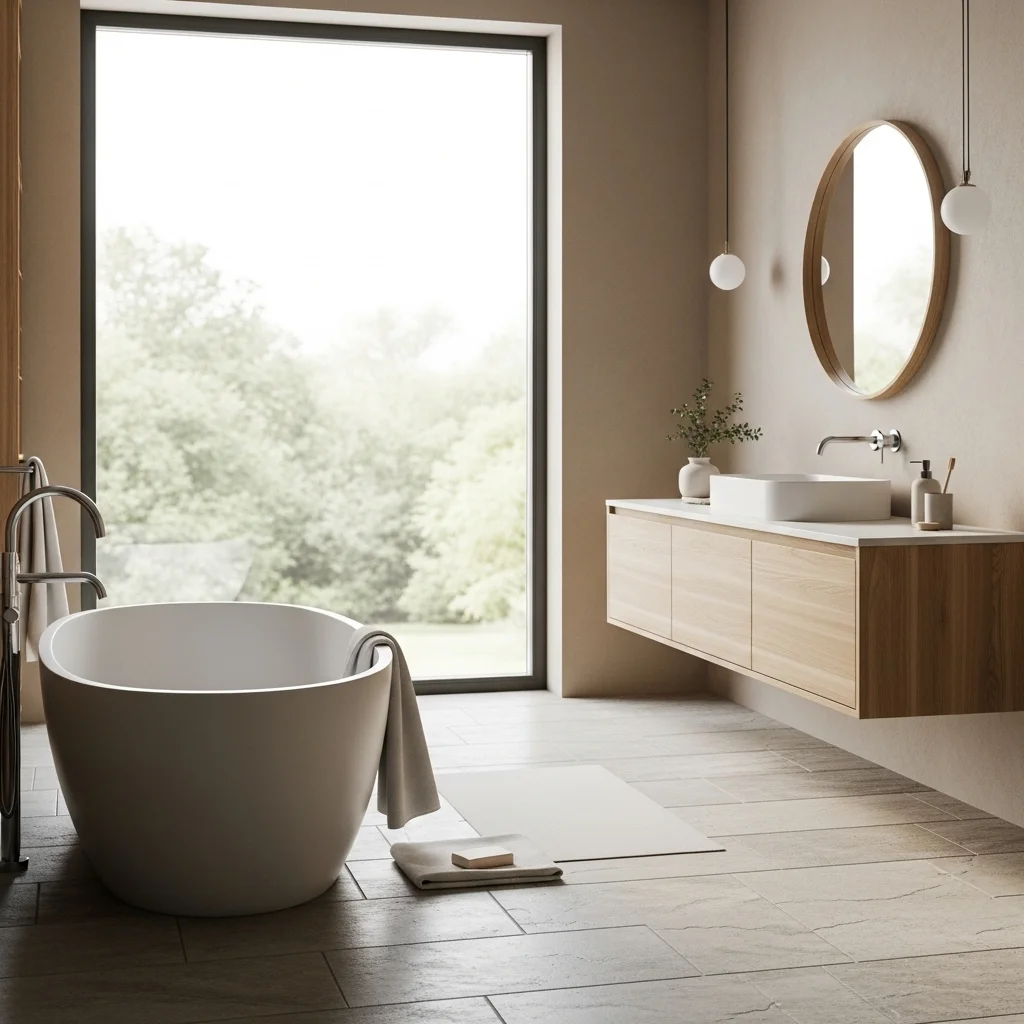
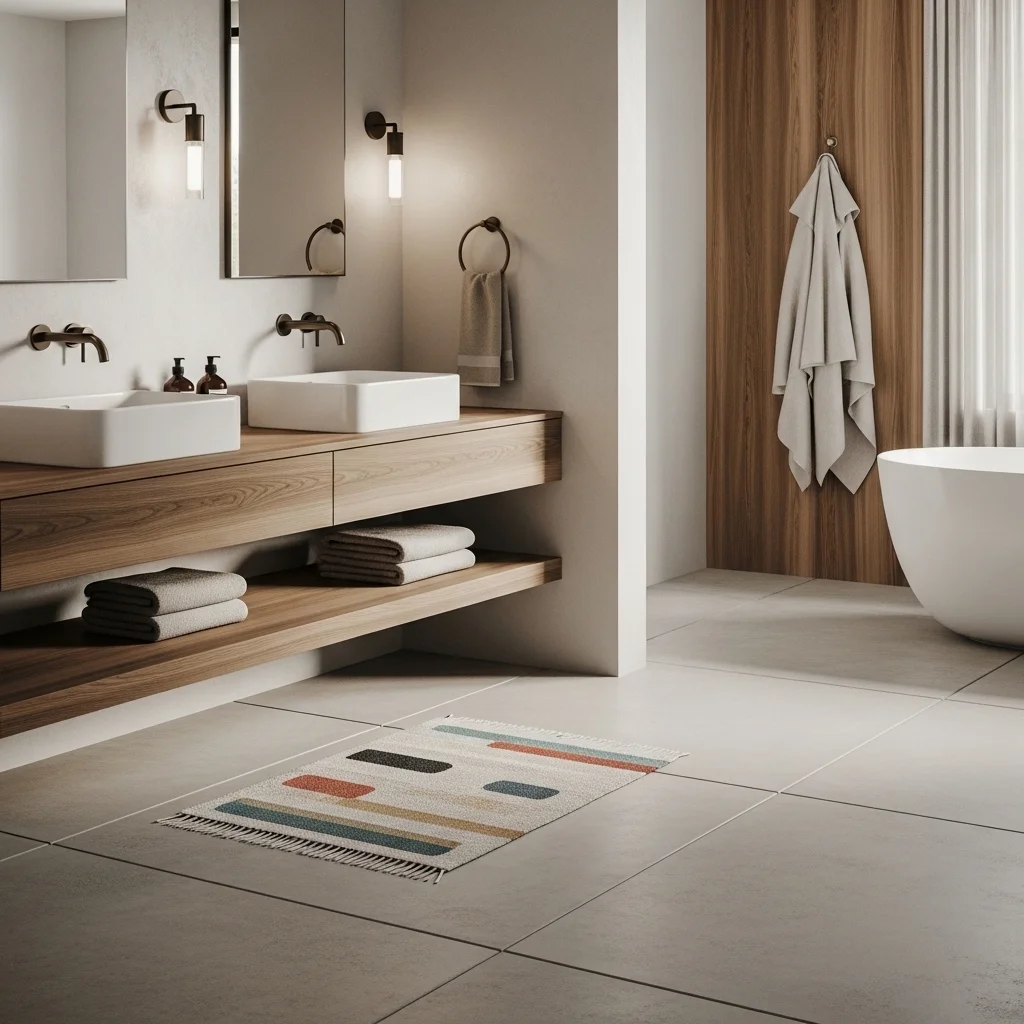
Floating vanities are essential in Japandi bathrooms because they create an airy, uncluttered look. By lifting cabinetry off the floor, they make the bathroom feel more spacious and facilitate cleaning. Select vanities with clean lines, handle-free drawers, and natural wood finishes to emphasize minimalism. Adding a stone vessel sink on top introduces texture contrast while maintaining simplicity. In small bathrooms, floating vanities prevent visual congestion, making the space appear larger than it actually is.
Use Natural Stone Surfaces
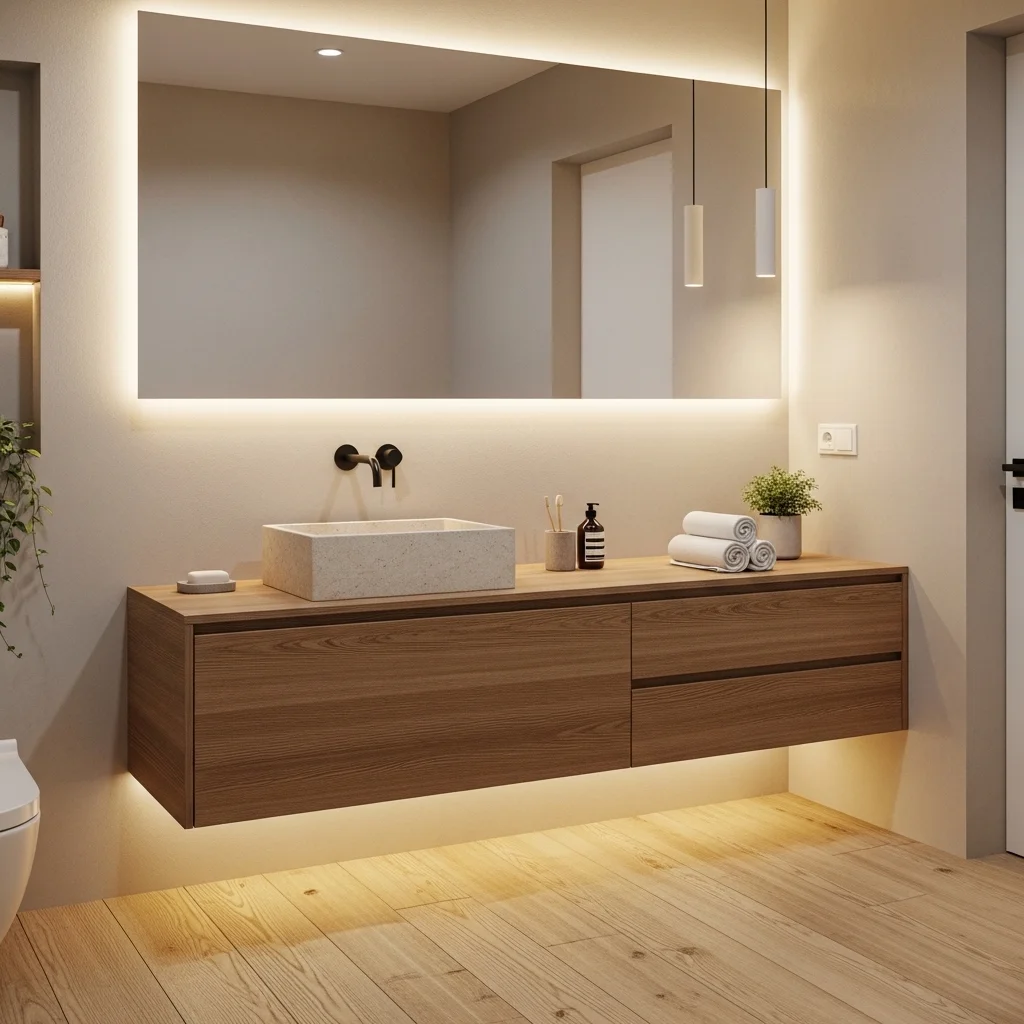
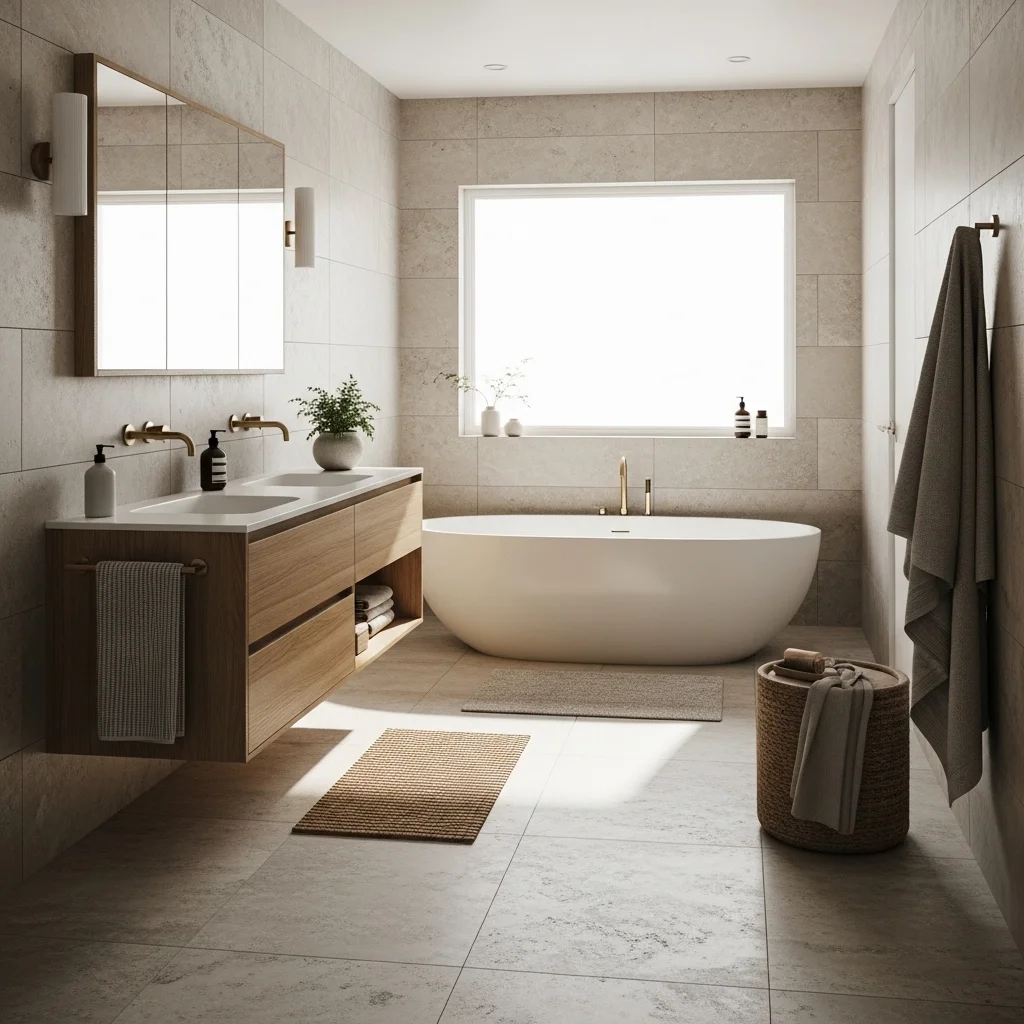
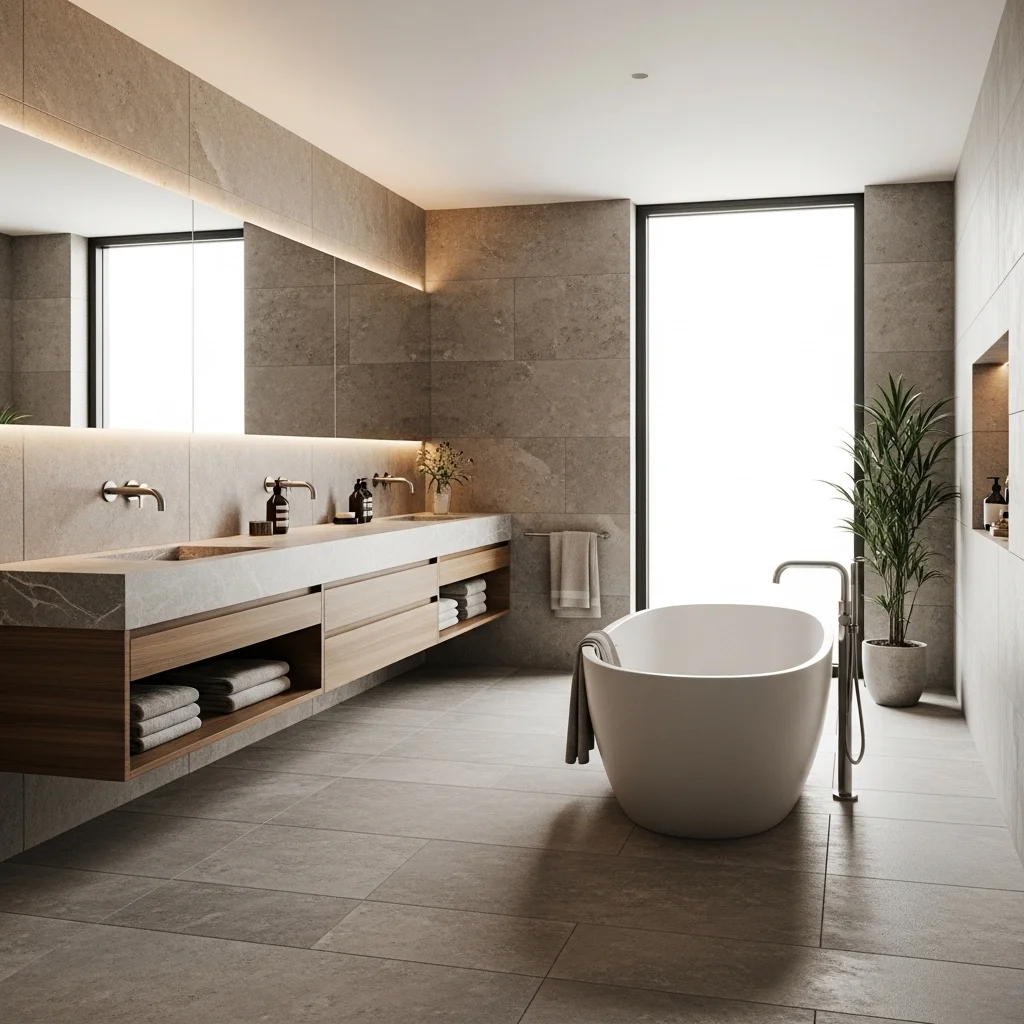
Stone surfaces are key to bringing natural texture and elegance into a Japandi bathroom. Stone tiles can be used for flooring or accent walls, while stone countertops on vanities add a sophisticated touch. Materials like travertine, limestone, and slate provide subtle variations in tone and texture, which evoke an organic, timeless beauty. Stone also complements wood elements seamlessly, enhancing the spa-like feel. For instance, pairing a light oak vanity with soft gray stone flooring creates a balanced, harmonious environment.
Incorporate Textured Plaster Walls
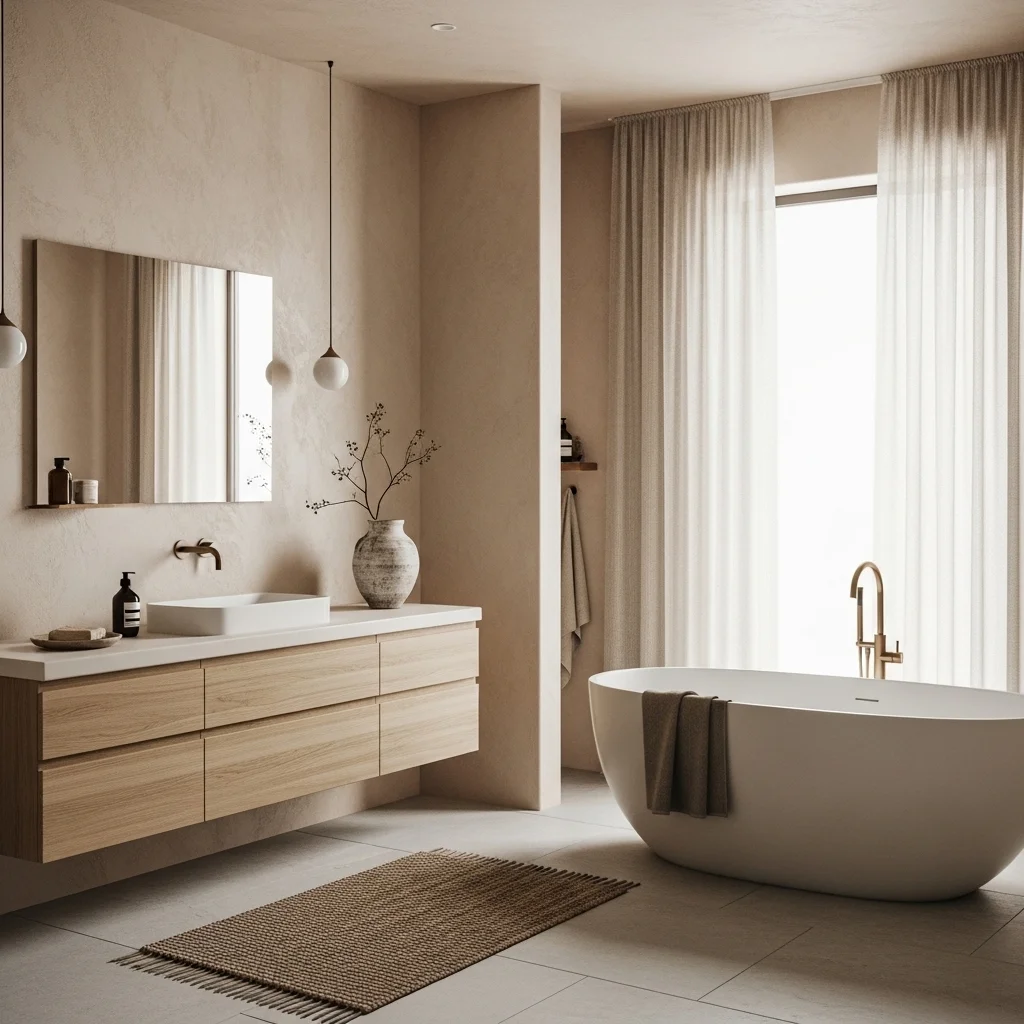
Textured plaster or tadelakt walls bring warmth and depth to a bathroom while embracing the Japanese wabi-sabi philosophy, which celebrates imperfection. Soft, matte finishes with subtle irregularities create a handcrafted feel that enriches the space. These textures also help diffuse light naturally, avoiding glare and enhancing the serene ambiance. Plaster walls can be finished in soft beige or warm gray tones to maintain harmony with natural wood and stone elements.
Keep the Layout Open and Uncluttered
Minimalism is at the heart of Japandi design. Avoid overcrowding your bathroom with unnecessary furniture, décor, or accessories. Maintain clear sightlines and functional zones for bathing, washing, and storage. Open layouts not only enhance the feeling of spaciousness but also reduce stress, creating a calming environment. Thoughtful placement of fixtures ensures movement is intuitive and effortless. Even in compact bathrooms, minimalism can be achieved through multi-purpose elements, like recessed shelving or floating vanities, which keep essentials accessible yet out of sight.
Opt for Frameless Glass Showers
Frameless glass shower enclosures preserve visual continuity in the bathroom. They allow natural light to flow freely and keep the space feeling open. Clean lines and simple hardware complement the Japandi philosophy of simplicity and understated elegance. Frosted or textured glass can be used for privacy without sacrificing light, while a seamless transition from floor to shower area maintains a continuous, harmonious aesthetic.
Select Matte Black or Brushed Metal Fixtures
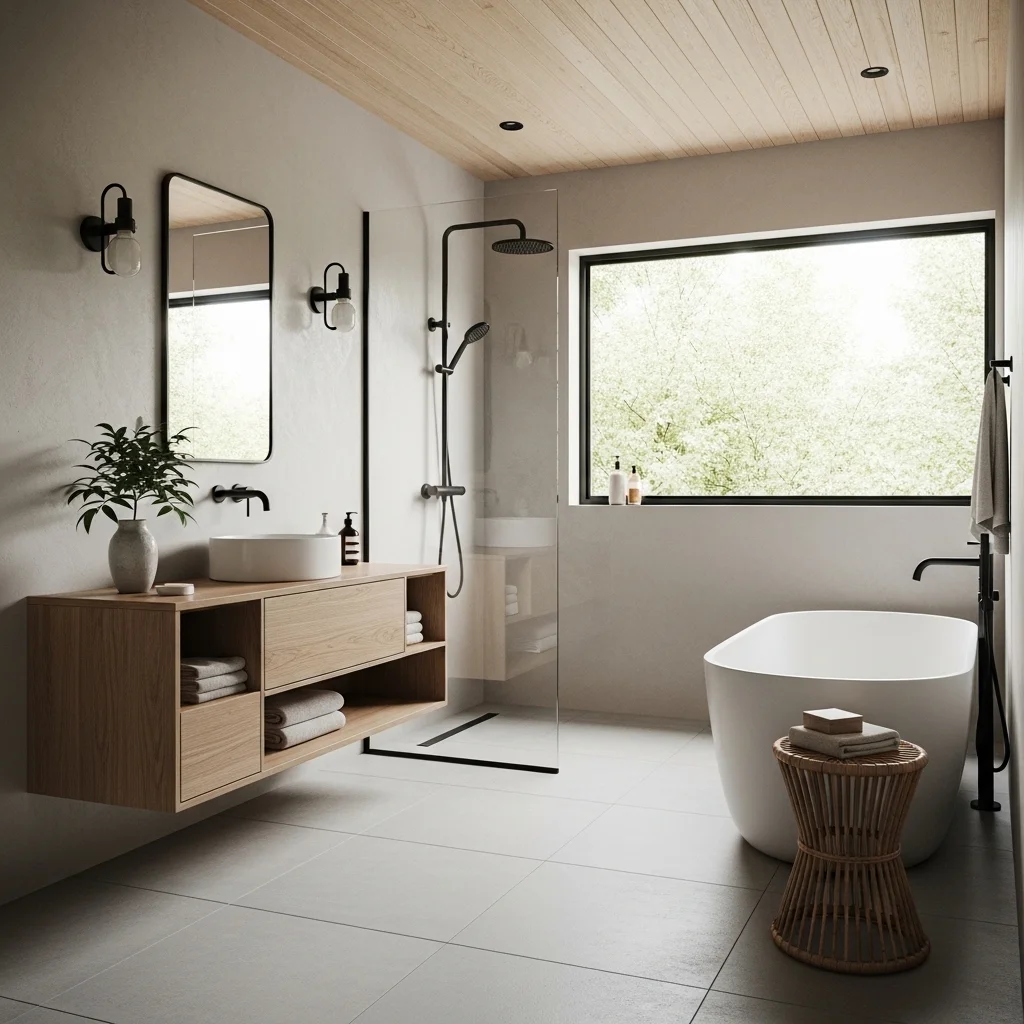
Fixtures in matte black, brushed nickel, or soft brass add subtle contrast to neutral tones without disrupting the overall calm. Wall-mounted faucets, showerheads, and handles with clean silhouettes enhance the minimalist feel. These accents provide visual interest while remaining understated, supporting the balance between Japanese restraint and Scandinavian warmth. For example, a matte black faucet against a light stone countertop becomes an elegant focal point without overwhelming the design.
Add Built-In Storage Niches
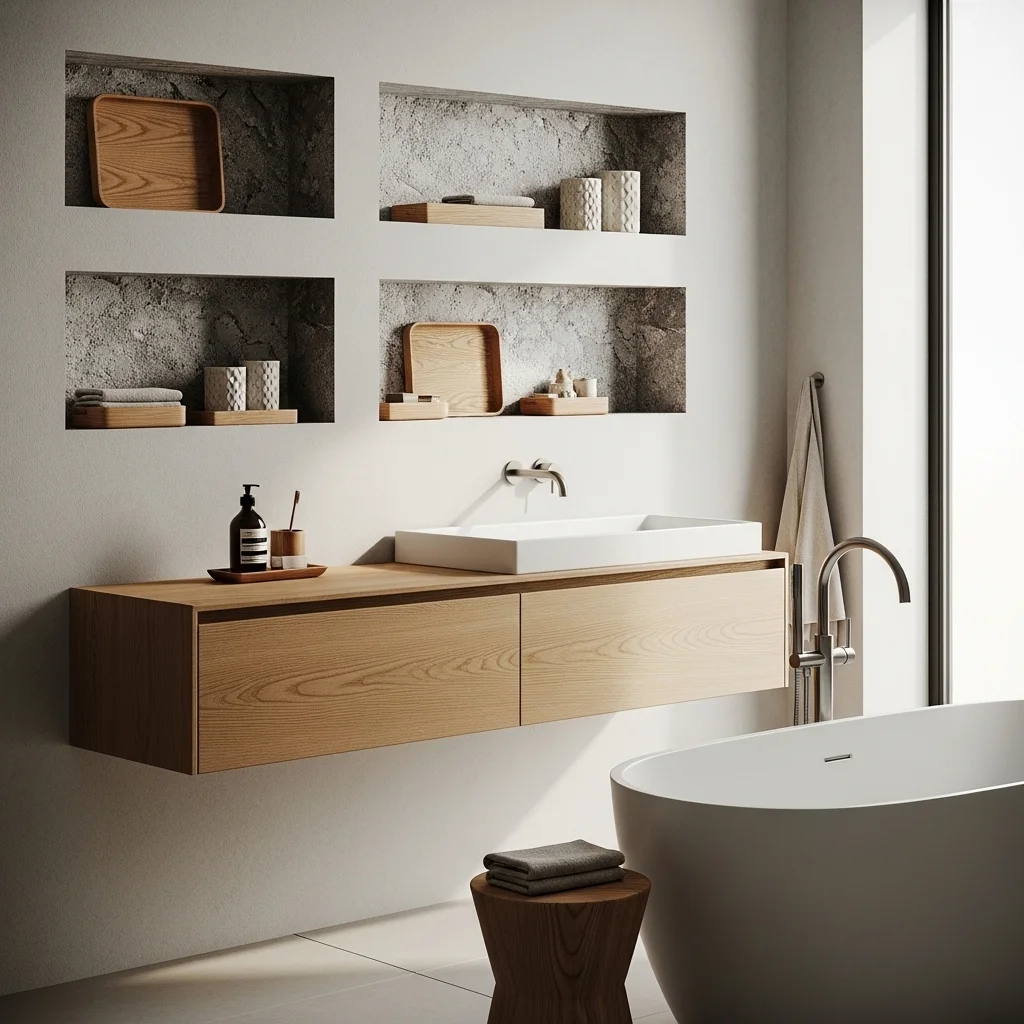
Recessed storage niches in the shower or above the vanity provide functional storage without cluttering the space. These niches keep toiletries organized and maintain the clean, minimalist aesthetic. Using the same tile or plaster material as the surrounding walls creates a seamless look. For a personal touch, add wooden trays or small ceramic containers in the niches for soap, lotions, or decorative accents.
Choose Large Format Tiles
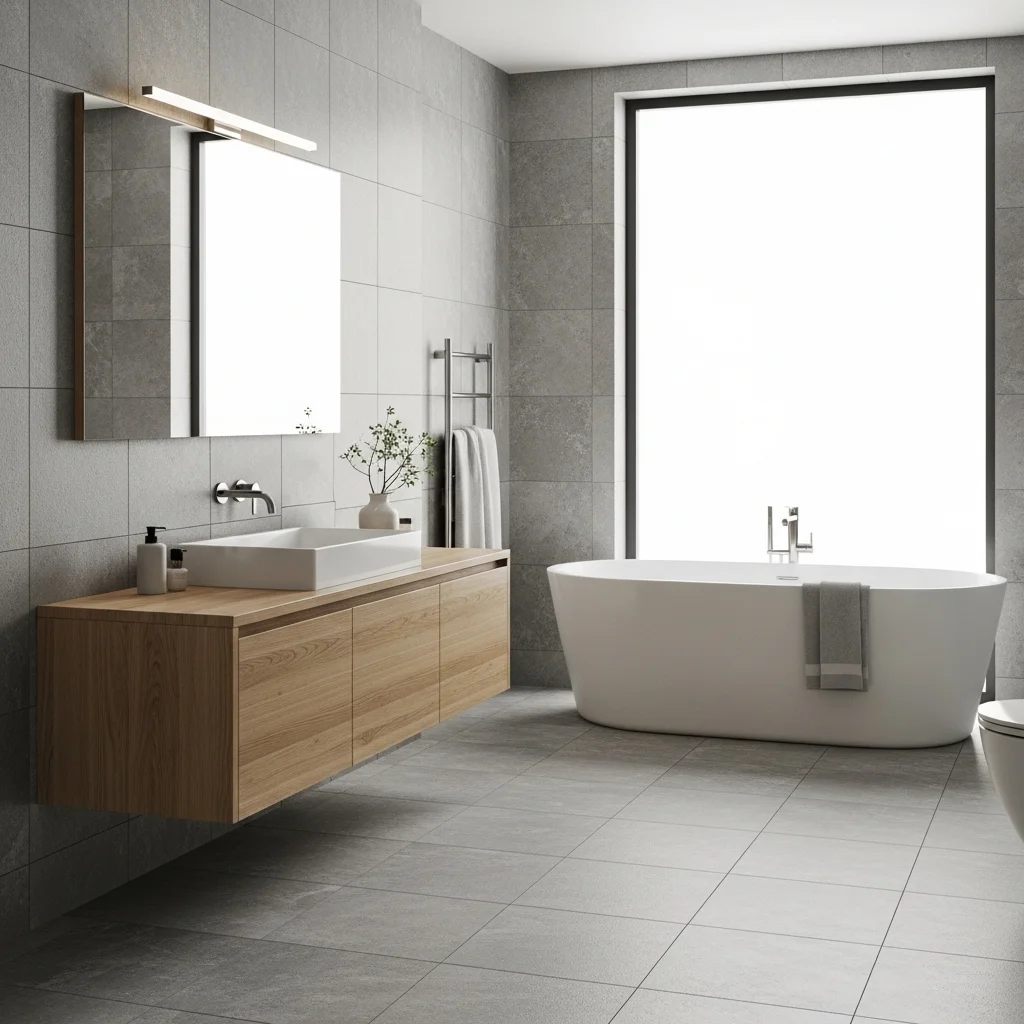
Large format tiles reduce grout lines and create a smoother, more seamless appearance. This helps to visually expand the space, making small bathrooms appear larger. Stone or porcelain tiles in soft, neutral shades work particularly well. Large tiles also emphasize simplicity and provide a clean backdrop for other elements, such as wooden vanities or freestanding tubs, enhancing the Japandi aesthetic.
Layer Soft Ambient Lighting
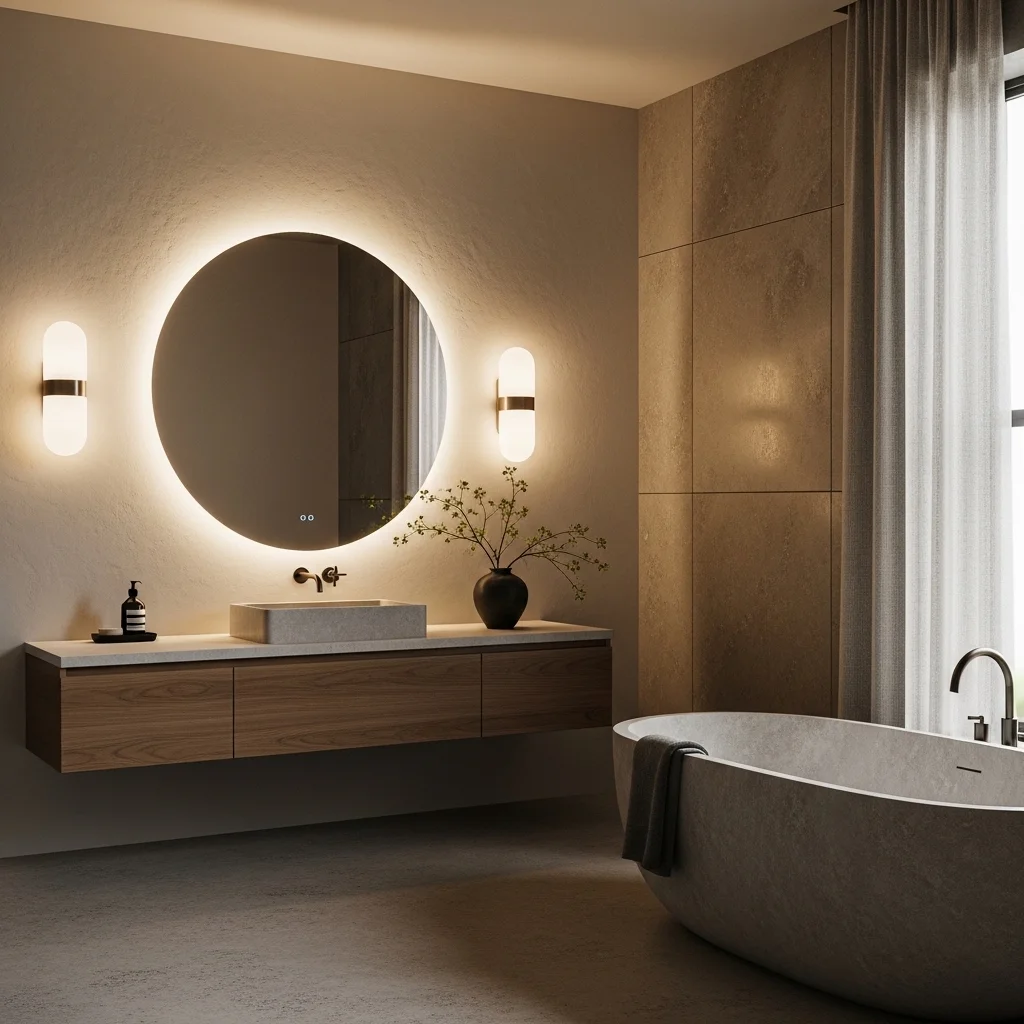
Lighting should be soft, layered, and ambient. Avoid harsh overhead fixtures in favor of a combination of ceiling lights, wall sconces, and backlit mirrors. Warm LED lights complement natural materials and create a spa-like atmosphere. Dimmer switches can adjust the mood, providing brighter illumination for practical tasks and softer light for relaxation. Lighting is not only functional but also central to cultivating serenity in a Japandi bathroom.
Maximize Natural Light
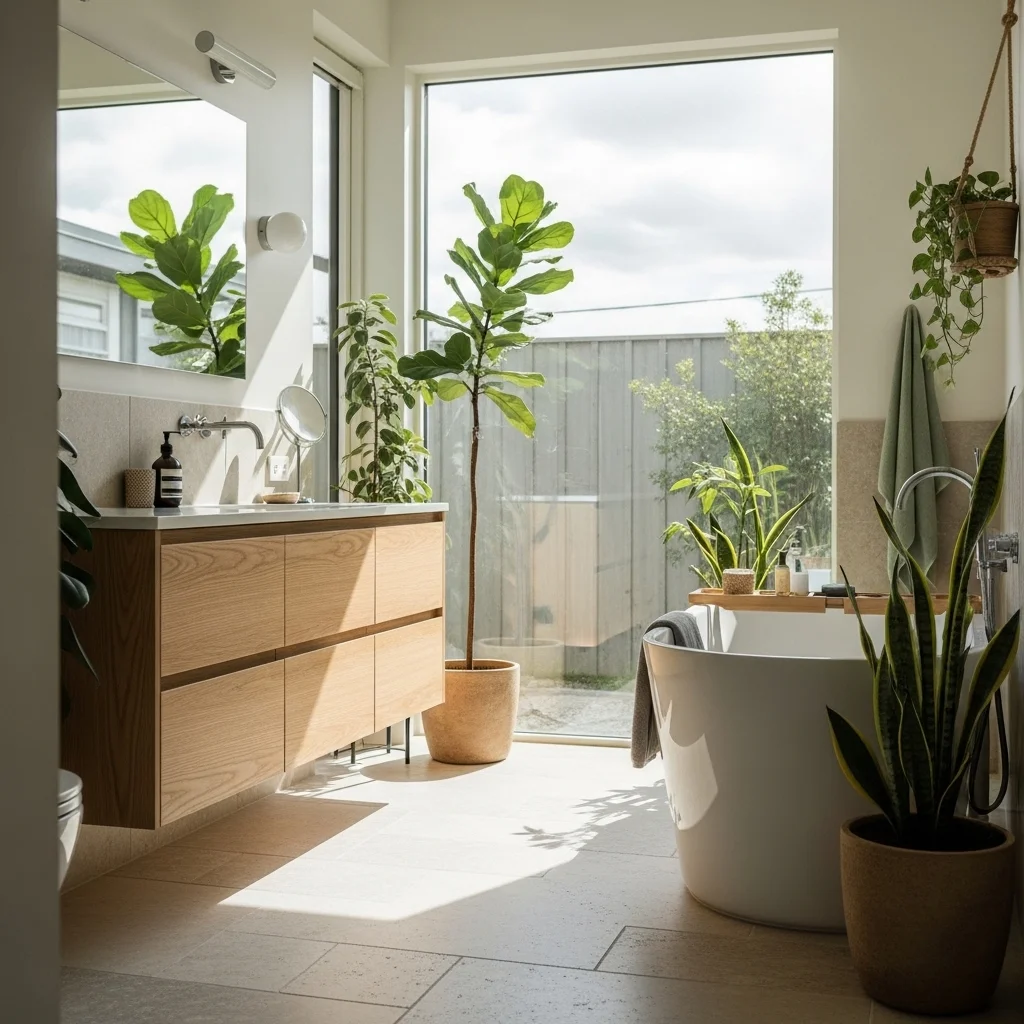
Natural light is essential in Japandi bathrooms. Windows, skylights, or frosted glass panels allow daylight to flood the space, highlighting the textures of wood, stone, and plaster. Daylight also improves mood and helps regulate circadian rhythms, contributing to a restorative environment. For privacy, consider translucent blinds or shoji-style screens that diffuse light gently without blocking it entirely.
Introduce Indoor Greenery
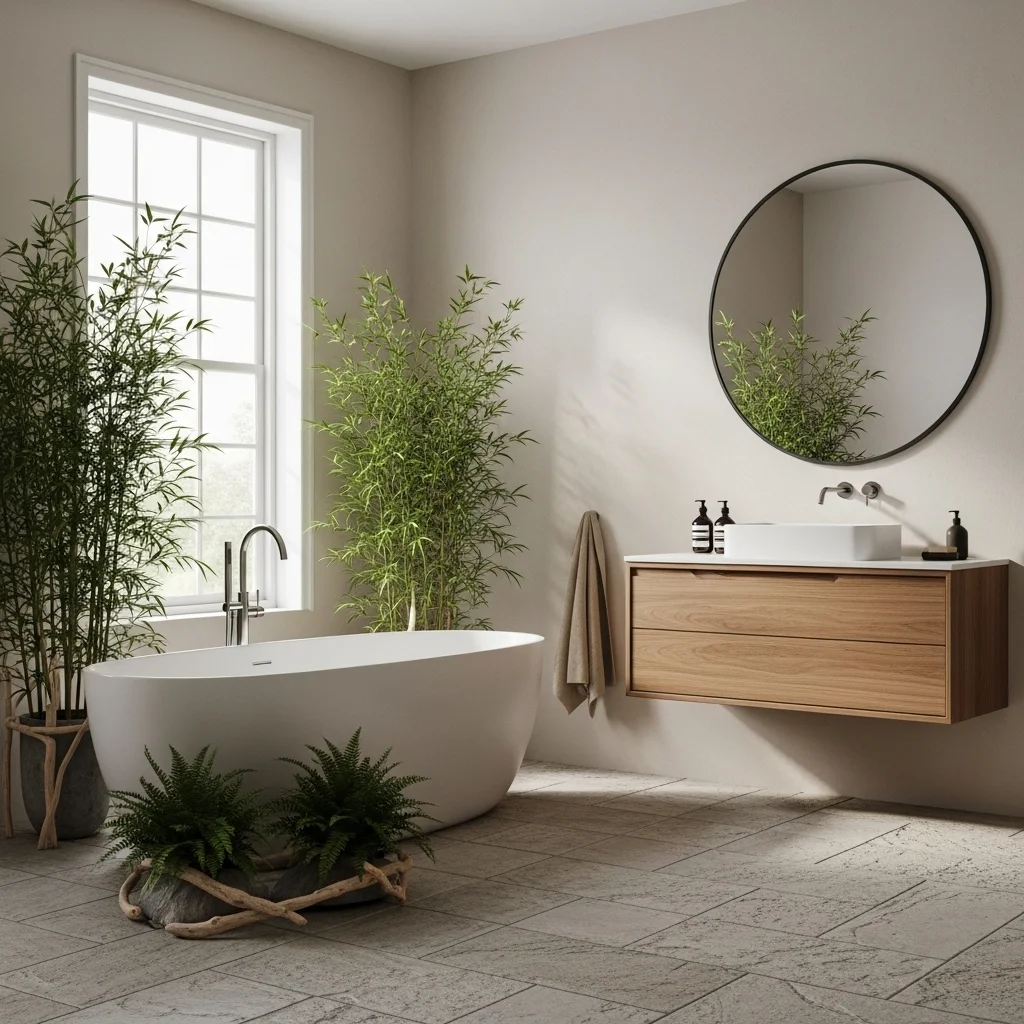
Plants add life, color, and a connection to nature. Bamboo, ferns, and snake plants thrive in humid conditions and require minimal maintenance. Place them near windows, on shelves, or in corners to soften hard surfaces and create a calming visual rhythm. Natural greenery reinforces Japandi principles by bridging the gap between indoor and outdoor spaces.
Incorporate Wabi-Sabi Accents
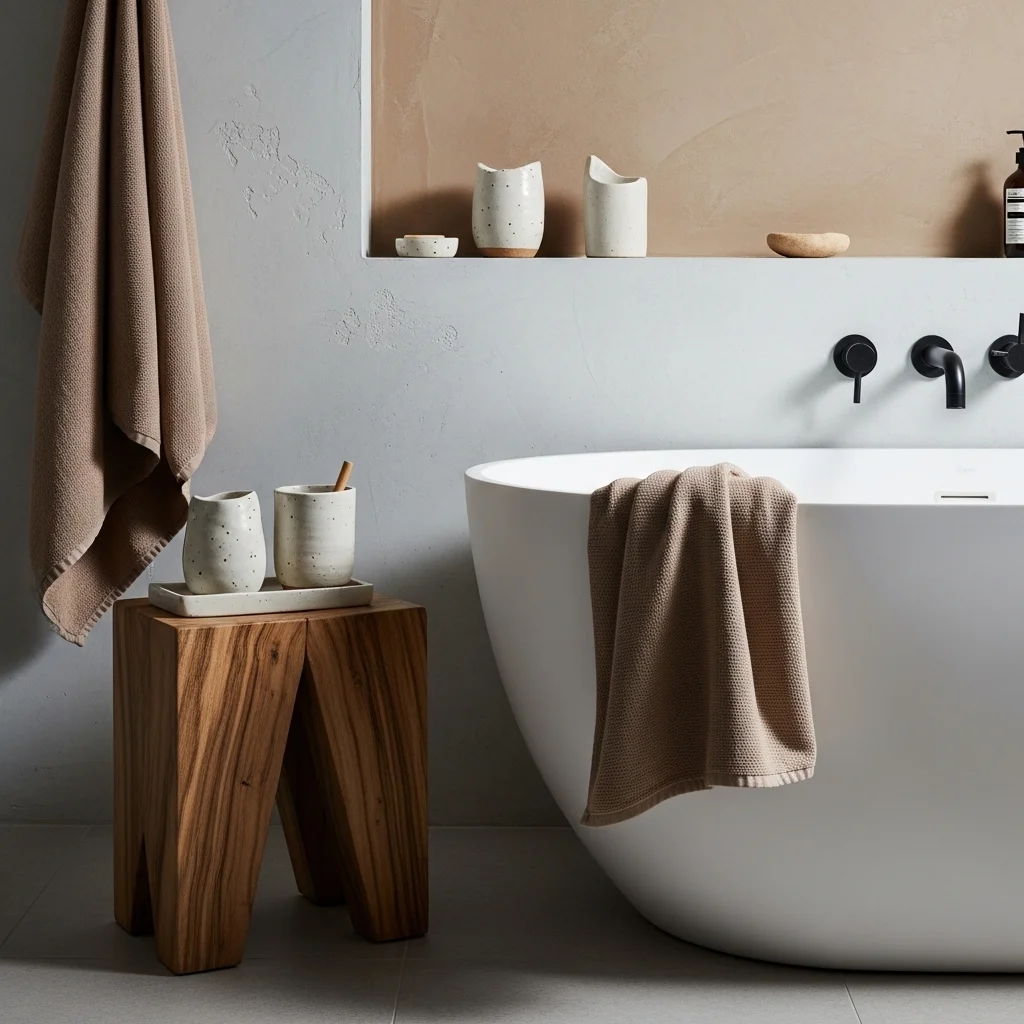
Wabi-sabi embraces imperfection and authenticity. Incorporate handcrafted ceramics, unevenly glazed tiles, or raw-edged wood to introduce this philosophy subtly. These accents create visual interest and a sense of individuality while maintaining a calm, cohesive aesthetic. Wabi-sabi elements remind us that beauty can be found in simplicity, irregularity, and natural textures.
Use Soft Neutral Textiles
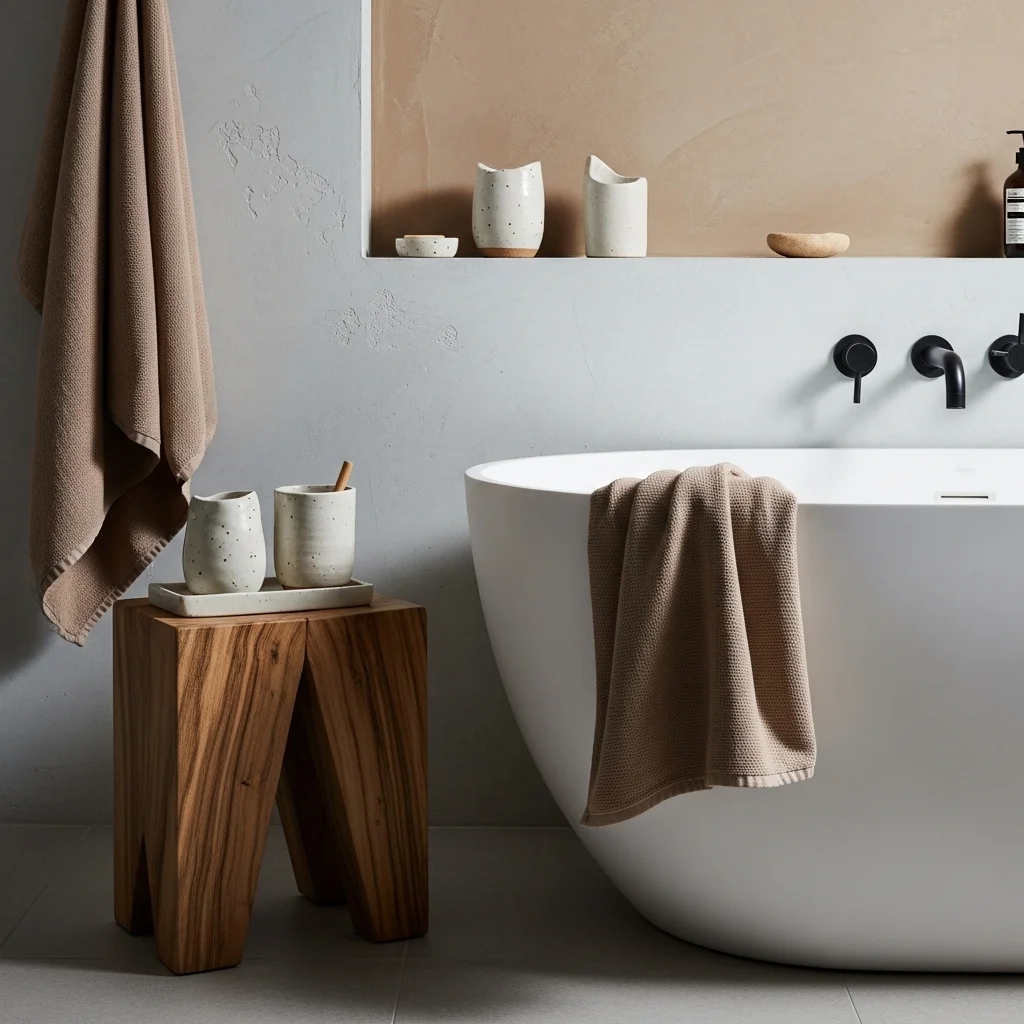
Textiles provide comfort and warmth in a Japandi bathroom. Linen towels, cotton bath mats, and woven baskets in muted tones enhance the sensory experience while maintaining the minimal aesthetic. Choose fabrics with subtle textures rather than bold patterns. This layering of soft textures contrasts with hard surfaces like stone and wood, creating balance and inviting touch.
Add Fluted Wood Panels
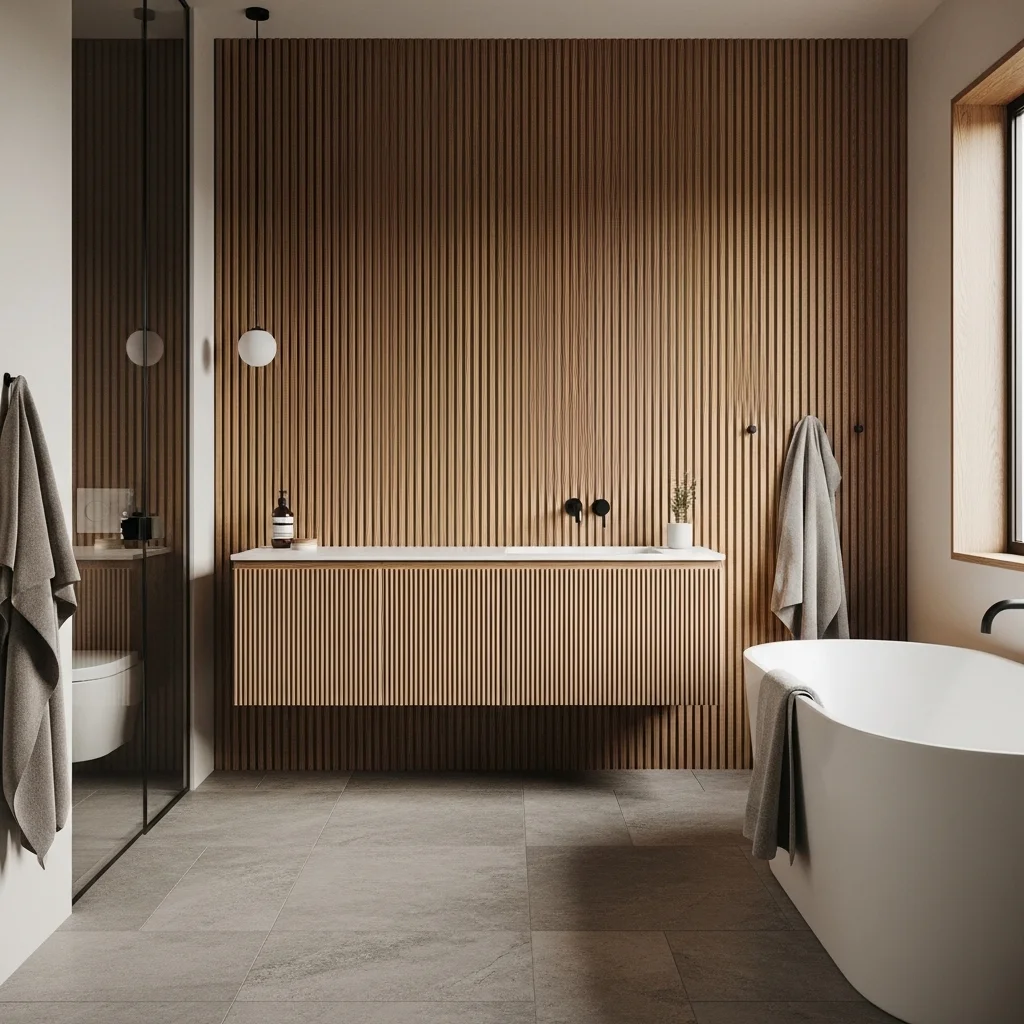
Fluted wood panels on cabinetry or accent walls introduce gentle vertical lines, adding rhythm and dimension to the space. These textures enhance visual interest without overwhelming the minimalist aesthetic. Fluted wood creates shadows and depth, subtly changing with natural light, which reinforces the natural, serene qualities of Japandi design.
Consider Concrete Elements
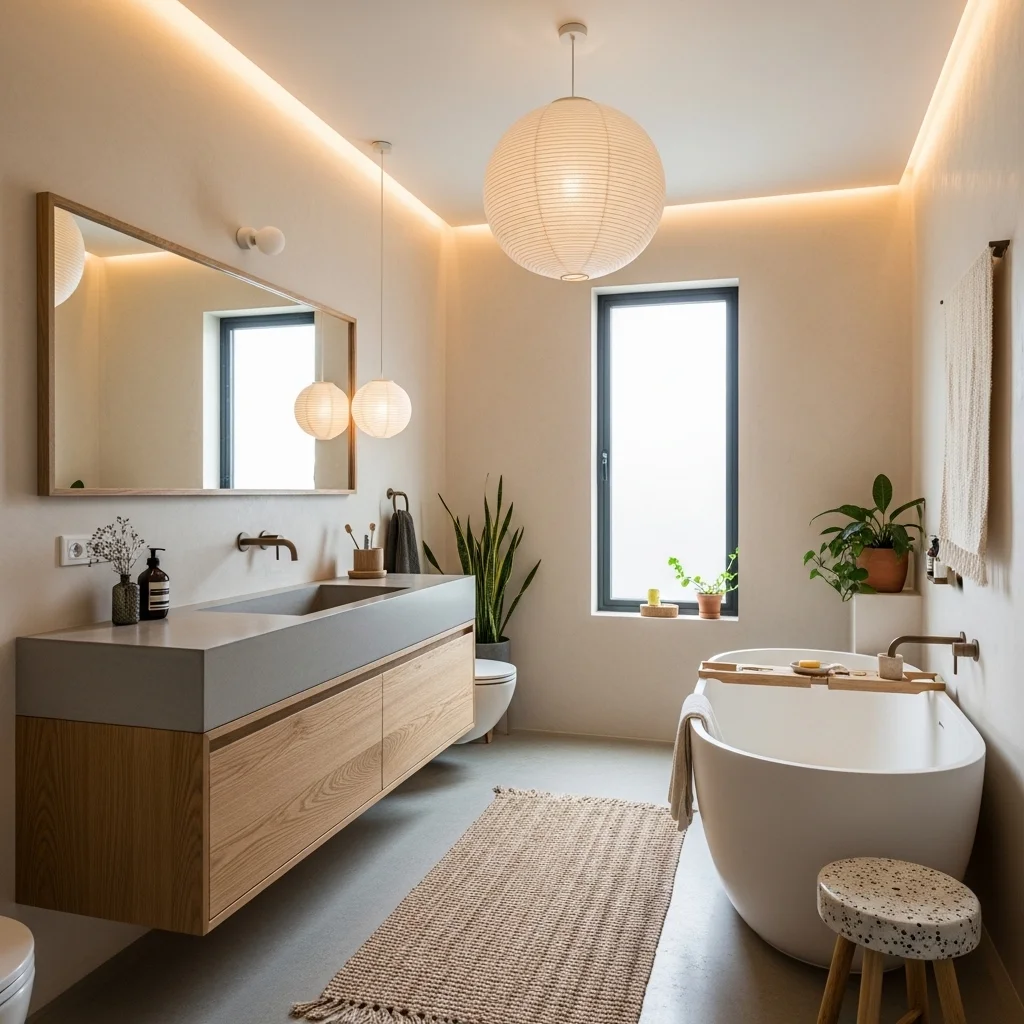
Concrete countertops or sinks bring a contemporary edge while honoring natural materiality. Their raw, unfinished surface contrasts beautifully with wood and soft textiles, creating a tactile balance. Light gray or beige concrete complements neutral tones and adds subtle texture to the overall design. Concrete can also be molded into freestanding basins or integrated shelving for a cohesive, minimalist look.
Install Wall-Mounted Faucets
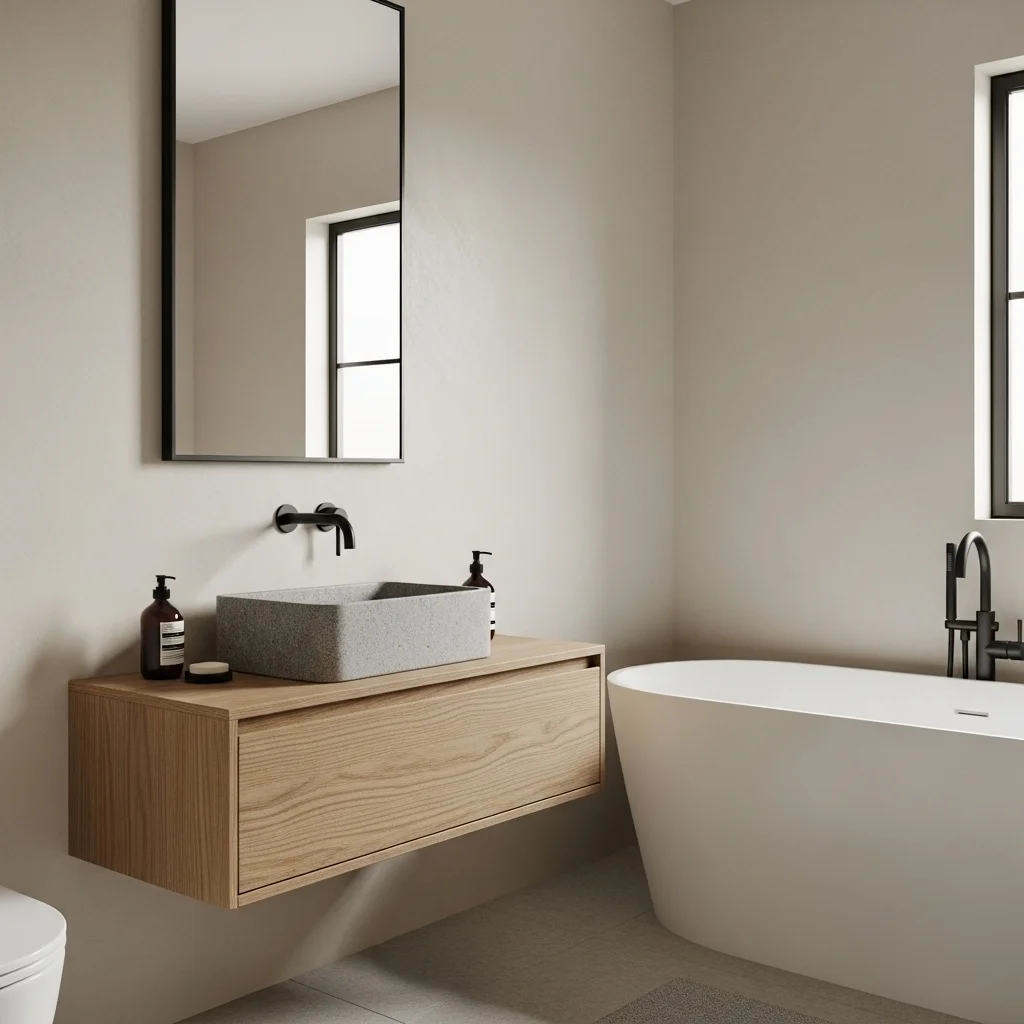
Wall-mounted faucets maintain clean lines and free up countertop space. They contribute to the minimalist feel while enhancing usability. Combining these with stone or concrete sinks elevates the aesthetic, creating a refined and uncluttered look. Wall-mounted options also allow for easy cleaning and maintenance, which supports both functionality and visual calm.
Integrate Shoji-Inspired Dividers
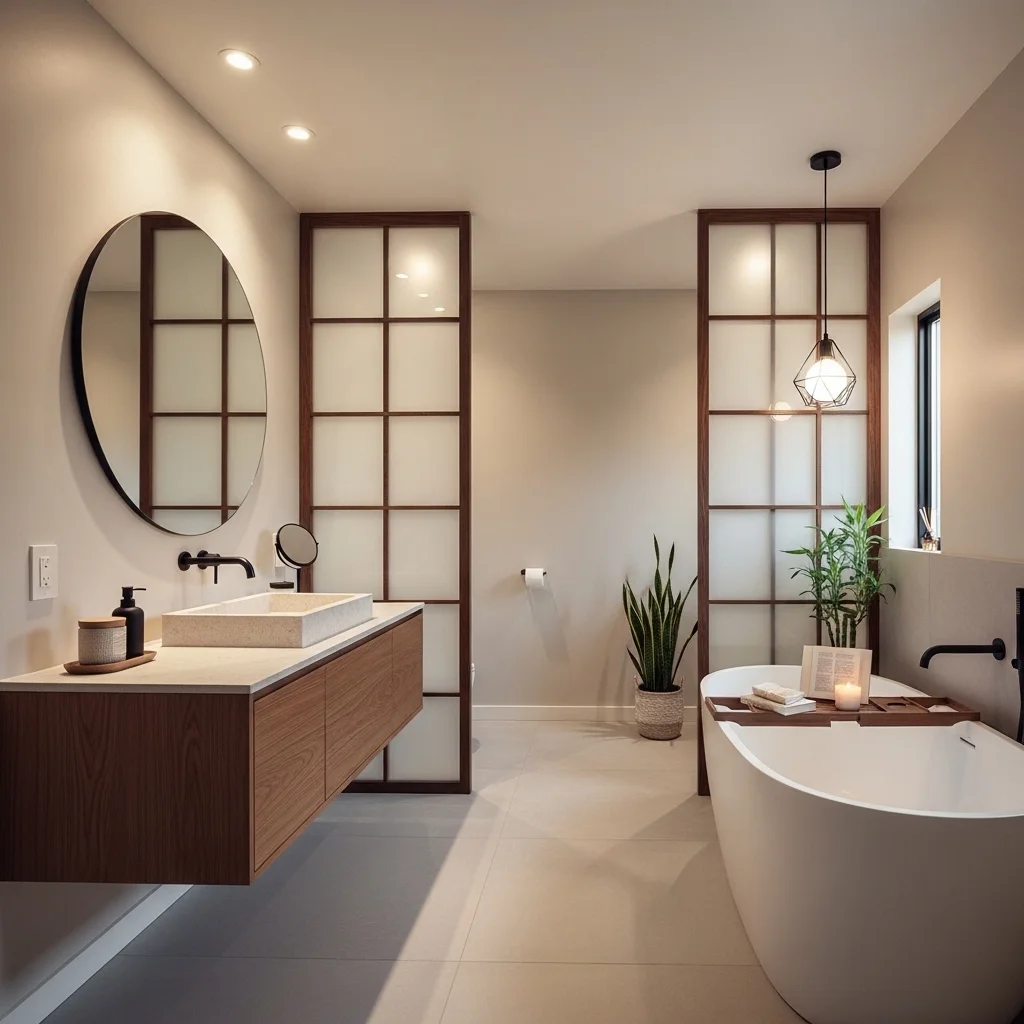
Shoji-inspired screens or frosted glass panels provide privacy while diffusing light softly. They evoke traditional Japanese interiors and add architectural interest. Lightweight, translucent partitions allow you to divide zones without compromising openness. Shoji-inspired elements also enhance the meditative quality of the space, emphasizing harmony and calm.
Maintain a Balanced Color Contrast
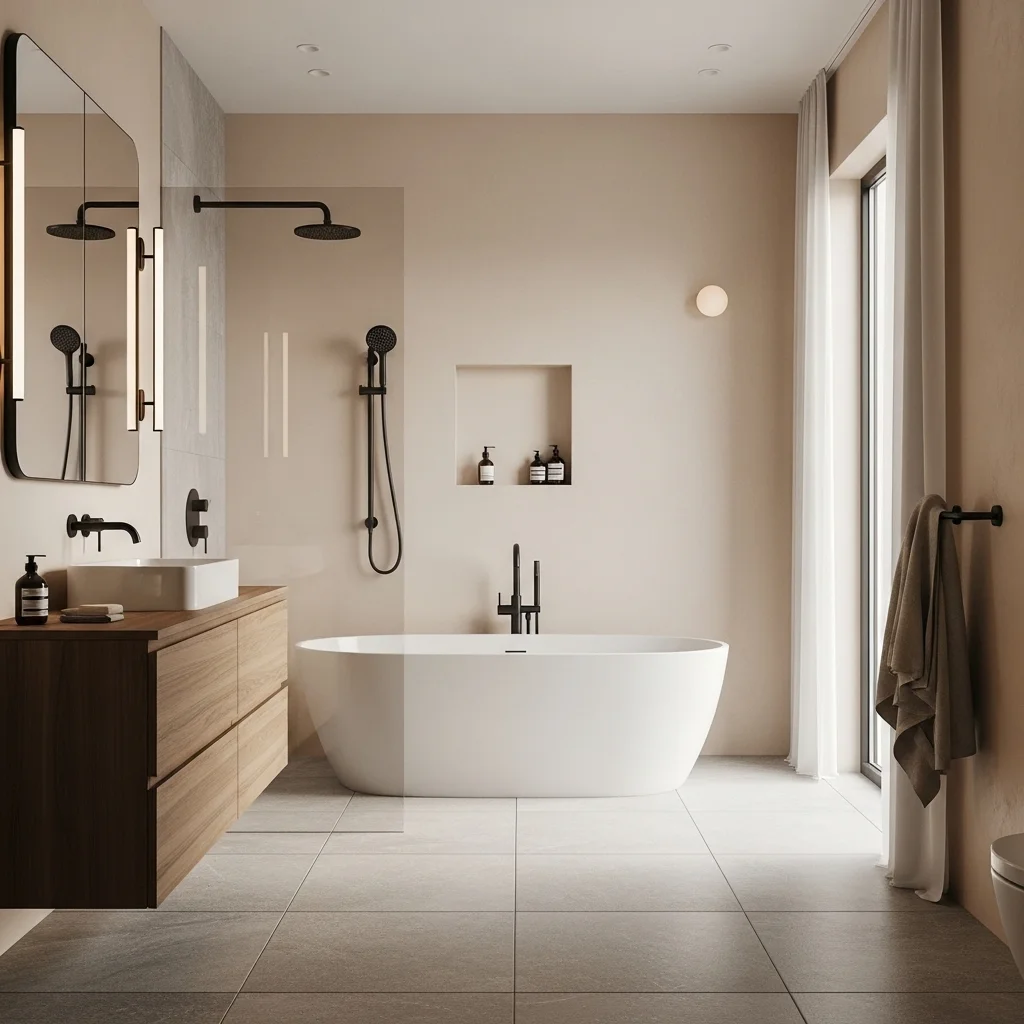
While soft neutrals dominate, introducing darker wood tones, charcoal accents, or matte black fixtures creates grounding contrast. Balance is essential: the contrast should feel intentional and harmonious rather than dramatic. Properly applied, these elements guide the eye, create focal points, and enhance the perception of depth.
Create a Dedicated Relaxation Corner
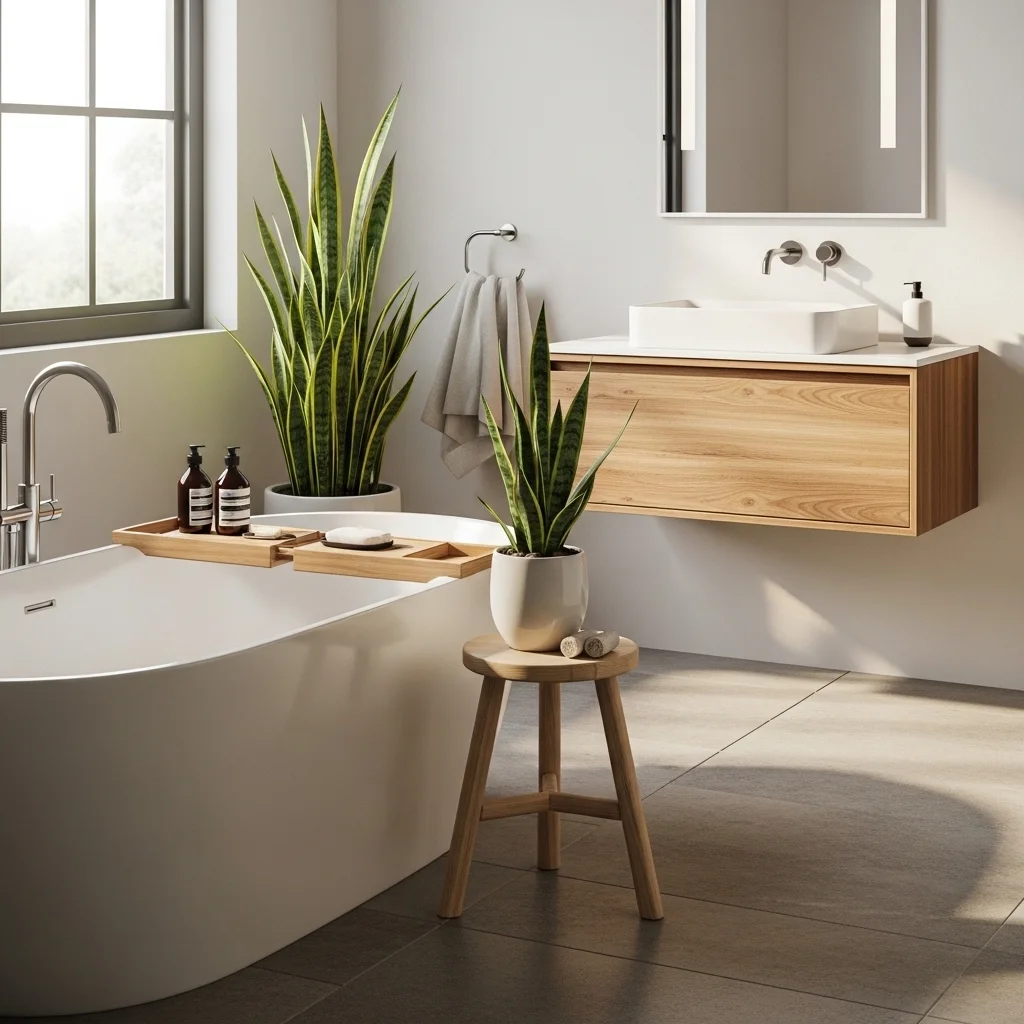
Incorporate a small wooden stool or bench near the tub to encourage slow, mindful bathing. This functional addition allows you to sit comfortably, place bath accessories, or simply pause and enjoy the serene environment. A dedicated relaxation corner reinforces the Japandi focus on intentional living and mindful moments within your daily routine.
Focus on Thoughtful Simplicity
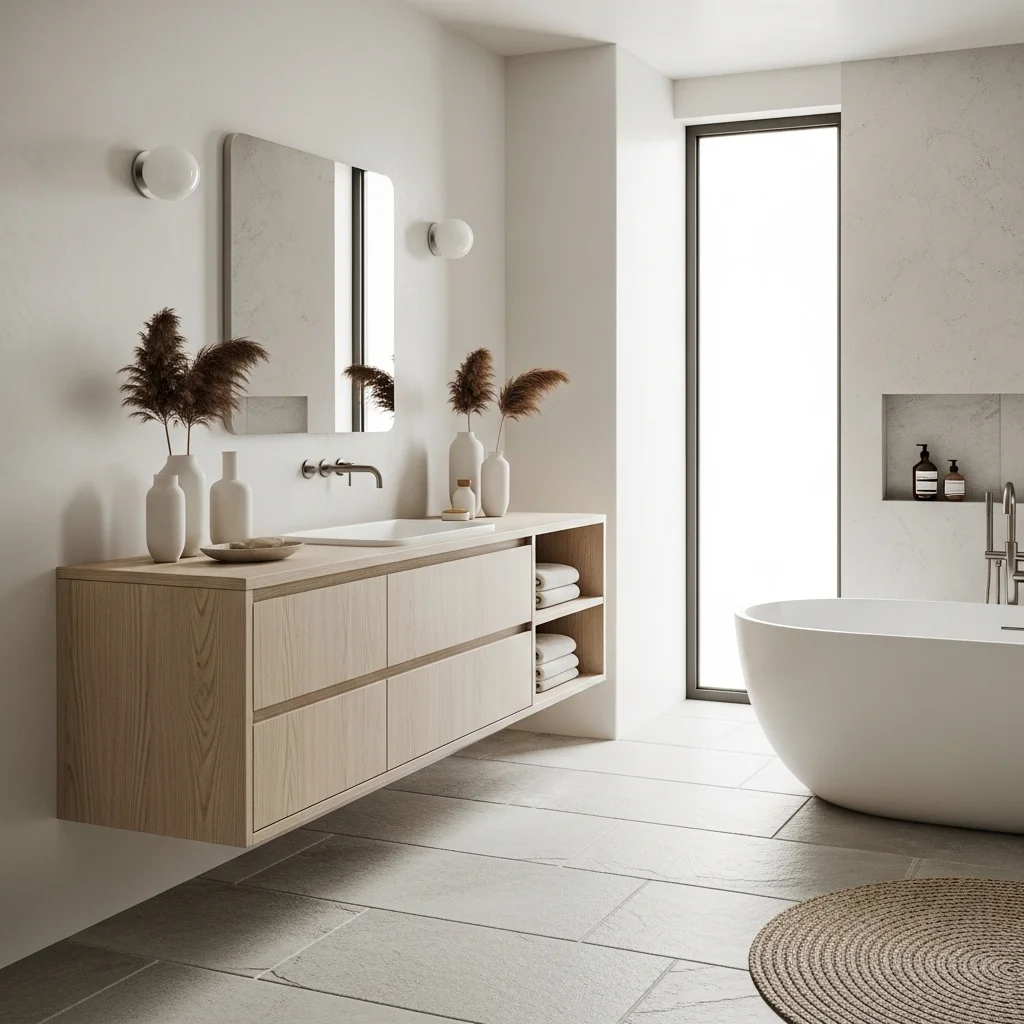
At its core, Japandi design emphasizes thoughtful simplicity. Remove anything that does not enhance function or serenity. Every material, fixture, and accessory should serve a purpose and contribute to calm. By prioritizing quality, natural beauty, and intentional design, your bathroom becomes a timeless sanctuary where simplicity is luxurious and restorative.
Japandi bathrooms are more than a design choice; they are a lifestyle statement. Through the thoughtful combination of Japanese restraint and Scandinavian warmth, these spaces create a sanctuary where every element—from wood and stone to light and greenery—contributes to serenity. By implementing these 23 ideas, you can design a bathroom that is elegant, calming, and perfectly aligned with nature.
FAQs
What defines Japandi bathroom design?
Japandi bathroom design is a blend of Japanese minimalism and Scandinavian simplicity, focusing on natural materials, neutral colors, and uncluttered layouts that promote tranquility and functionality.
Can wood be used safely in a bathroom?
Yes, provided it is properly treated or water-resistant. Sealing or using naturally durable species ensures longevity in humid environments.
Which colors suit a Japandi bathroom?
Neutral earth tones like beige, cream, taupe, and soft gray create a soothing and cohesive atmosphere, complementing natural wood and stone materials.
How can small bathrooms adopt Japandi style?
Use floating vanities, maximize natural light, and incorporate recessed or hidden storage. Large tiles and minimal décor also help create an open, uncluttered feel.
Are plants necessary in a Japandi bathroom?
While not mandatory, indoor plants reinforce the connection to nature, enhance serenity, and complement natural materials, making the space feel alive and balanced.