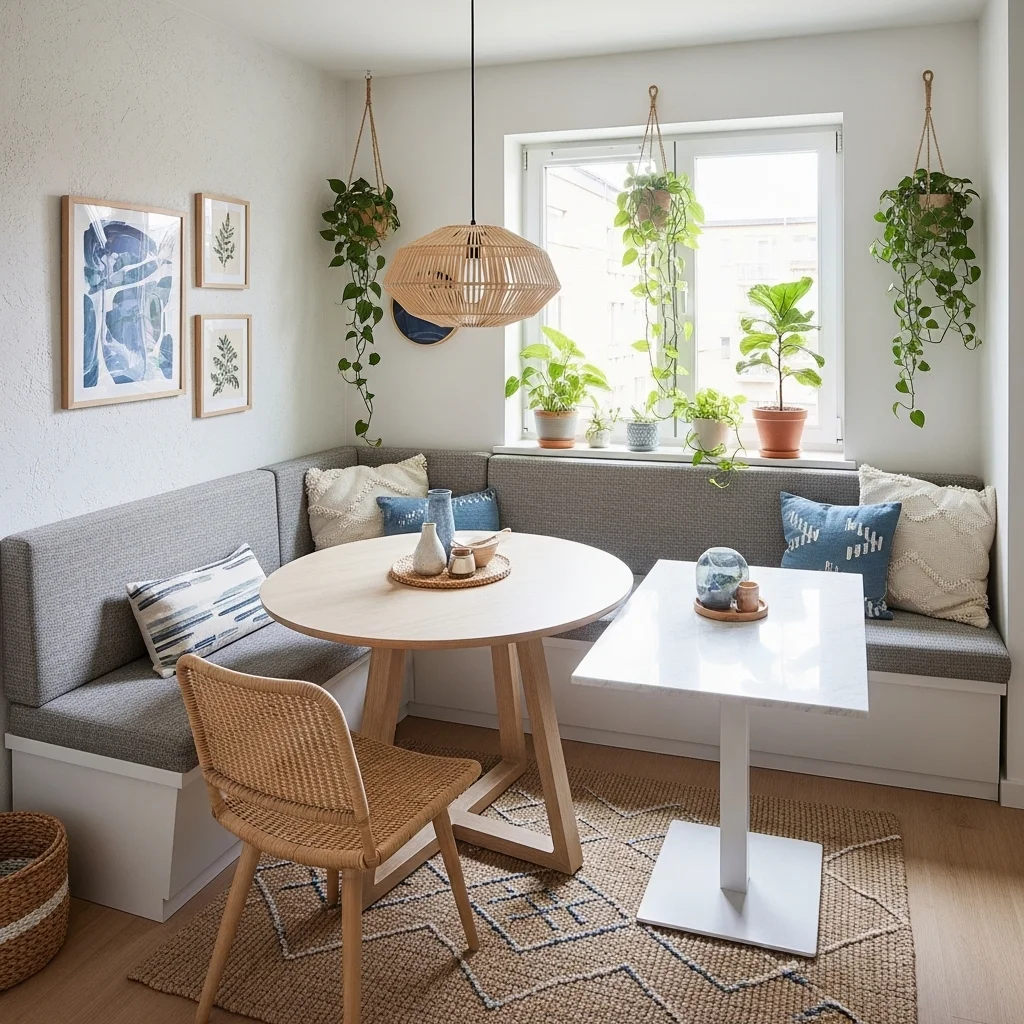
The popularity of the corner dining nook has grown steadily as more people embrace smaller homes, open-plan apartments, and the general philosophy that a space should work harder rather than simply grow larger. Whether your available corner sits inside a busy kitchen, beside a living room window, or in an awkward alcove that has never quite found its purpose, there is an idea in this article that will help you see it differently.
Built-In Banquette Seating
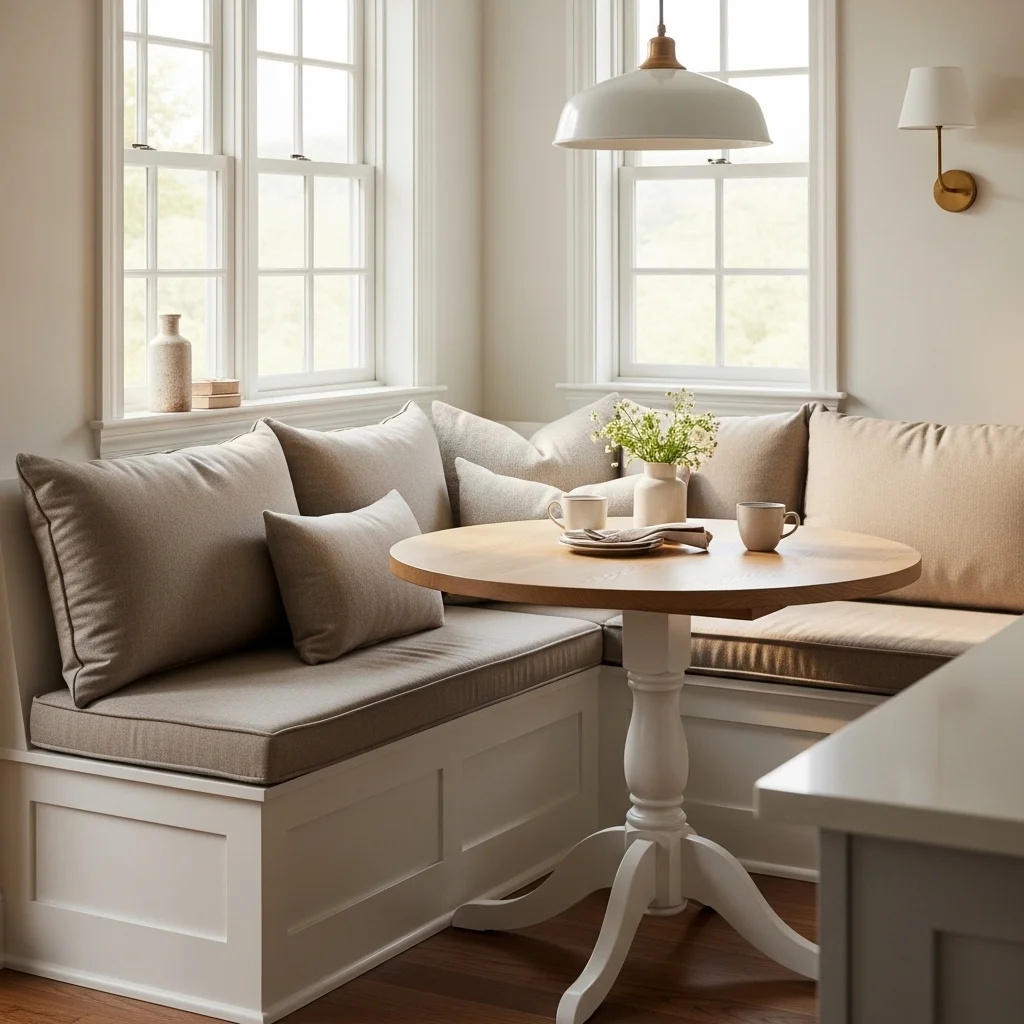
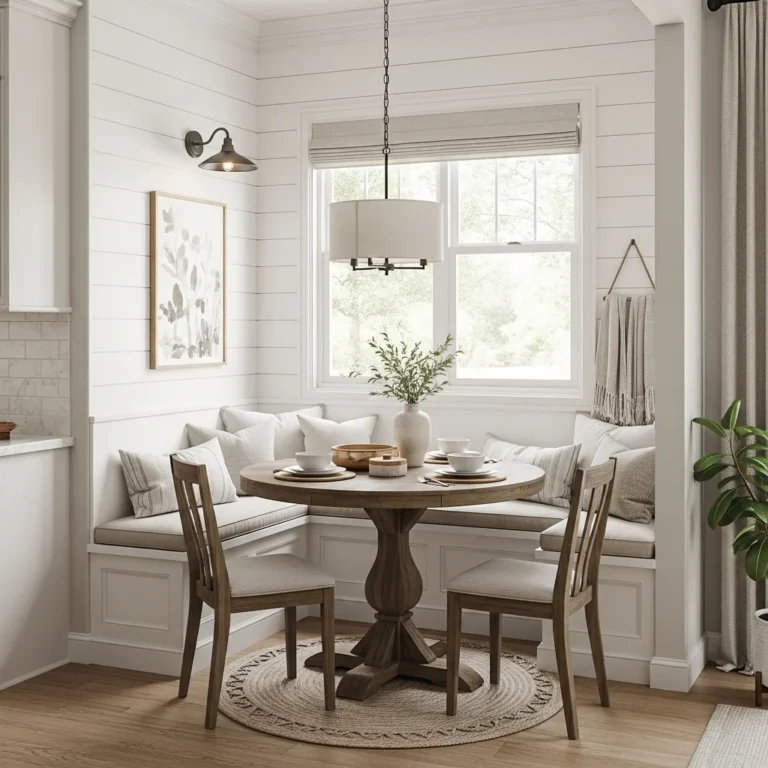
A built-in banquette is widely regarded as the gold standard of corner dining nook design, and for good reason. It presses seating flush against two walls simultaneously, eliminating the wasted space that freestanding chairs require when pulled out from a table.
L-Shaped Bench with a Rectangular Table
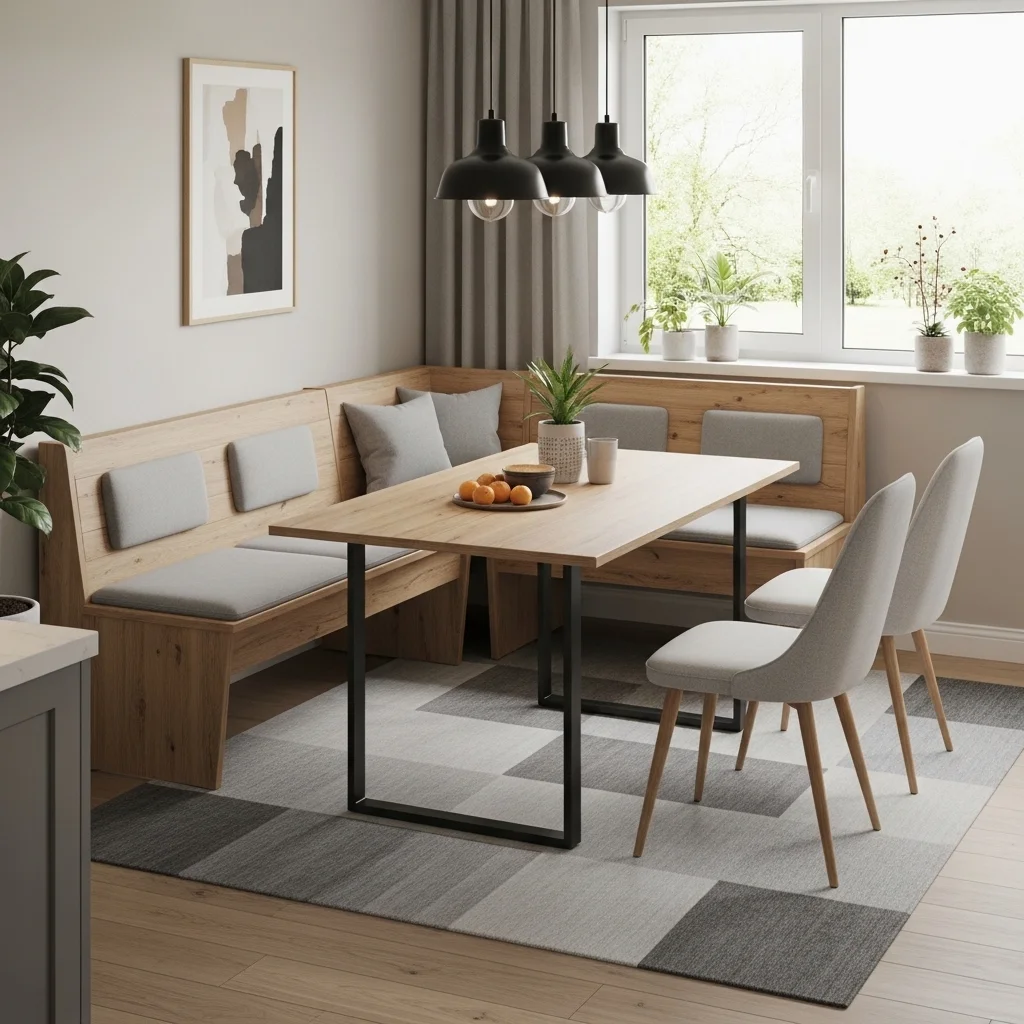
An L-shaped bench configuration is one of the most practical layouts available for a corner dining nook because it wraps the seating around two walls and leaves the remaining sides open for additional chairs or free movement. Paired with a rectangular table, it creates a generous dining area that works equally well for a quick weekday breakfast and a weekend gathering with guests. The bench can be custom built or assembled from modular units available through most home furnishing retailers.
Round Table for Better Flow
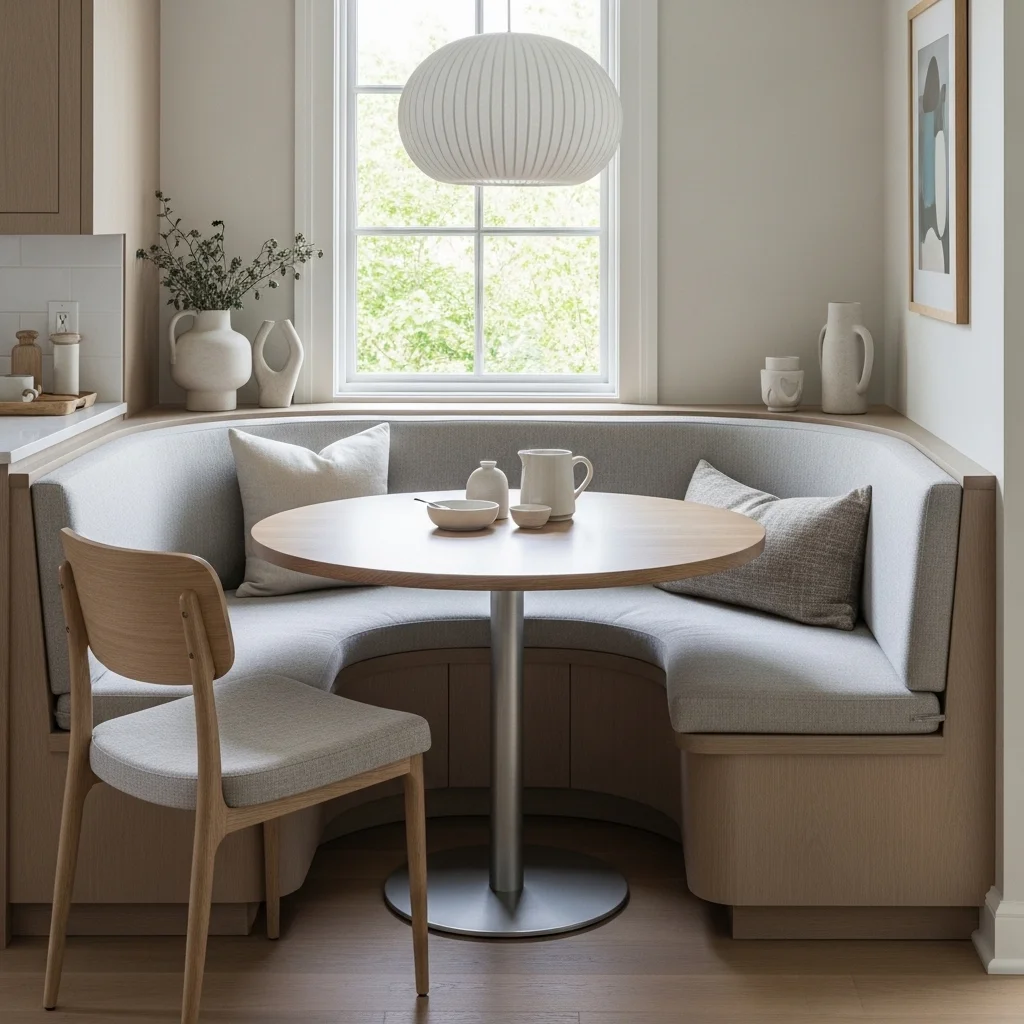
Choosing a round table for a corner dining nook is one of the most reliable small-space decisions a homeowner can make. Round tables have no sharp corners to navigate around, which improves the flow of movement in a tight space and makes the overall layout feel less rigid and more welcoming. Placed in a corner with a wraparound bench or two curved chairs on the open sides, a round table creates a naturally intimate dining environment that encourages conversation and connection across the meal.
Window-Side Corner Nook
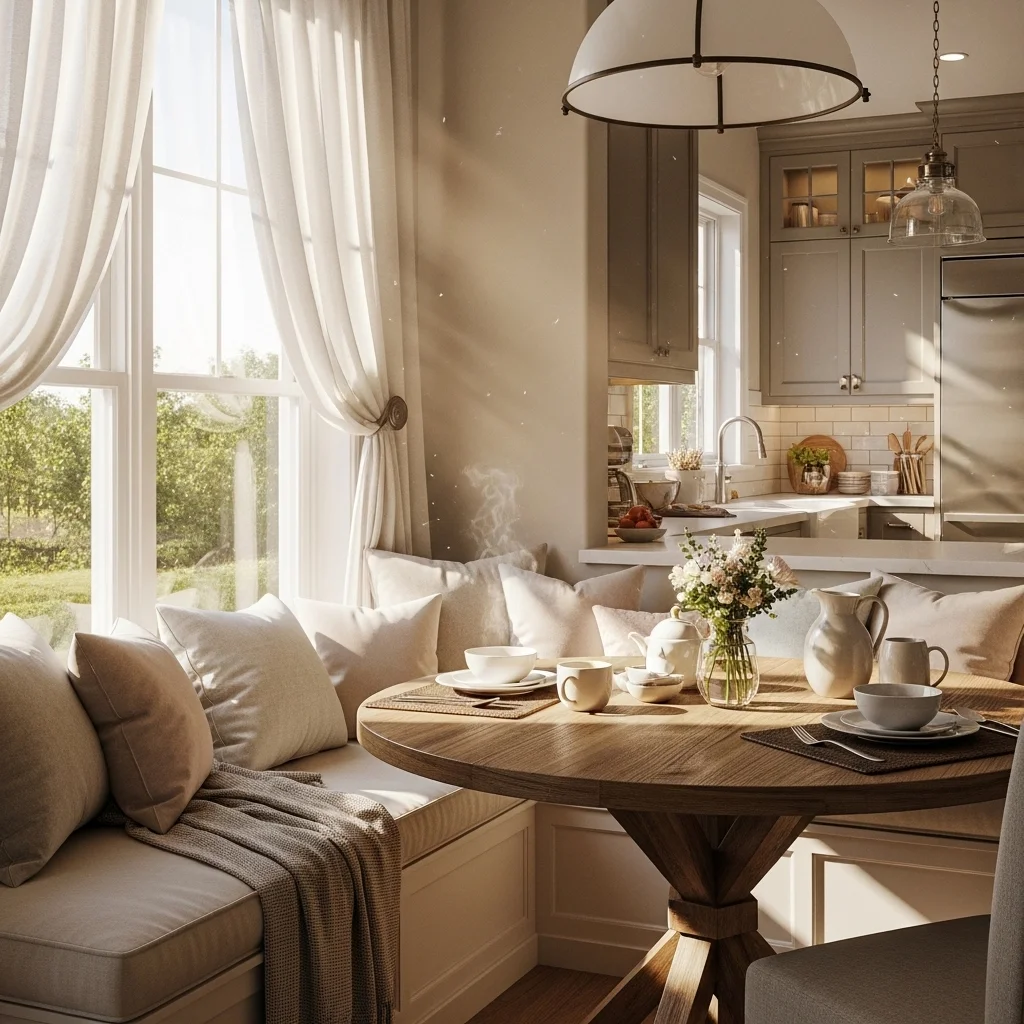
Positioning a corner dining nook beside or directly within a window is one of the most universally appealing configurations in residential interior design. Natural light transforms the experience of eating, making meals feel more relaxed and more connected to the rhythm of the day outside. A corner window setup that allows daylight to fall across the table surface from two directions is particularly effective, creating a bright and inviting zone that draws household members naturally toward it at mealtimes.
Booth-Style Corner Setup
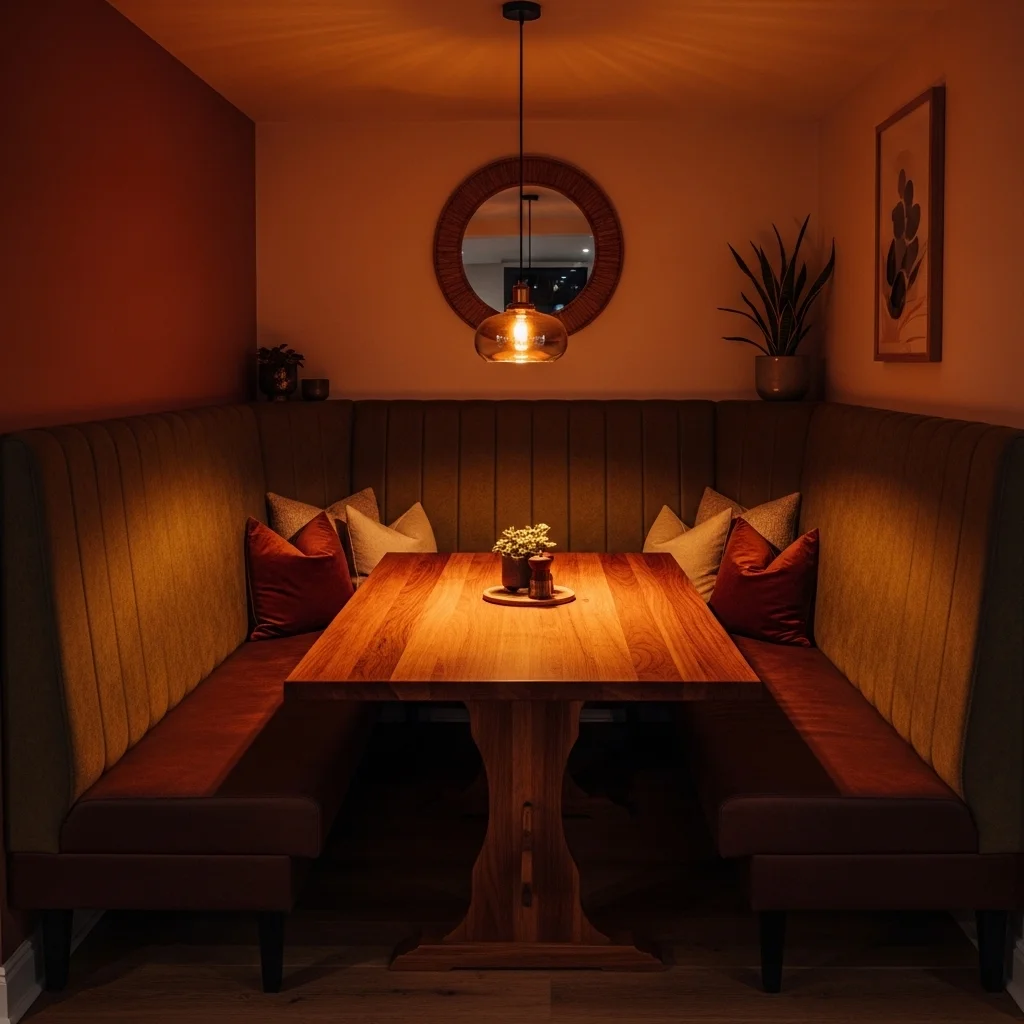
A booth-style corner dining nook captures the comfortable, enclosed feeling of a favorite restaurant or neighborhood cafe and brings it directly into the home. This setup typically features high-backed bench seating on two sides with a table between, creating a defined and self-contained dining space that offers both comfort and a sense of privacy. The enclosed nature of the booth makes it particularly appealing for families, as it naturally keeps young children contained and comfortable during meals.
Hidden Storage Under the Seat
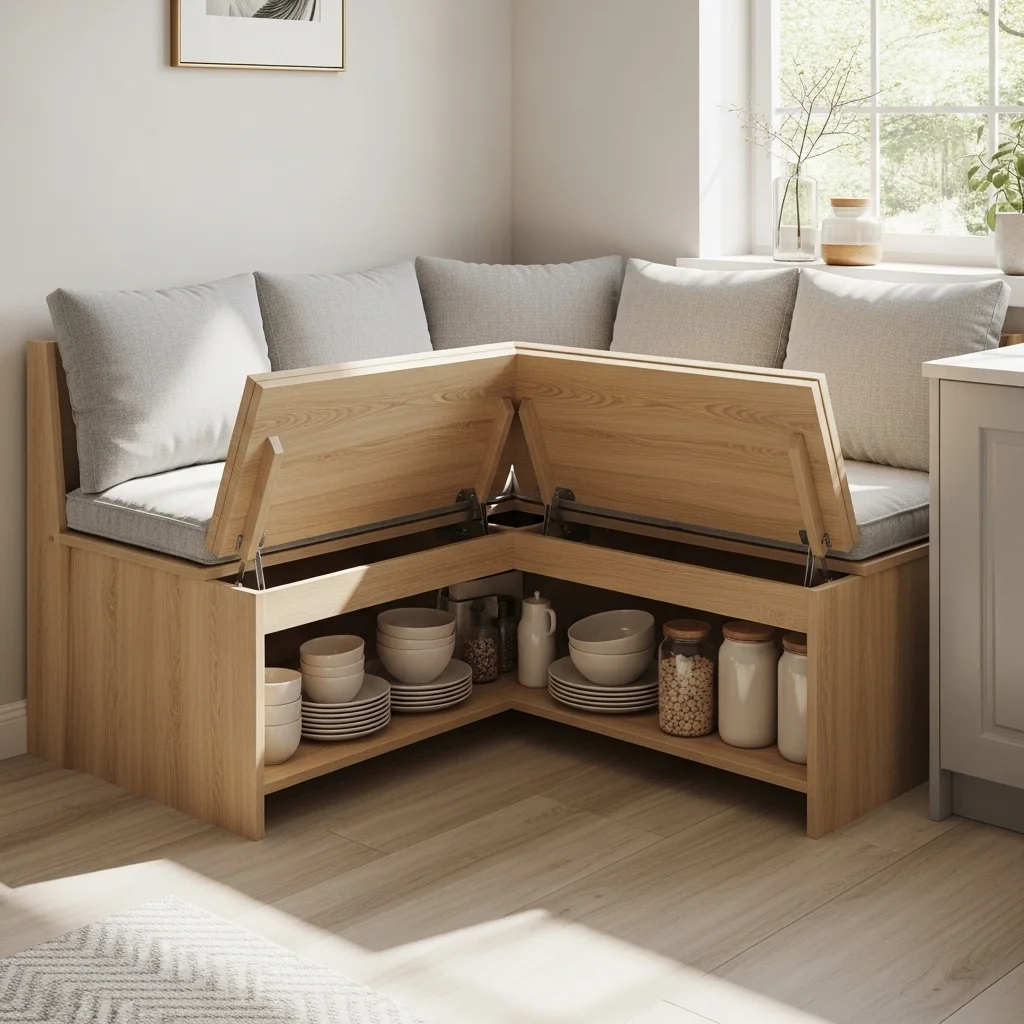
Storage is one of the most practical benefits that a corner dining nook offers over a standard dining table and chairs arrangement, and it is an opportunity that should never be wasted. Under-seat storage can be incorporated through lift-up bench lids, pull-out drawers, or hinged panels, each offering a slightly different kind of access and capacity. In a kitchen where pantry and cabinet space is always in short supply, a bench that can hold placemats, napkins, table runners, serving boards, and even small appliances represents a meaningful gain in domestic organization.
Drop-Leaf Table for Flexible Dining
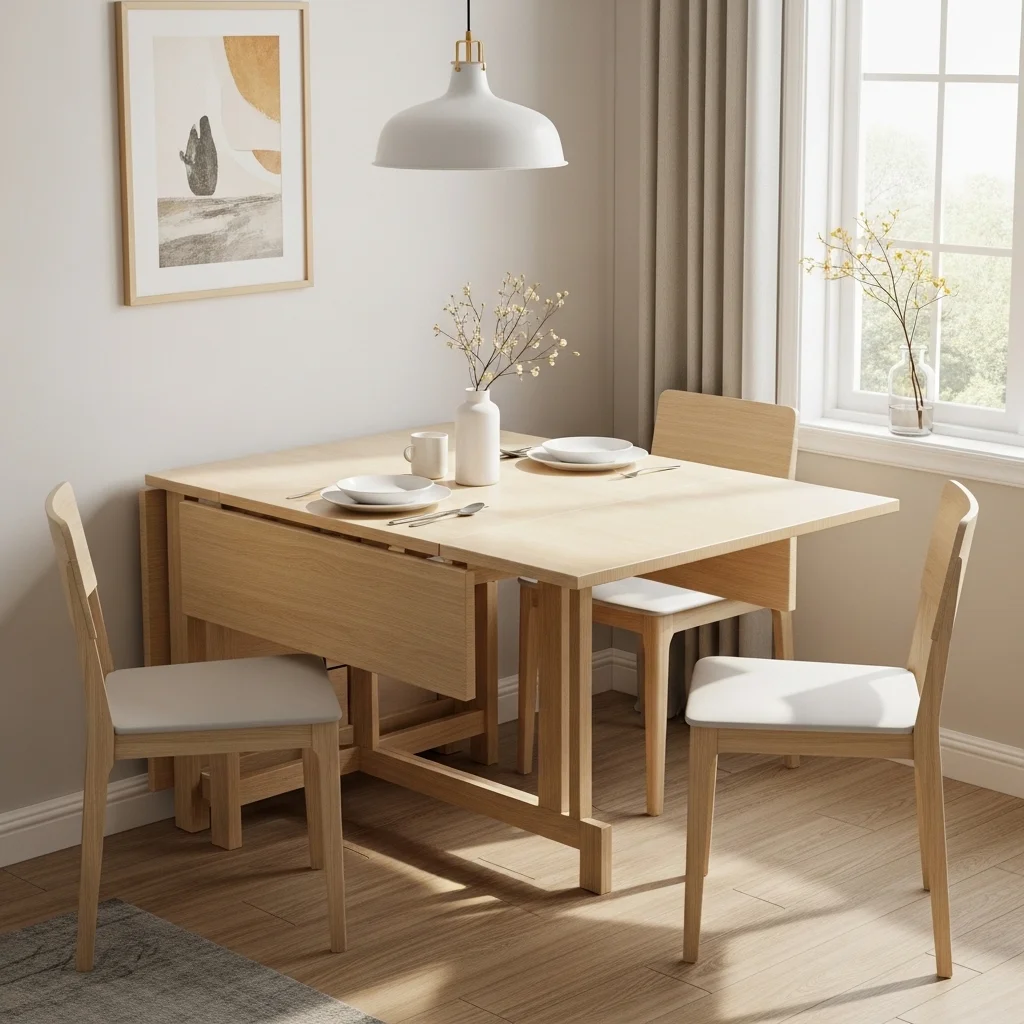
A drop-leaf table is one of the most underused pieces of furniture in small-space design, and it works brilliantly in a corner dining nook context. The table can be collapsed to its narrowest configuration against the wall during the day, freeing up floor space for other activities, and then expanded to full dining capacity when a meal is being served. Some drop-leaf designs can accommodate as many as six people when both leaves are raised, which is a remarkable capacity for a piece that occupies almost no space in its folded state.
Farmhouse Style Corner Nook
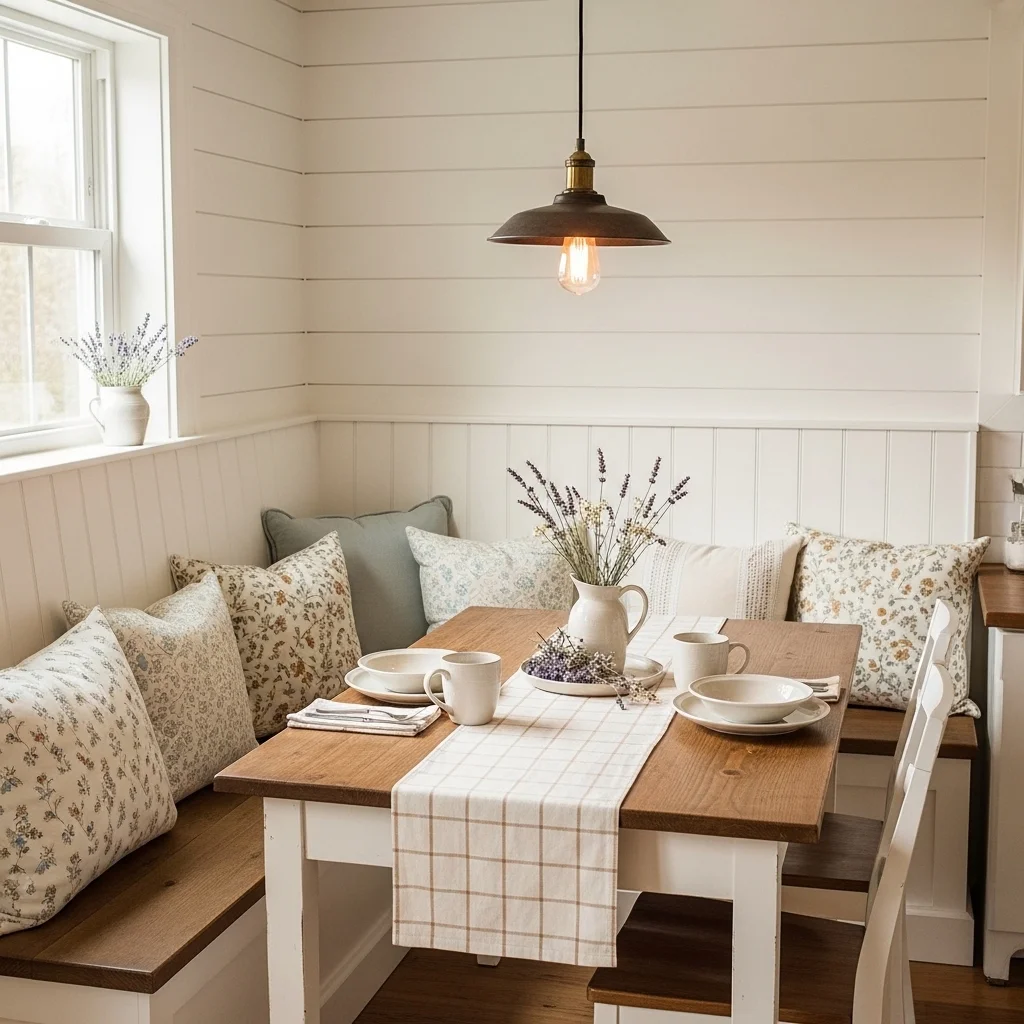
A farmhouse-style corner dining nook brings warmth, character, and a sense of well-worn comfort to any kitchen or dining area. The key elements of farmhouse nook design are natural wood in honest grain and finish, simple sturdy construction, soft textiles in classic patterns such as gingham, grain-sack stripe, or solid homespun linen, and lighting that echoes the utilitarian beauty of vintage agricultural buildings. Together, these elements create a corner that feels like it has always been part of the house rather than recently installed.
Modern Minimalist Corner Nook
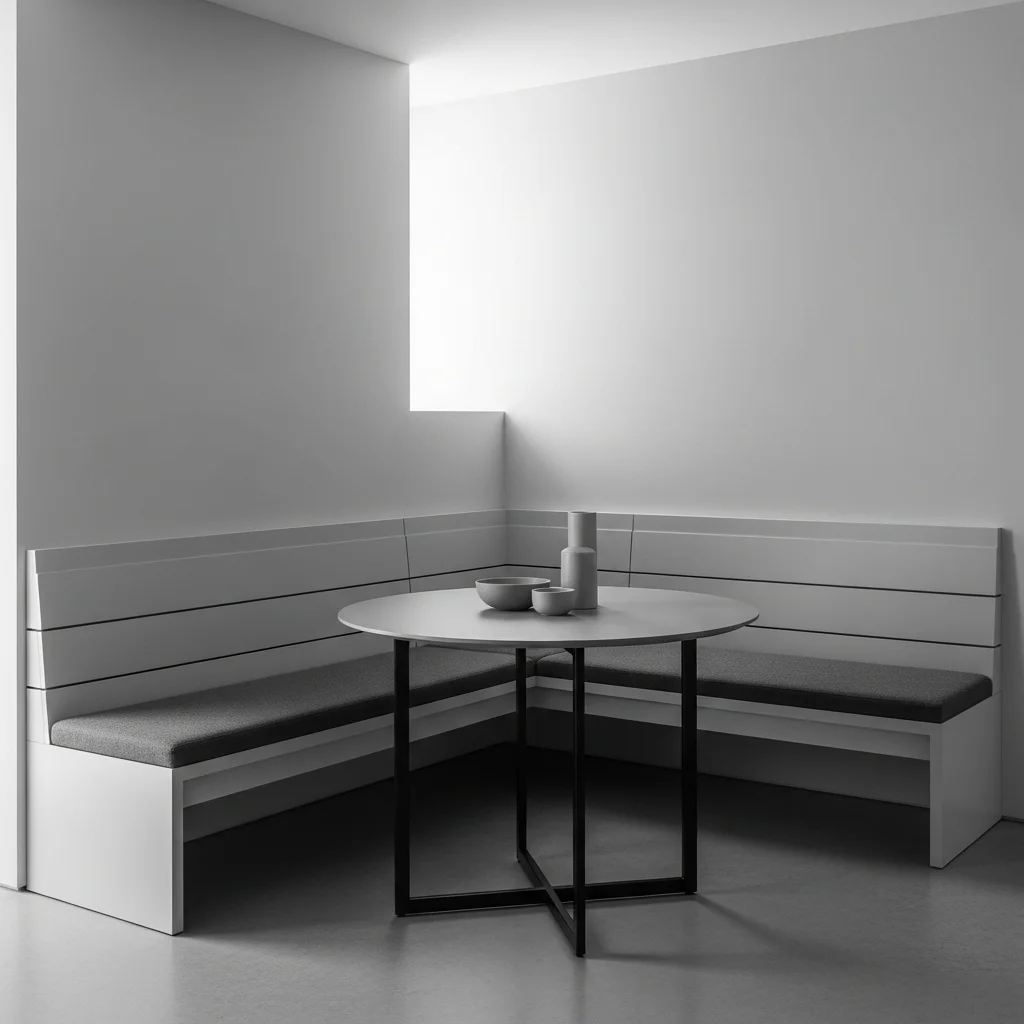
A modern minimalist corner dining nook achieves its effect through restraint: fewer pieces, cleaner lines, and a deliberate economy of color and texture that makes the available space feel larger and more considered than it actually is. The furniture in a minimalist nook is typically low-profile and geometric, with slim table legs, smooth bench surfaces in a single material, and chairs with open backs that do not interrupt the sightlines across the room. The overall impression is one of quiet, confident order.
Industrial Chic Corner Dining Setup
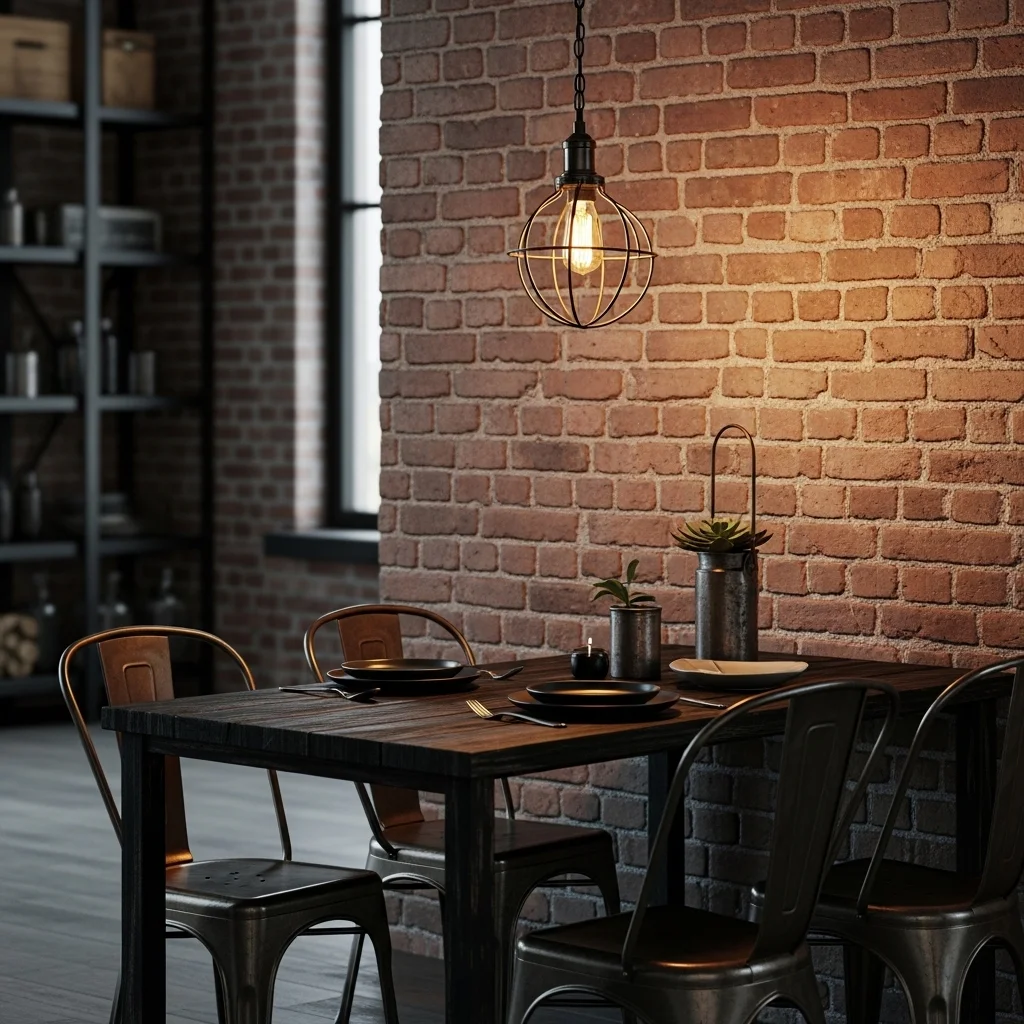
An industrial-style corner dining nook combines raw materials, utilitarian furniture, and statement lighting to create a dining space with genuine personality and edge. Exposed brick or raw concrete walls form the ideal backdrop, but the aesthetic can be achieved equally well with textured paint finishes or brick-effect tiles. A thick-edged table in reclaimed wood or a dark-stained solid timber paired with metal-legged chairs or a steel-framed bench sets the material tone of the space convincingly.
Coastal Corner Nook with Light Tones
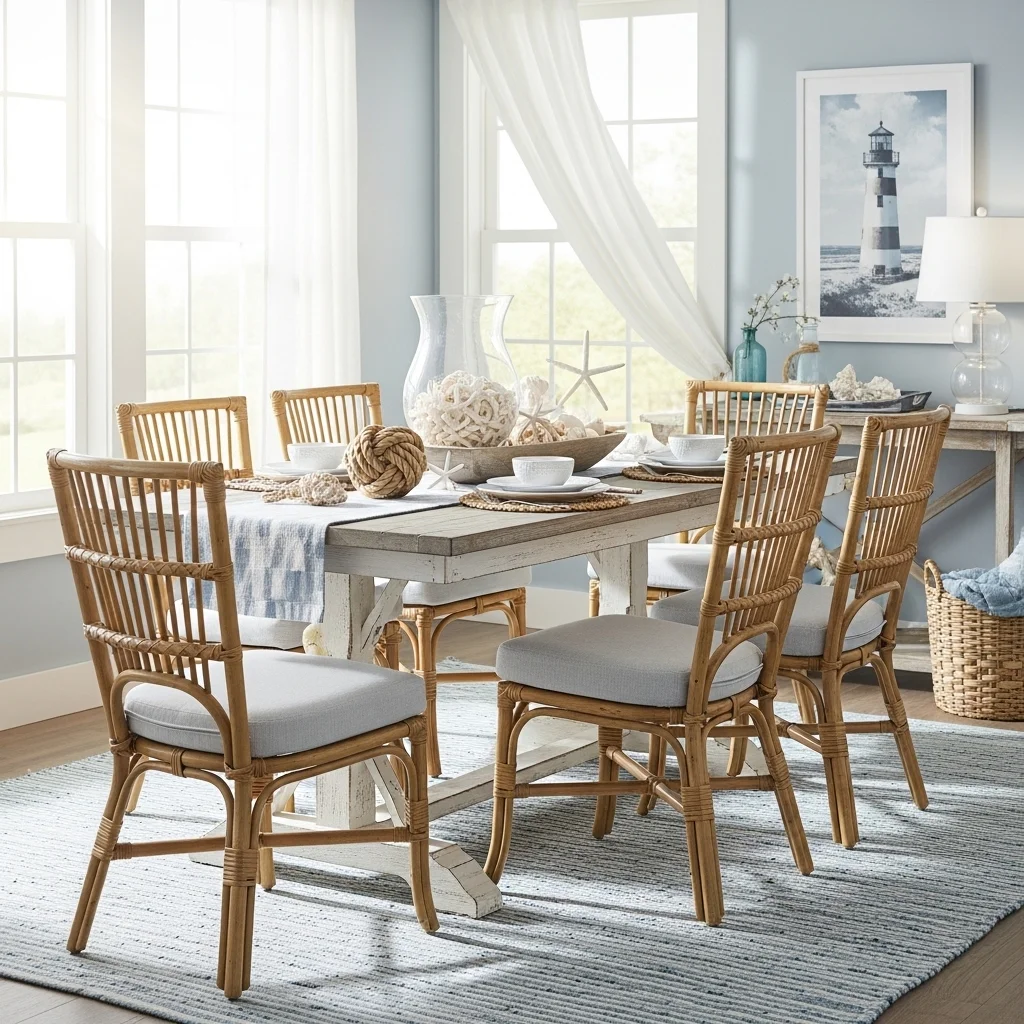
A coastal-inspired corner dining nook translates the relaxed, light-filled quality of seaside living into an interior space through a palette of soft whites, warm sandy tones, and oceanic blues paired with natural materials that suggest a connection to the outdoors. Rattan chairs, a weathered white or natural pine table, linen cushions, and driftwood accessories all contribute to the coastal nook vocabulary. The overall effect is one of unhurried ease, as if the dining corner exists at the intersection of an indoor room and an outdoor veranda.
Bohemian Corner Dining Nook
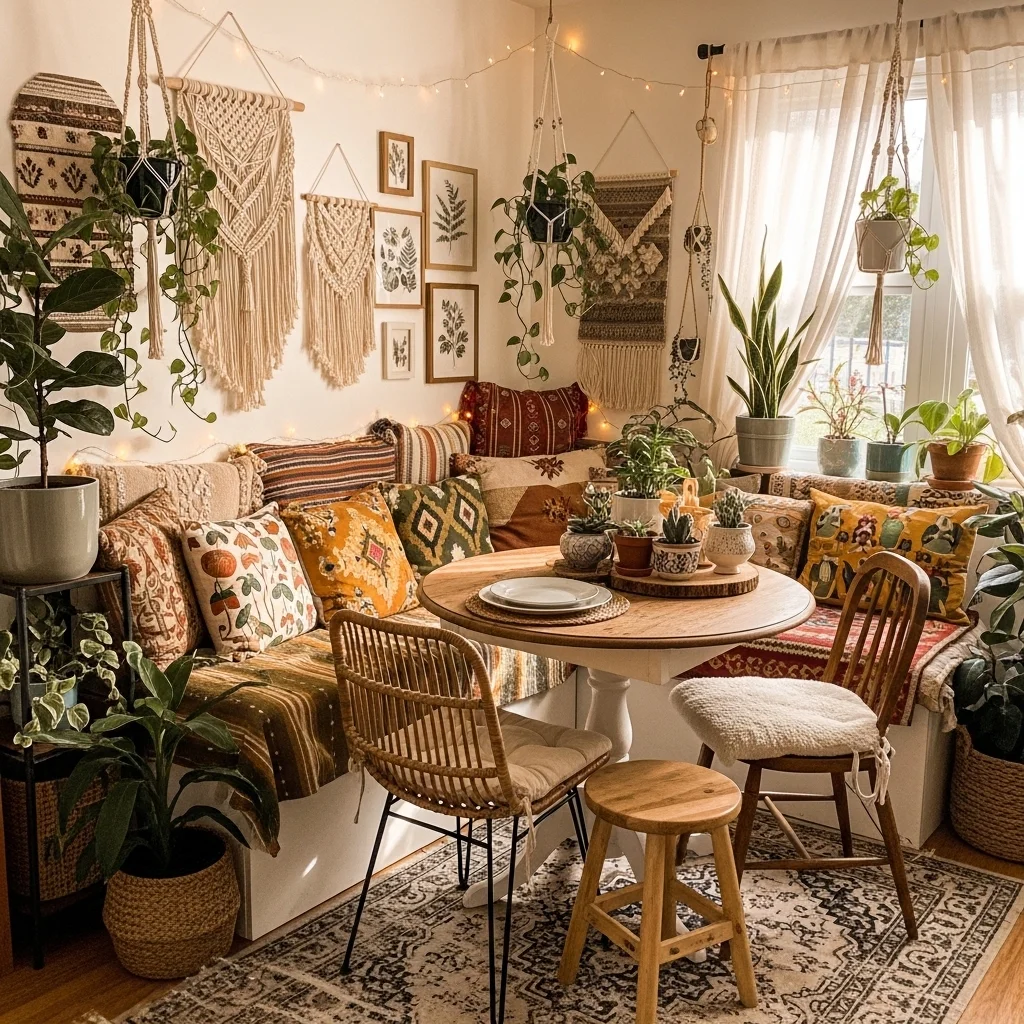
A bohemian corner dining nook celebrates layering, color, pattern, and the collected quality of a space that has been built up over time rather than assembled in a single purchase. Mismatched chairs around a central table, cushions in varied prints and textures, a patterned area rug, macrame wall hangings, and plants in terracotta pots all contribute to the richly layered atmosphere that defines the bohemian aesthetic. The corner becomes a gathering place that reflects personal history and a genuine love of beautiful, diverse objects.
Floating Shelves Beside the Nook
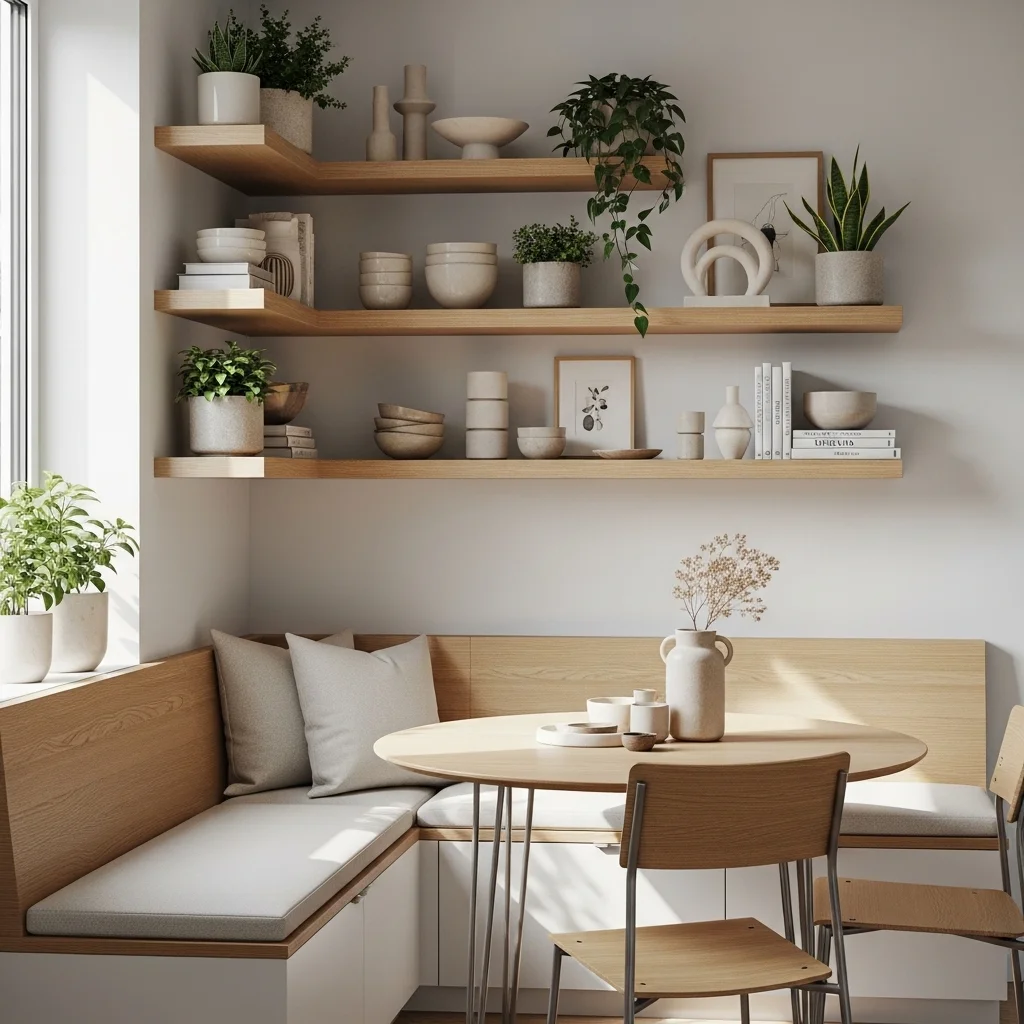
Incorporating floating shelves on the walls adjacent to a corner dining nook extends the functionality and visual interest of the space without consuming any additional floor area. Shelves positioned above or beside the bench provide accessible storage for tableware, glassware, small serving pieces, and decorative objects that bring character to the corner. In a kitchen where cabinet space is limited, these shelves can be genuinely practical workhorses that hold frequently used items within easy reach of the table.
Pendant Lighting as a Nook Anchor
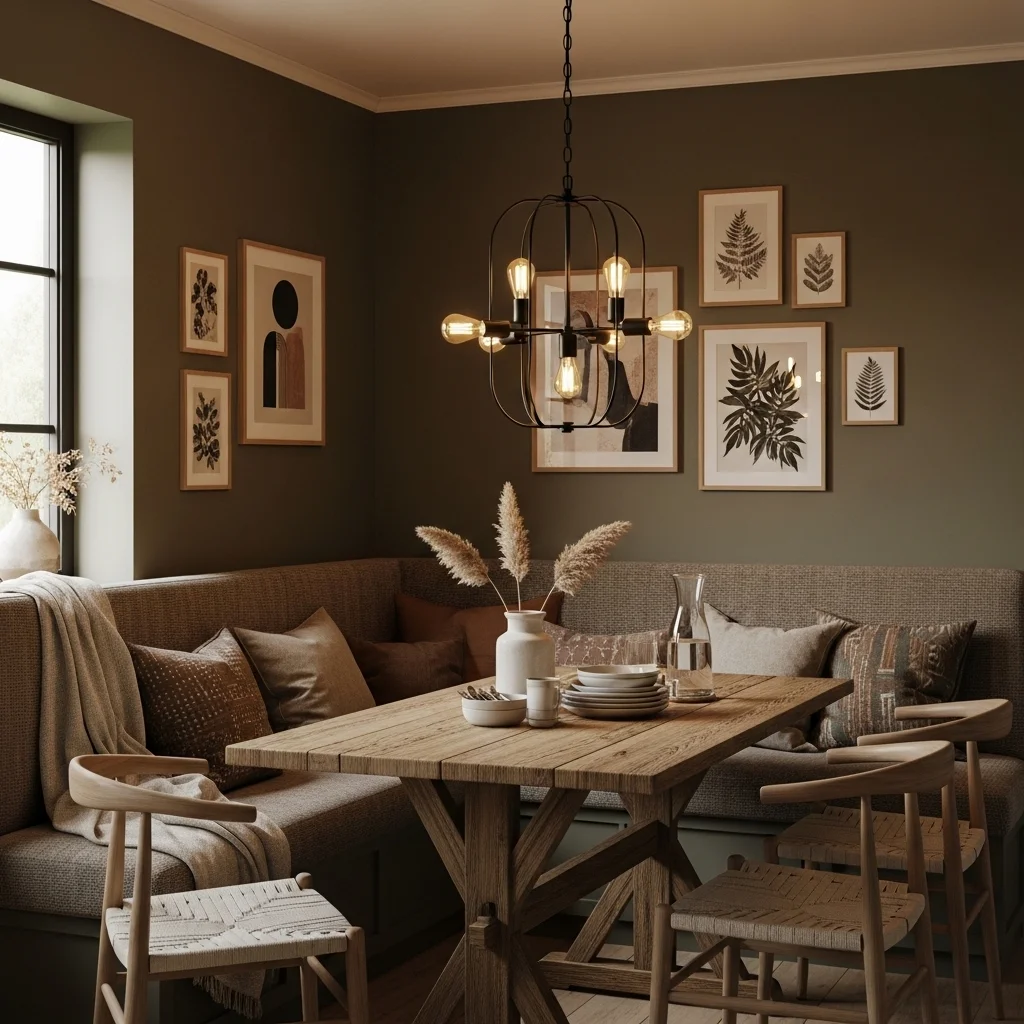
The right pendant light does more for a corner dining nook than almost any other single design decision. Hung directly above the table at the correct height, it creates a pool of warm, directed light that defines the dining zone, flatters the people gathered within it, and establishes the overall aesthetic tone of the corner. A pendant light in a corner nook also functions as a visual anchor, giving the eye a clear focal point that organizes the composition of the space.
Accent Wall Behind the Bench
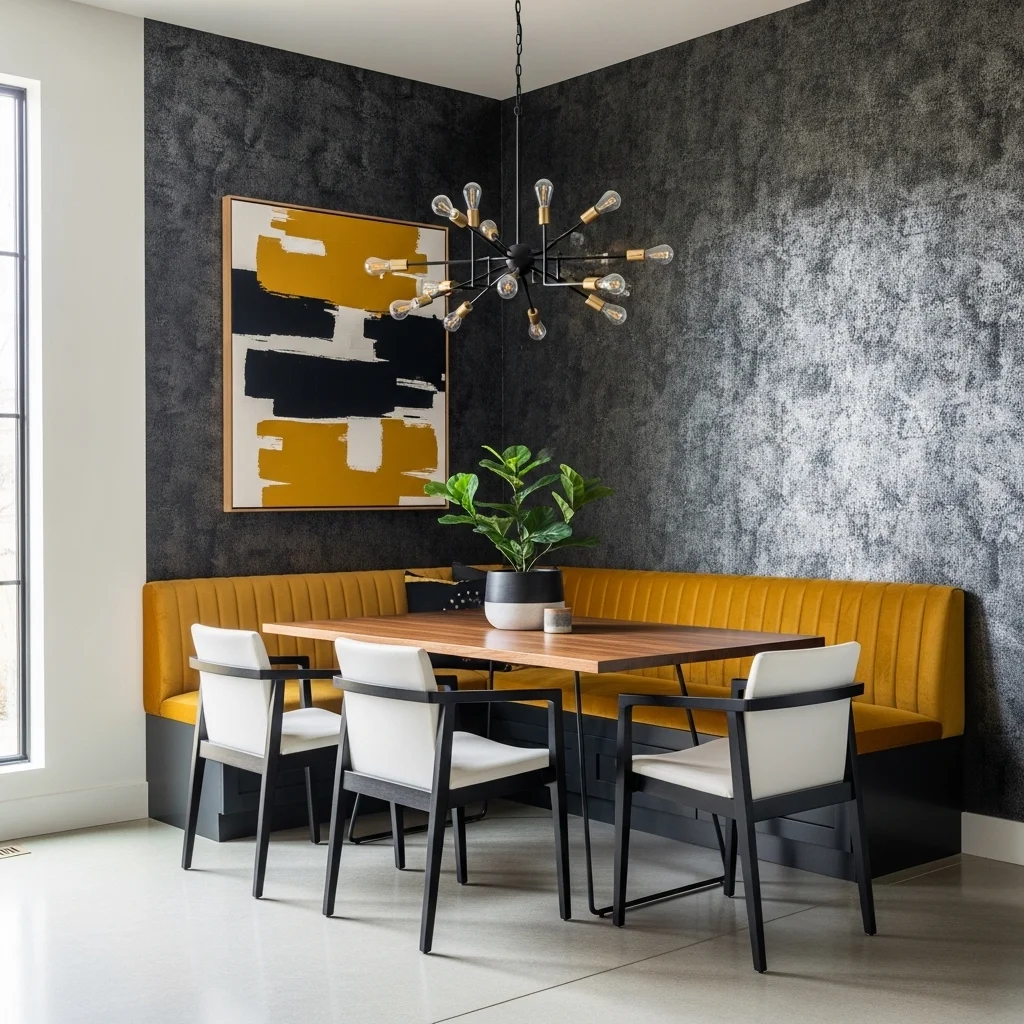
An accent wall behind the bench seat of a corner dining nook is one of the most transformative and most accessible upgrades available to any dining space. Whether achieved through a bold paint color, patterned wallpaper, vertical shiplap paneling, or a textured lime wash finish, the accent wall immediately gives the nook a sense of depth, character, and intentionality that plain surrounding walls cannot provide.
Mirrors to Open Up the Space
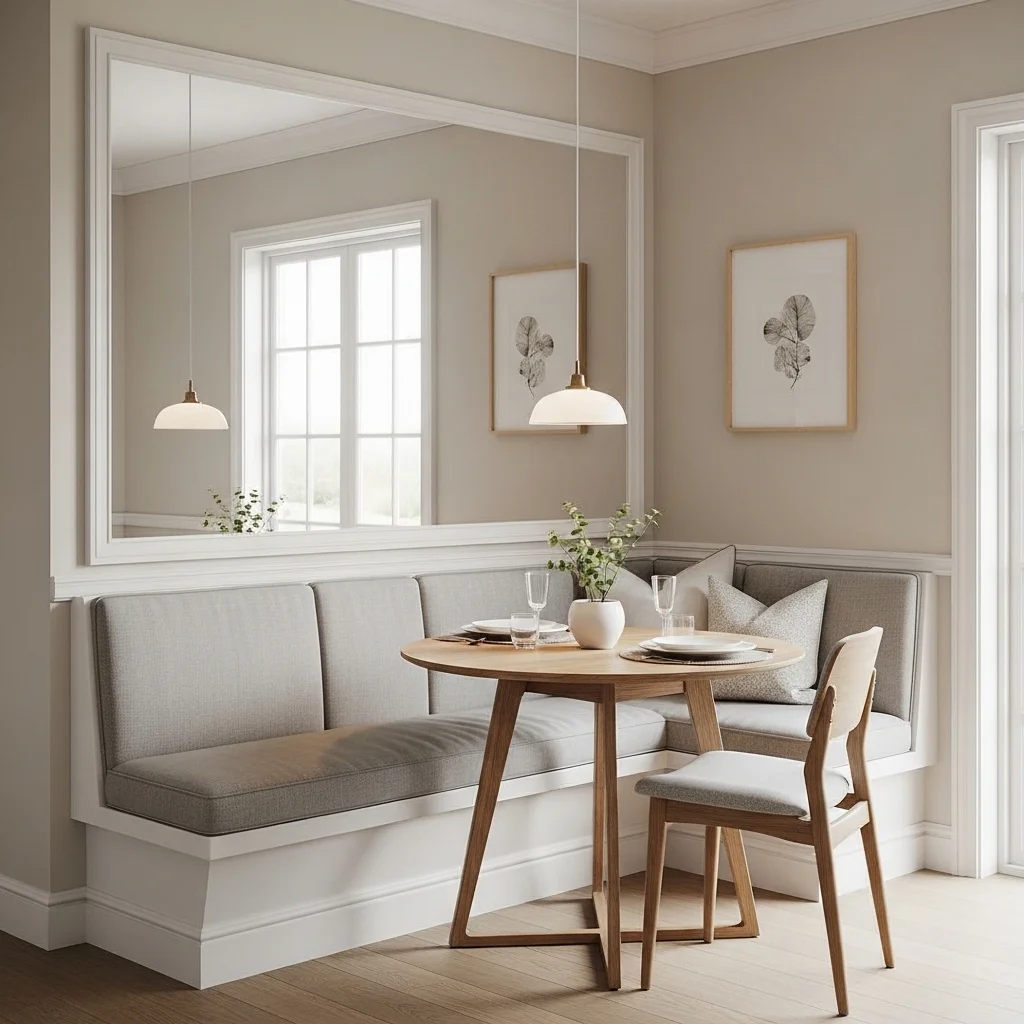
A well-placed mirror is one of the oldest and most reliable tools in small-space interior design, and a corner dining nook is an ideal context for using one effectively. Positioning a mirror on the wall beside or behind the bench seat reflects both the natural light entering the space and the visual interest of the opposite side of the room, creating an impression of depth and openness that measurably transforms the feel of a compact corner.
Kid-Friendly Corner Dining Nook
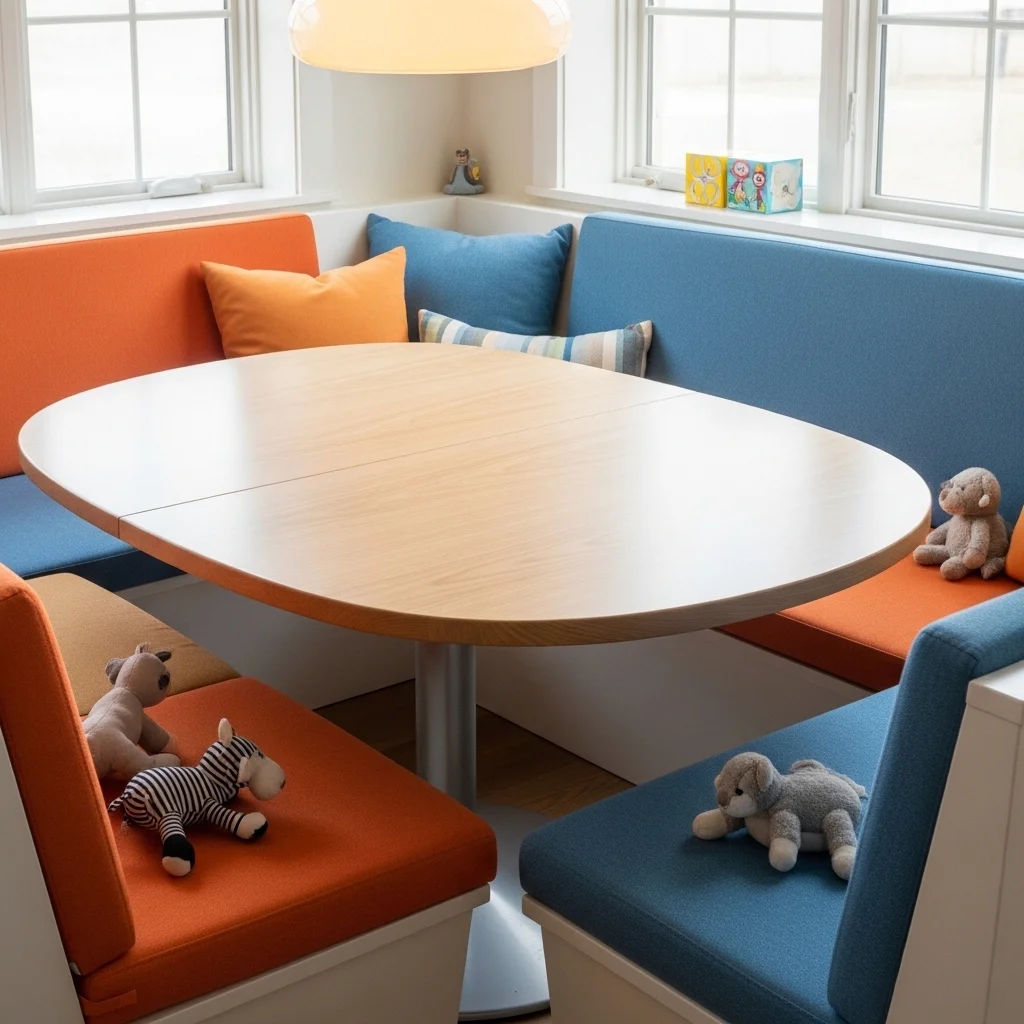
Designing a corner dining nook with children in mind requires a combination of durability, safety, and the kind of enclosed, cozy quality that children respond to positively. A built-in banquette with sturdy cushion upholstery in a performance fabric that resists staining.
Adding small personal touches that make children feel ownership over the nook, such as a low shelf at child height holding their own cups and plates.
Multifunctional Nook That Works as a Home Office
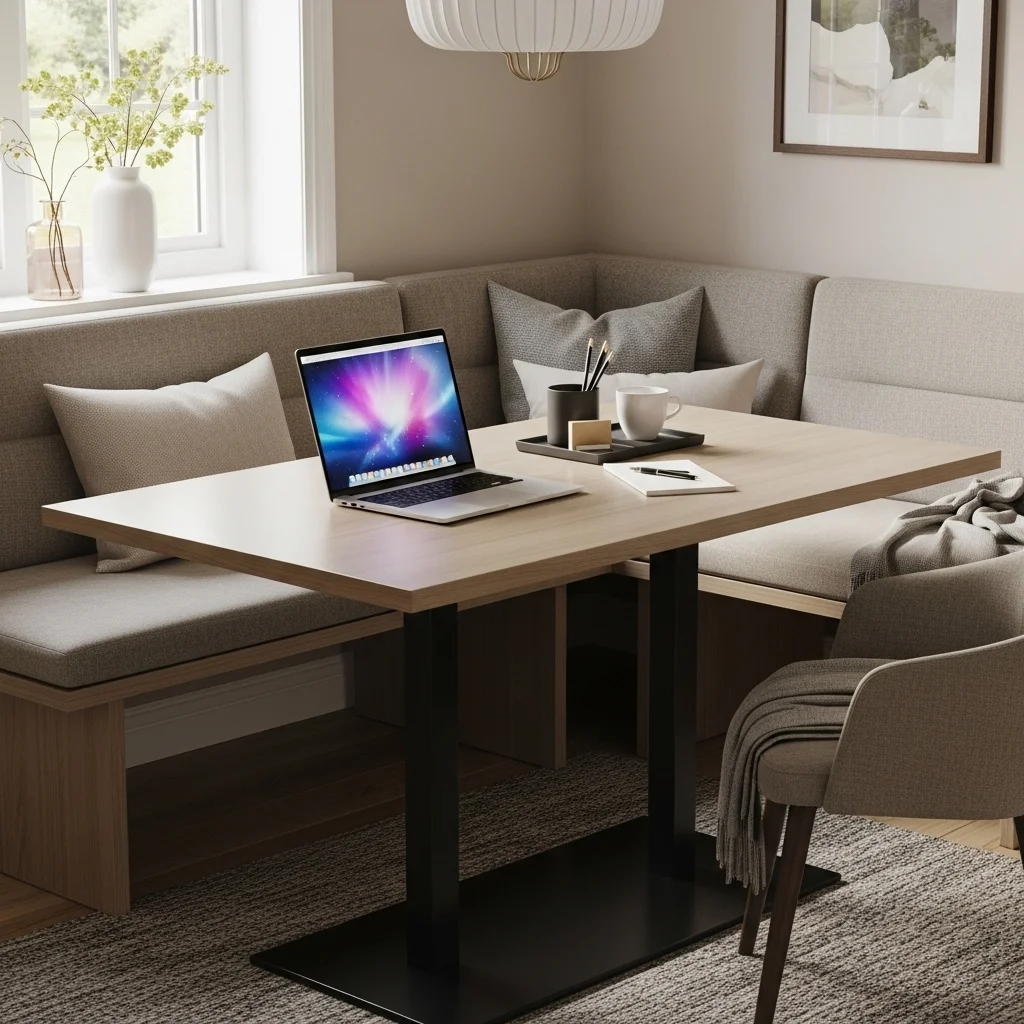
In homes where space serves multiple purposes throughout the day, a corner dining nook can be designed from the beginning to function as a workspace during working hours and a dining area in the evenings and on weekends. A table at standard dining height of thirty inches is equally usable as a desk, and built-in bench seating is genuinely comfortable for extended seated work sessions when the cushion is supportive enough and the table height is correctly proportioned.
Bistro Table Corner for Two
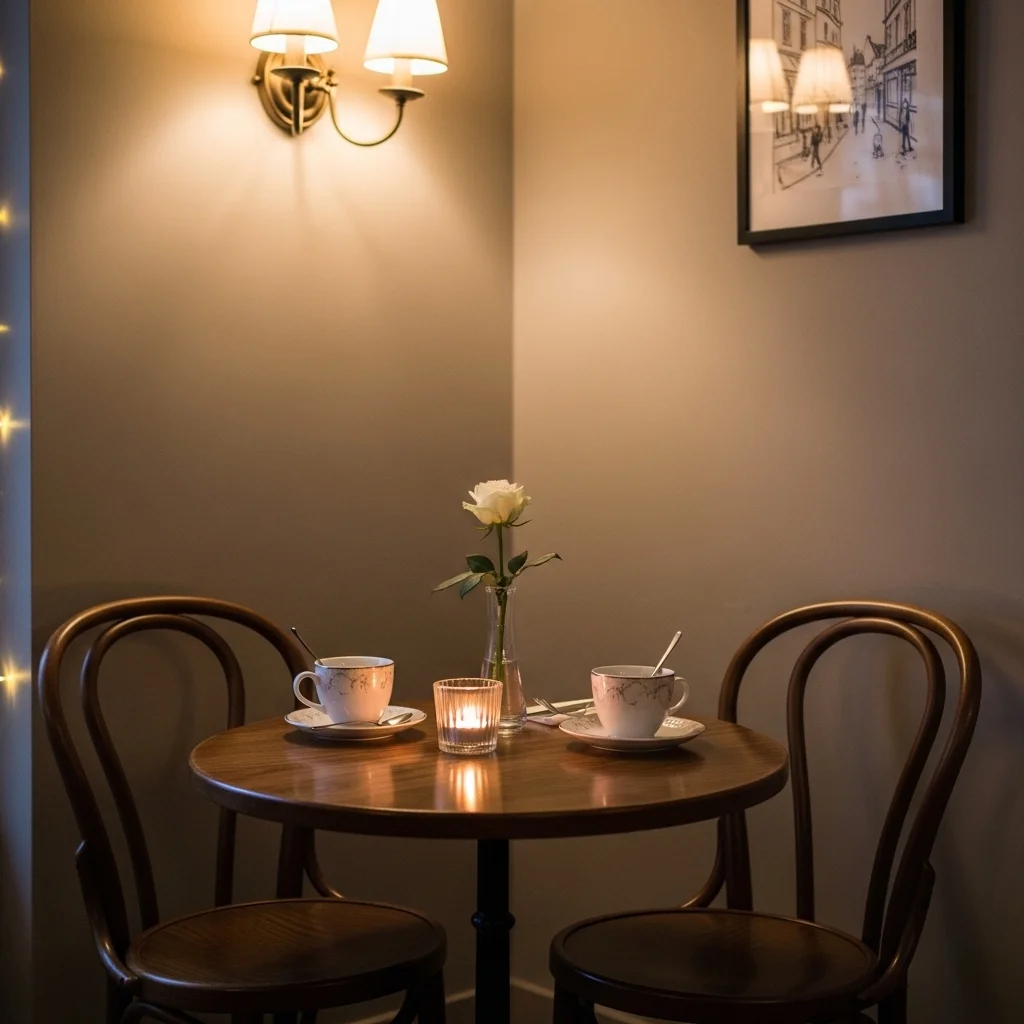
A small bistro table tucked into a corner with two chairs is one of the most romantic and most space-efficient corner dining configurations available. The bistro table format, typically a small round or square top on a slim pedestal base, occupies a minimal footprint while providing a surprisingly usable surface for two people sharing a meal. It suits city apartments, studio spaces, and any home where the primary dining scenario is an everyday meal for one or two rather than a large family gathering.
Under-Stair Corner Dining Nook
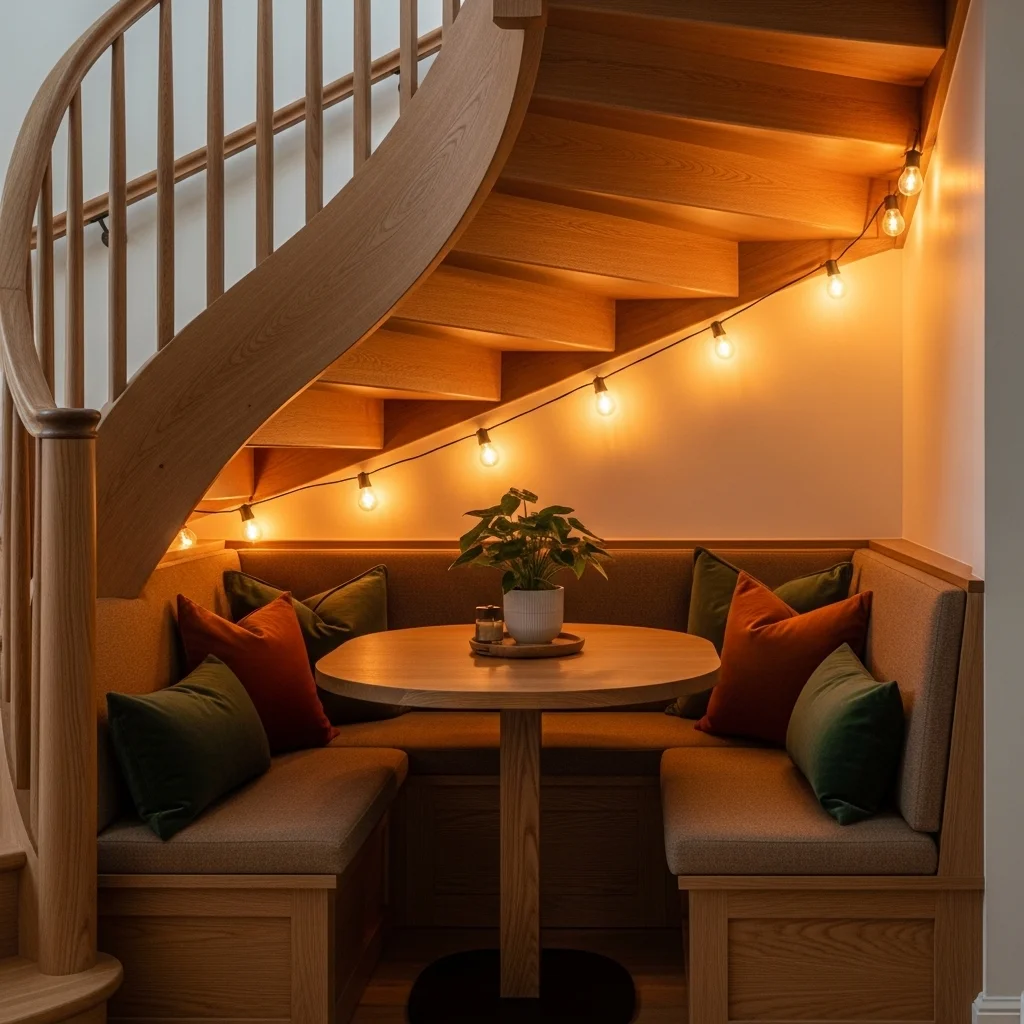
The space beneath a staircase is one of the most architecturally interesting and most consistently underused areas in any home that has one. Converting this awkward triangular volume into a corner dining nook requires custom design work to account for the sloped ceiling, but the result is a dining space with genuine character and a sense of discovery that no standard corner can replicate. Built-in bench seating that follows the slope of the stair soffit, combined with a table scaled to the available height at the open end, creates a nook that feels both architecturally integrated and genuinely cozy.
Bay Window Corner Nook
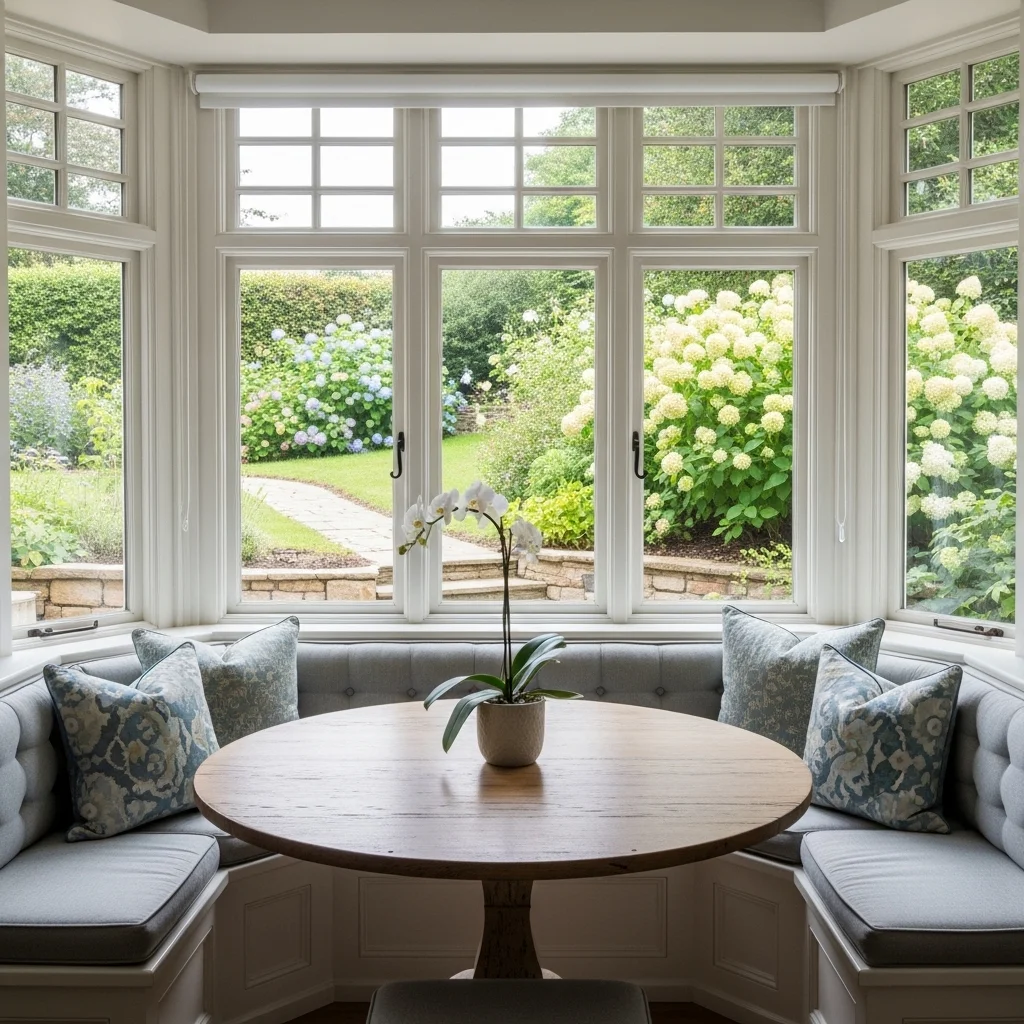
A bay window provides one of the most naturally configured settings for a corner dining nook, offering three angled wall surfaces, abundant natural light from multiple directions, and a sense of architectural definition that requires very little additional intervention. Custom bench seating built to follow the angles of the bay creates a dining space that makes full use of the window volume and provides a panoramic view of the garden or street outside.
Bold Color
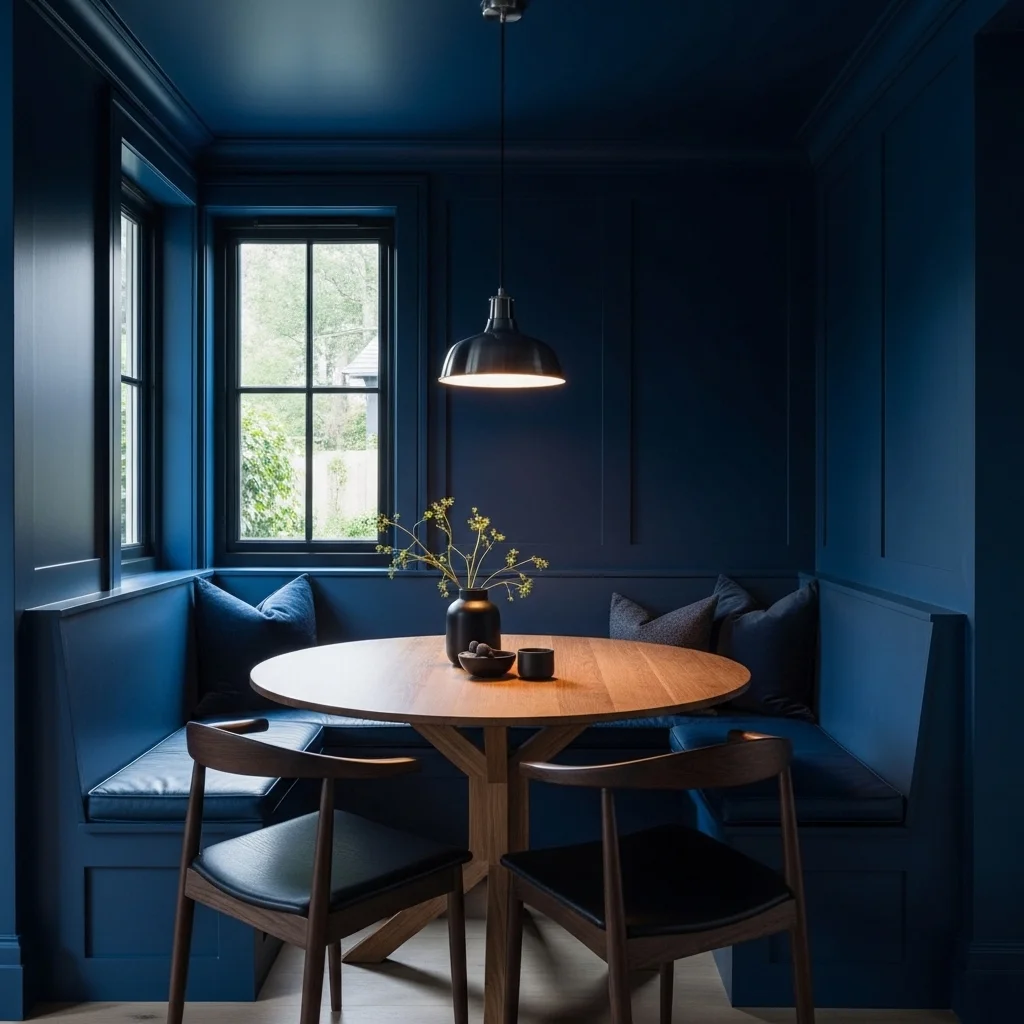
Painting an entire corner dining nook, including the bench frame, the surrounding walls, and the ceiling of the alcove, in a single bold color is one of the most dramatic and most effective small-space design moves available. This technique, sometimes called color drenching, eliminates the perception of individual surfaces and creates instead a unified envelope of color that makes the corner feel intentional, immersive, and far more spacious than a multicolored treatment of the same space would.
Textiles and Cushions for Comfort and Style
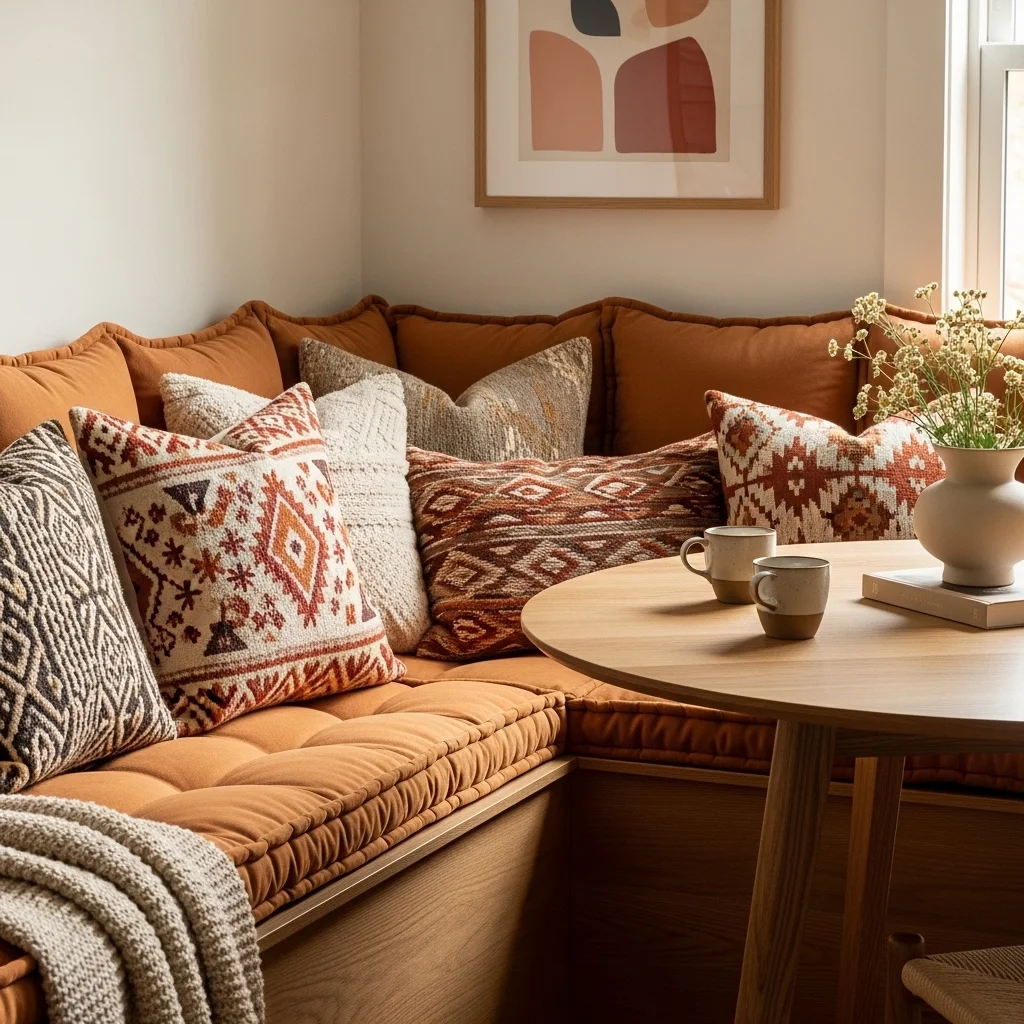
The role of textiles in a corner dining nook is often underestimated, but the difference between a bench nook with and without good cushioning is the difference between a space that is merely looked at and one that is actually used. Thick, well-padded seat cushions and supportive back cushions in a durable, washable fabric make the nook genuinely comfortable for extended mealtimes and encourage household members to linger at the table long after the food is finished.
Plants and Greenery as Natural Accents
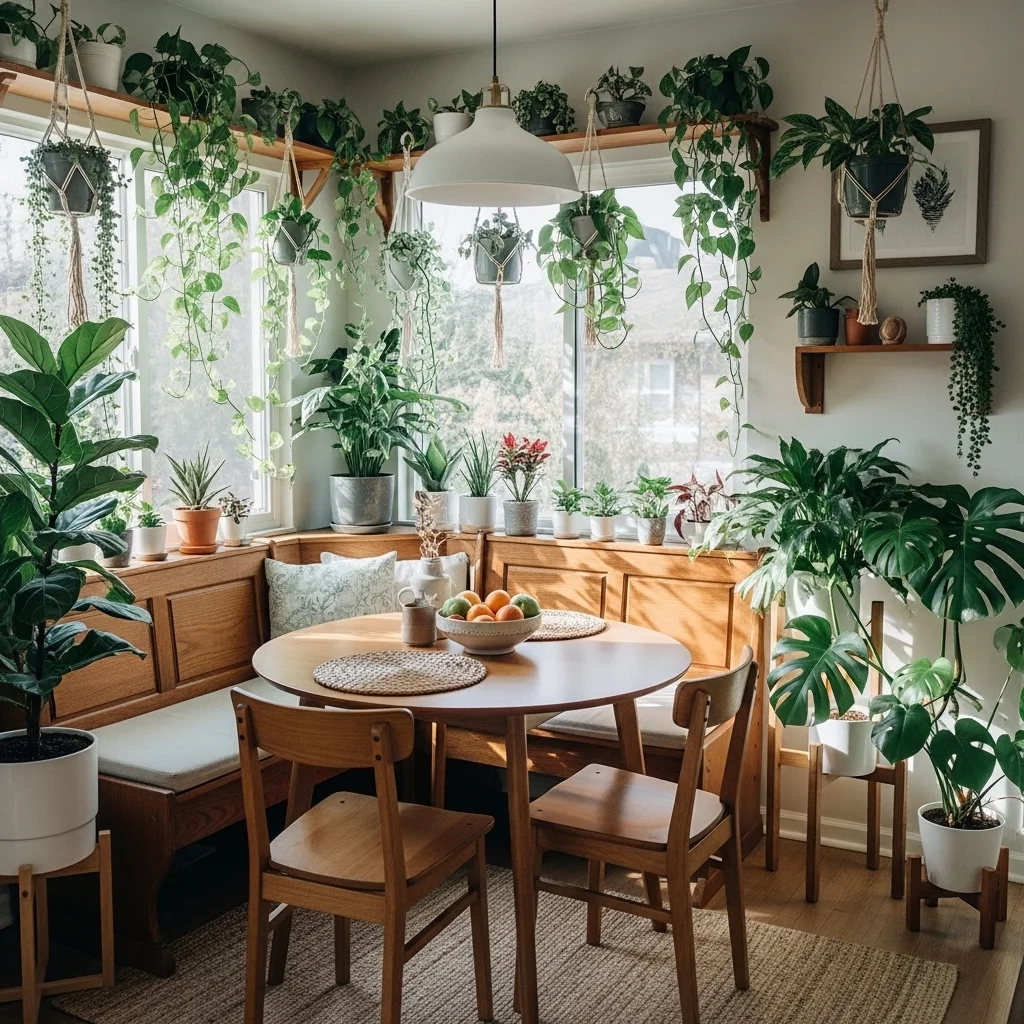
Adding plants to a corner dining nook is one of the most immediate ways to make it feel fresher, warmer, and more alive. A single well-chosen plant in the right scale for the corner, whether that is a trailing pothos on a shelf above the bench, a small fiddle-leaf fig in the corner beside the seating, or a compact herb planter on the windowsill, introduces organic form and color that no purchased decoration can replicate. Plants also improve air quality and create a subtle sense of connection to the natural world that makes the act of eating in the nook more pleasurable.
Area Rug to Define the Nook
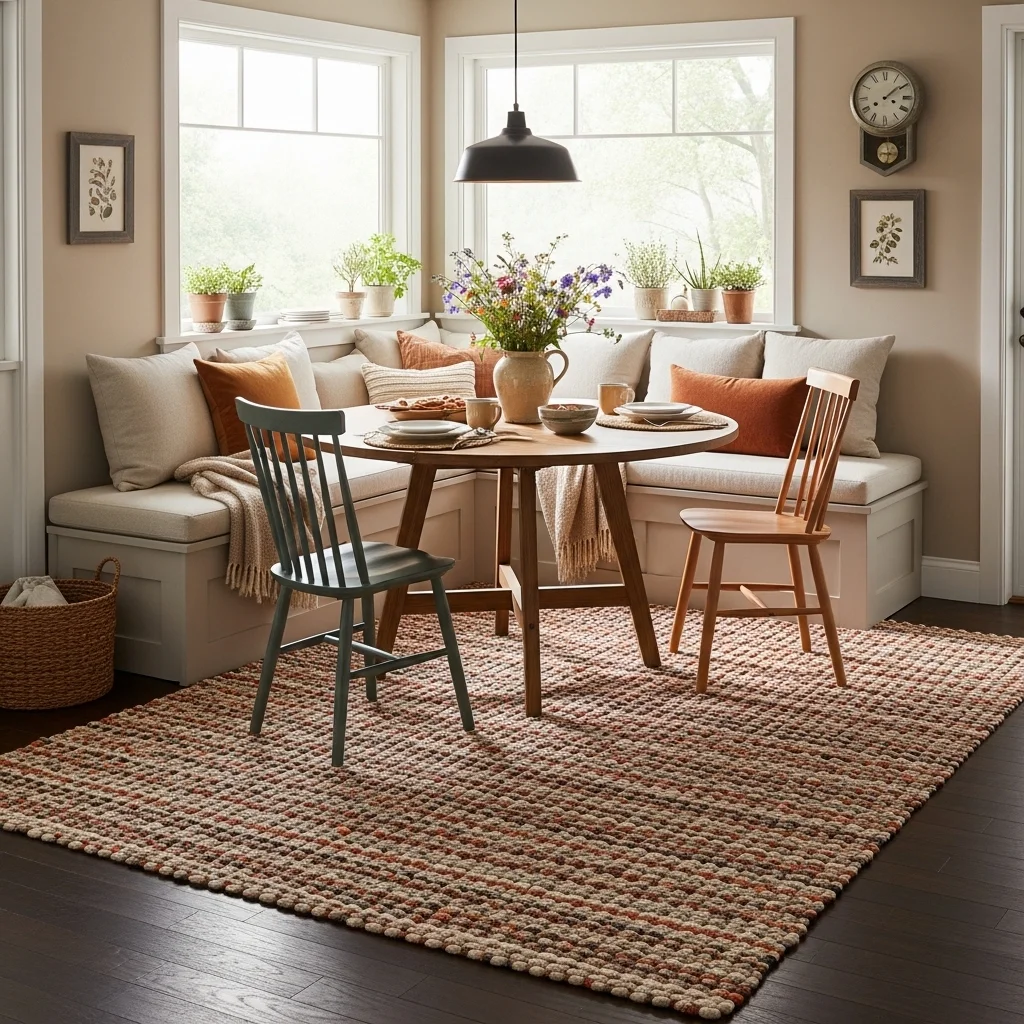
An area rug positioned beneath a corner dining table serves a clear dual purpose: it visually anchors and defines the nook as a dedicated zone within a larger room, and it adds a layer of softness and warmth to what is often a hard floor surface. In an open-plan space where the dining corner exists within a shared kitchen and living area, the rug functions as an invisible boundary that communicates the purpose of the zone without any physical partition.
Conclusion
A corner dining nook is one of the most rewarding design projects in any home, small or large. It takes a space that might otherwise be overlooked, an awkward angle, an underused wall, a window alcove with no clear purpose, and transforms it into something genuinely useful and genuinely beautiful. The twenty-five ideas explored in this article demonstrate that the corner dining nook is not a single look or a single formula but a concept flexible enough to accommodate farmhouse charm.
Frequently Asked Questions
What is a corner dining nook?
A corner dining nook is a compact, dedicated dining area created by positioning a table and seating arrangement into a corner of a room, typically a kitchen or open-plan living space.
What size table works best in a corner dining nook?
A round table between thirty-six and forty-eight inches in diameter or a rectangular table scaled to the available wall length works best.
How do I add storage to a corner dining nook?
Built-in bench seating with lift-up lids or pull-out drawers beneath the seat is the most effective storage solution.
Can a corner dining nook work in a rental apartment?
Yes. Freestanding L-shaped bench sets, drop-leaf tables, area rugs, pendant lights on ceiling hooks.
What lighting works best above a corner dining nook?
A pendant light or small chandelier hung directly above the table at approximately thirty inches above the table surface is the most effective choice.