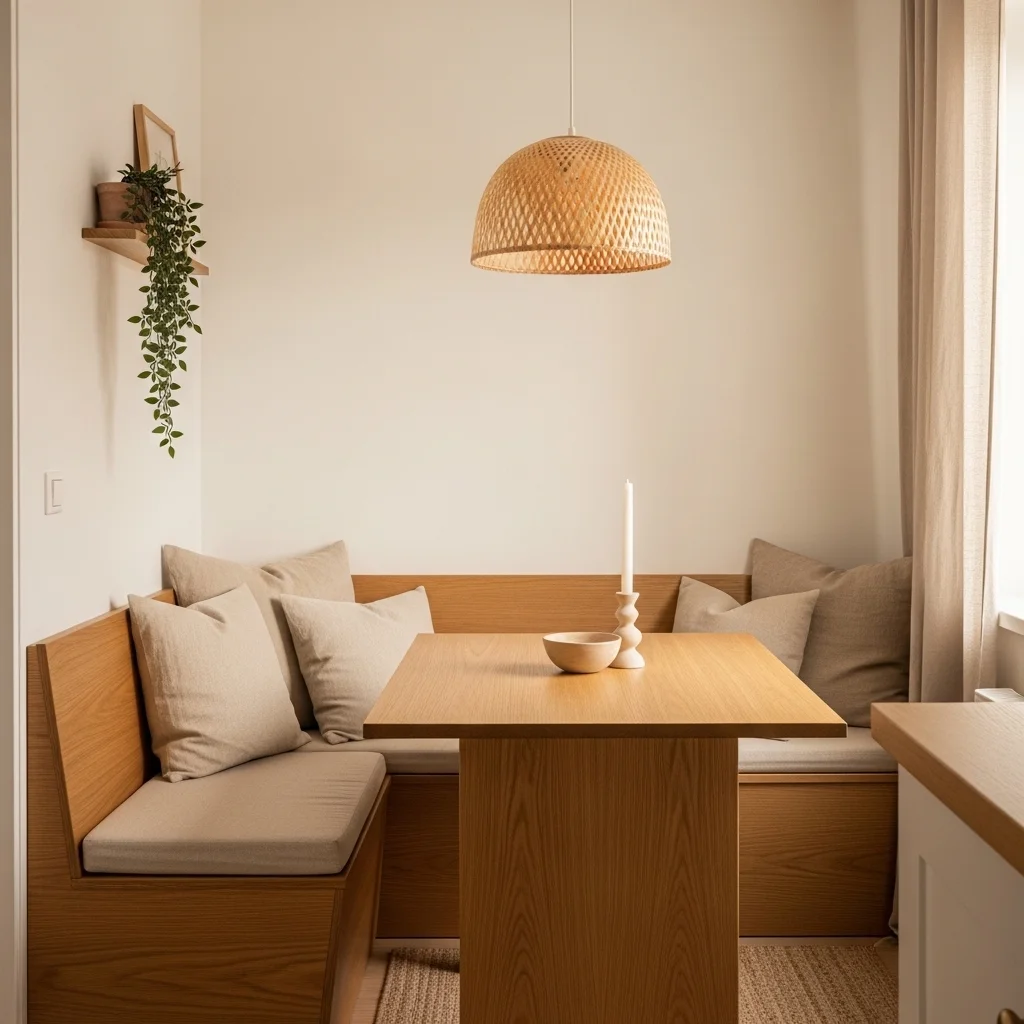
There is something deeply satisfying about a corner that has been thoughtfully transformed into a dining nook. In homes where square footage is limited, every wall, every angle, and every underused pocket of space carries real potential. The japandi dining room aesthetic has become one of the most respected approaches to solving exactly this challenge.
This article walks through 24 concrete corner dining nook ideas, all filtered through the lens of japandi style. Whether you are working with a narrow apartment alcove, an awkward kitchen corner, or an open-plan space that needs better definition, these ideas offer practical direction.
Understanding the Japandi Dining Room Philosophy
Before diving into specific ideas, it helps to understand what makes japandi design different from generic minimalism. Japandi is not about stripping a room bare and calling it done. It is about choosing fewer things, but choosing them with great care, so that what remains has both function and quiet beauty.
In a corner dining nook, this philosophy translates into built-in seating with linen cushions, a simple oak table with honest grain, a pendant light made from woven bamboo, and perhaps one ceramic vase with a dried grass stem. Nothing is purely decorative.
Built-In Corner Banquette with Natural Linen Cushions
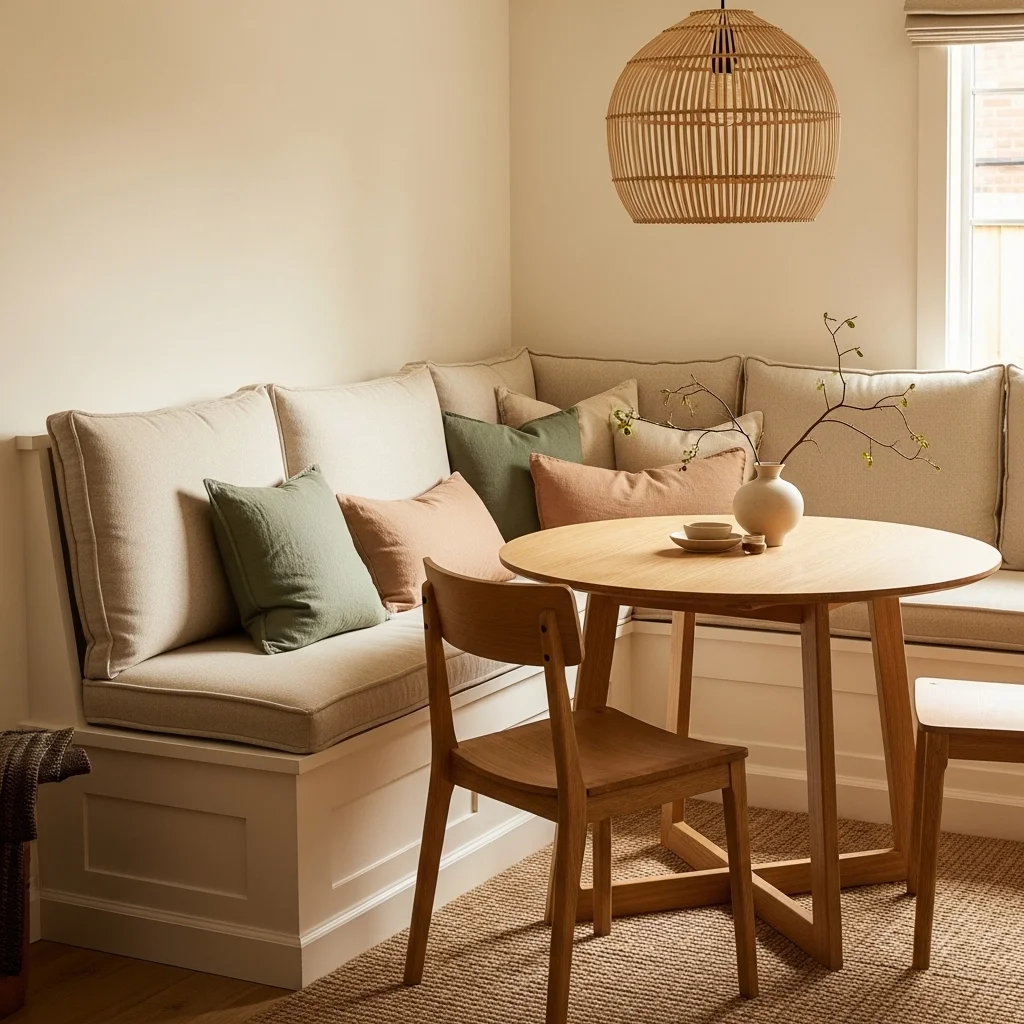
A built-in banquette tucked into a corner is one of the most space-efficient seating solutions available for a small dining area. When upholstered in natural linen or undyed canvas, it becomes immediately and authentically japandi.
The key to making this idea work within a japandi dining room is restraint in color and texture. Choose cushion fabric in warm cream, warm oat, or dusty stone rather than stark white.
Wall-Mounted Foldable Table for Micro Dining Corners
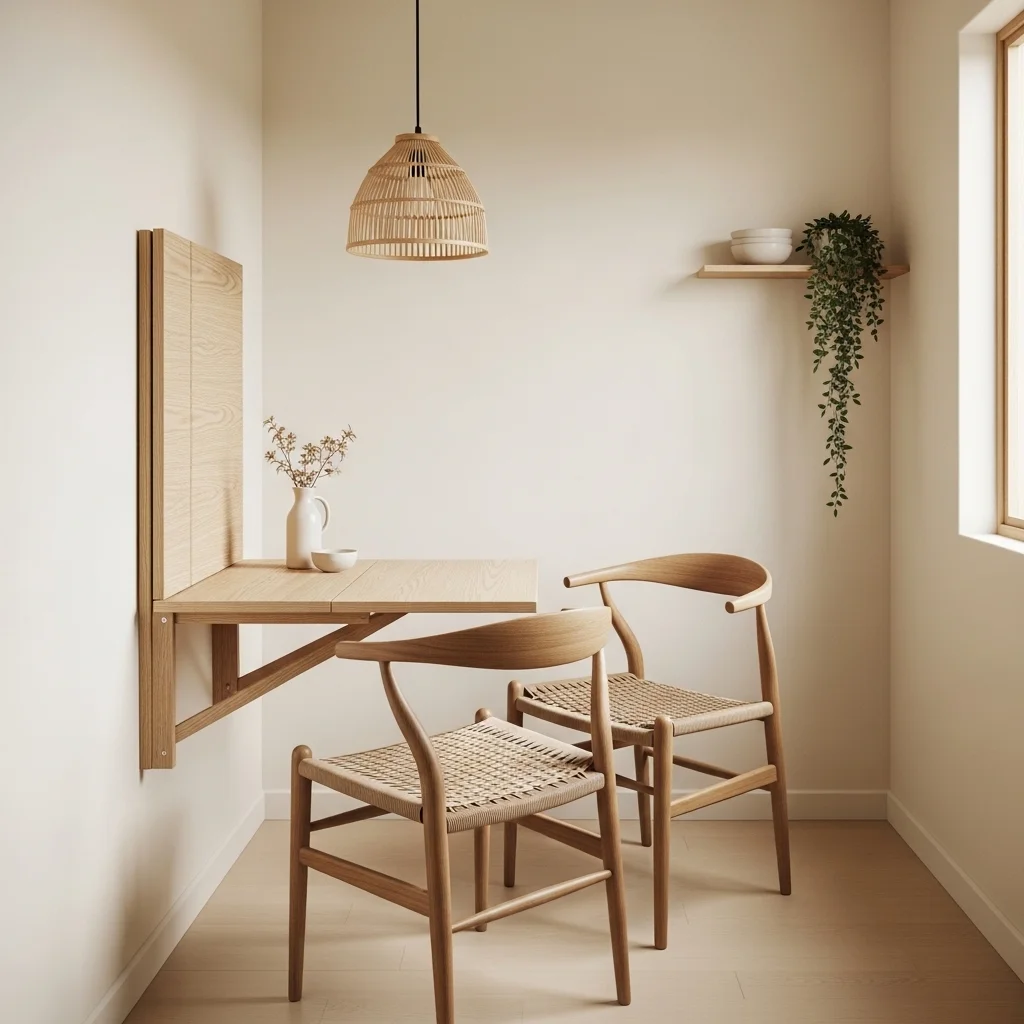
When floor space is genuinely limited, a wall-mounted foldable table is not a compromise but a smart design decision. In japandi style, the table folds flat against the wall when not in use, revealing a clean surface that contributes to the uncluttered atmosphere of the room. When opened, it provides enough space for one or two people to dine comfortably with all the warmth and intention of a full dining room.
Choose a wall-mounted table in light ash, pale oak, or whitened pine for the cleanest japandi expression. Pair it with two stackable chairs in a natural wood or woven rattan seat. When the chairs are stored away, the corner reads as a quiet architectural detail rather than an awkward empty space.
Round Table in a Corner Alcove
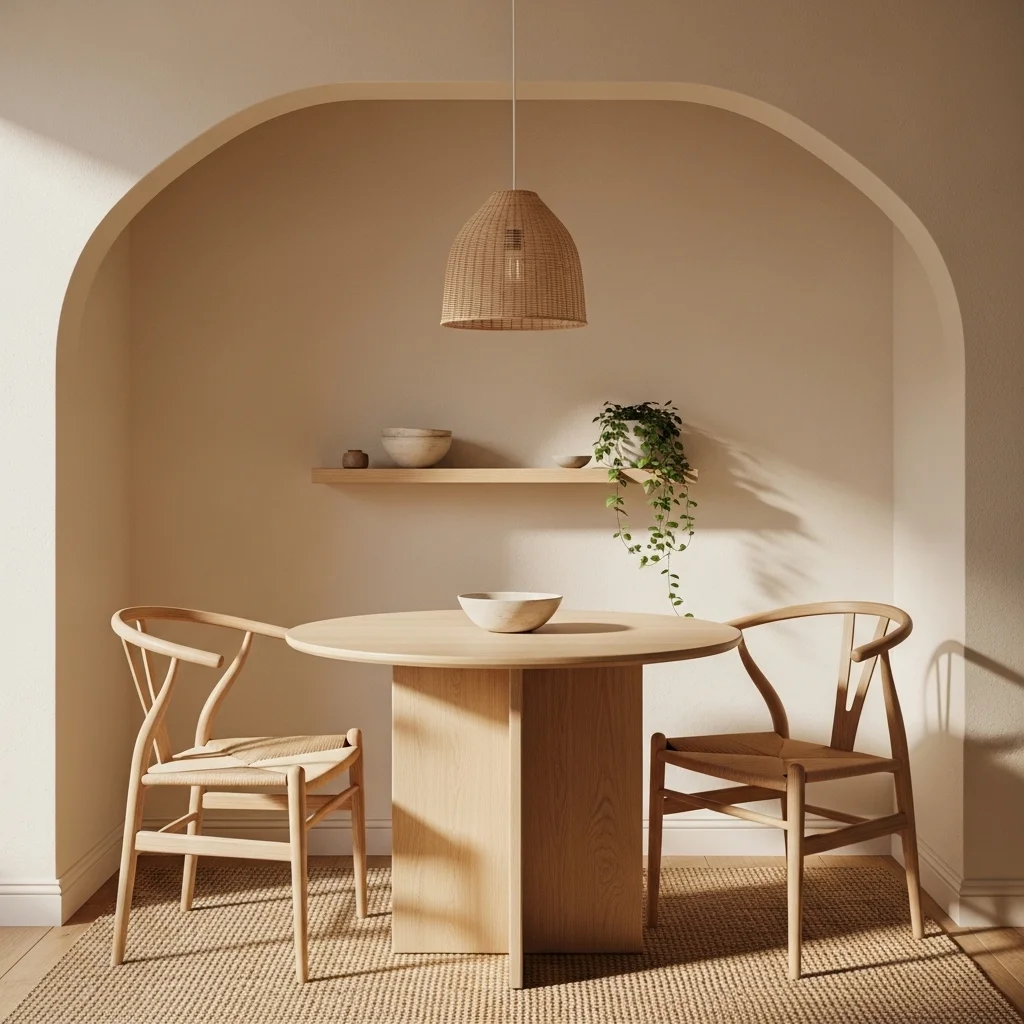
A round dining table placed in a corner alcove softens the geometry of the room and creates an immediate sense of intimacy. Circles are deeply connected to the japanese aesthetic of balance and harmony, and in a small space they improve traffic flow by eliminating sharp corners that interrupt movement.
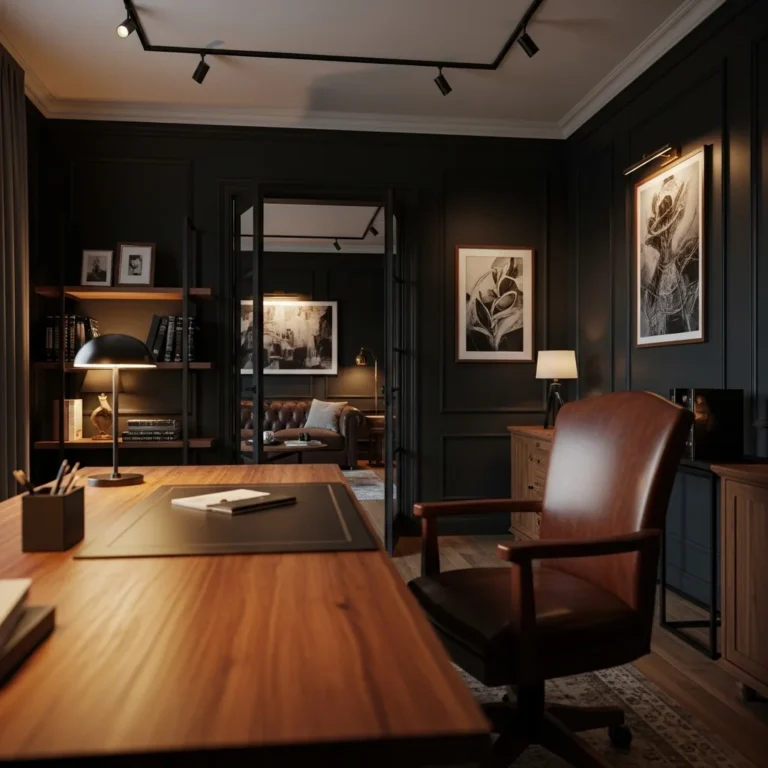
Deep Charcoal Accent Wall Behind a Light Wood Setup
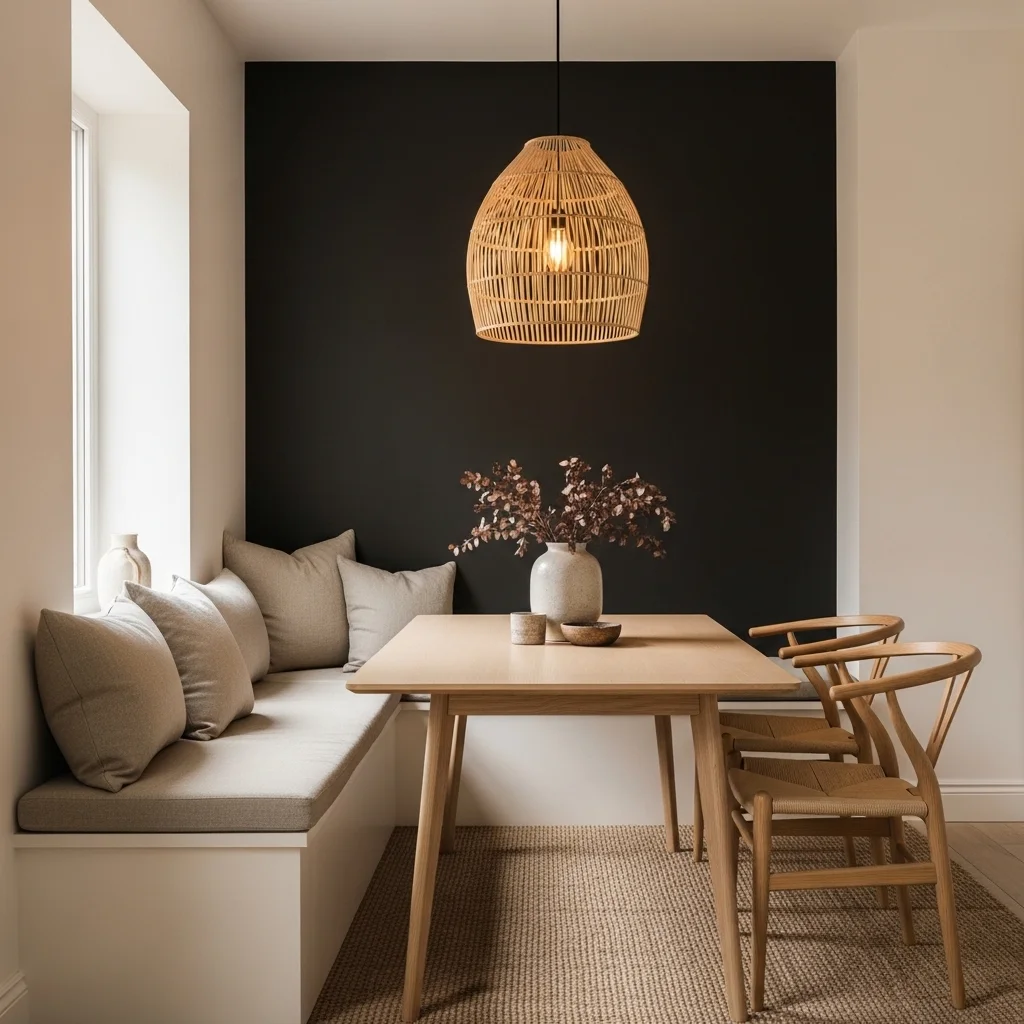
One of the most visually effective ideas in a japandi corner dining nook is to paint a single accent wall in deep charcoal or warm near-black behind a light wood table and pale cushioned seating. The contrast is quiet but powerful. The dark wall recedes visually, making the natural materials in front of it appear to glow, and the overall effect is one of sophisticated depth without heaviness.
This technique also helps to define the nook as a separate zone within an open-plan space.
Bench Seating with Hidden Storage
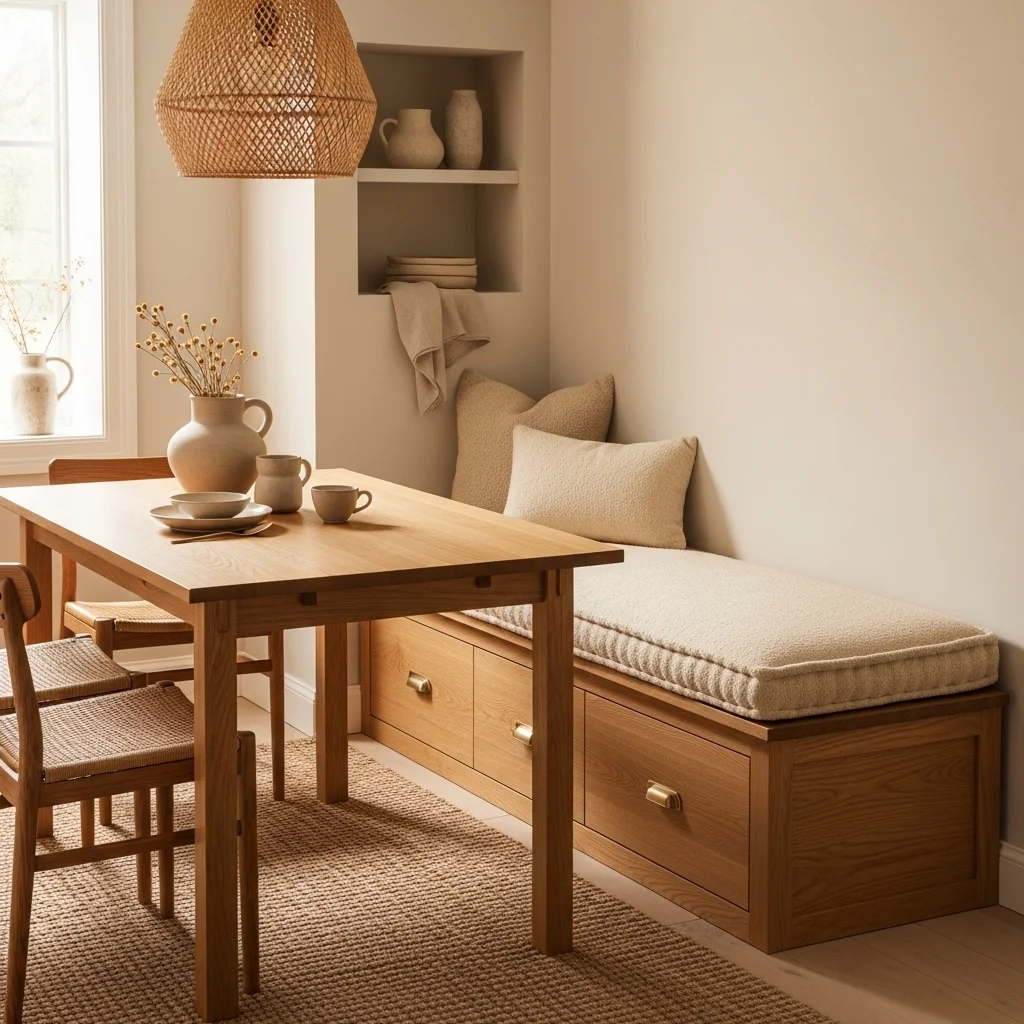
A corner bench with built-in hidden storage beneath the seat is one of the most practical ideas in any small-space dining context. In a japandi dining room, this kind of furniture celebrates the scandinavian love of functionality while maintaining the clean, unhurried aesthetic that japanese design demands.
The exterior of the storage bench should be simple and smooth, ideally in a warm wood tone or painted in a soft warm neutral.
Window-Side Corner Nook with Natural Light as a Feature
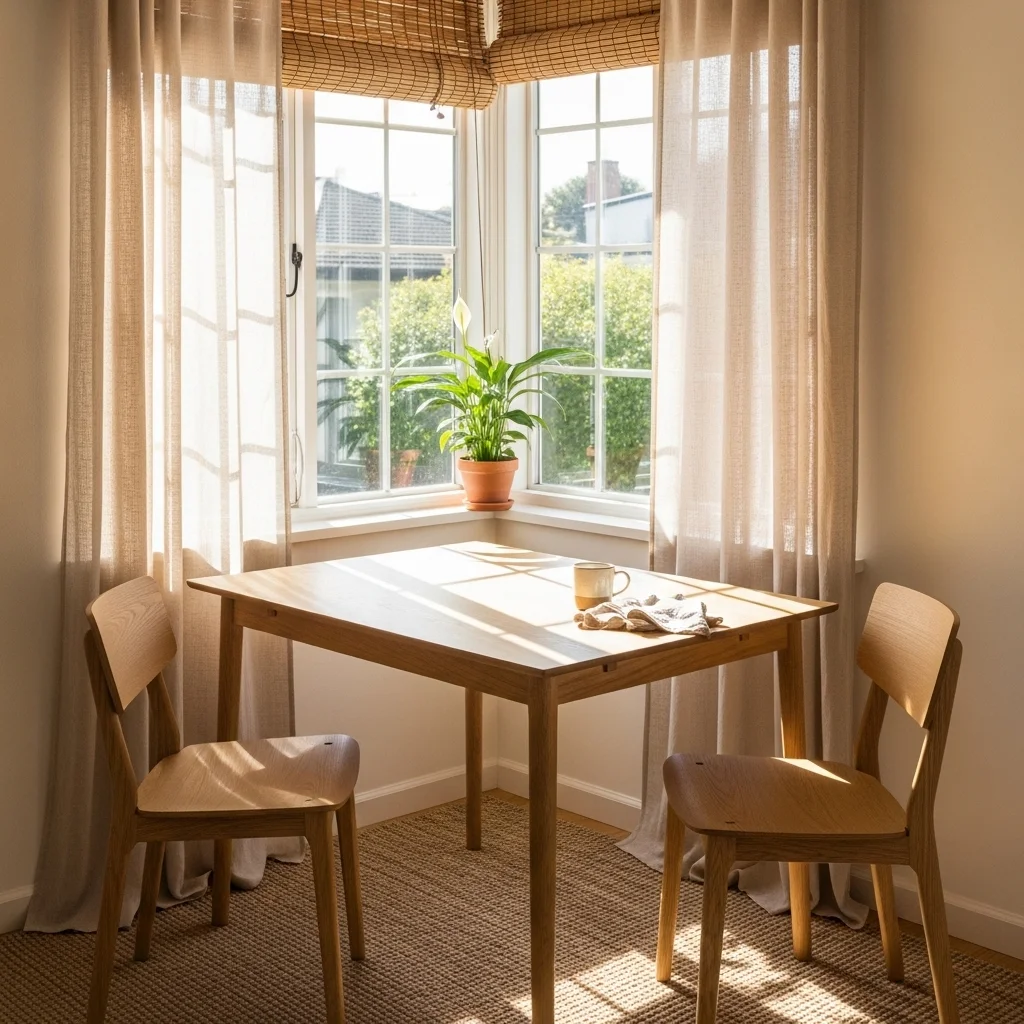
Positioning a corner dining nook beside the largest available window is one of the most effective japandi strategies for small spaces. Natural light is not merely practical in this design philosophy; it is considered one of the primary materials of a well-designed room. A simple table placed in a window corner with two chairs angled to face the light creates a breakfast and lunch nook that feels connected to the outdoors even when the window overlooks an urban street.
Use sheer linen curtains or bamboo roller blinds to filter the light without blocking it.
Shoji Screen Room Divider for Corner Definition
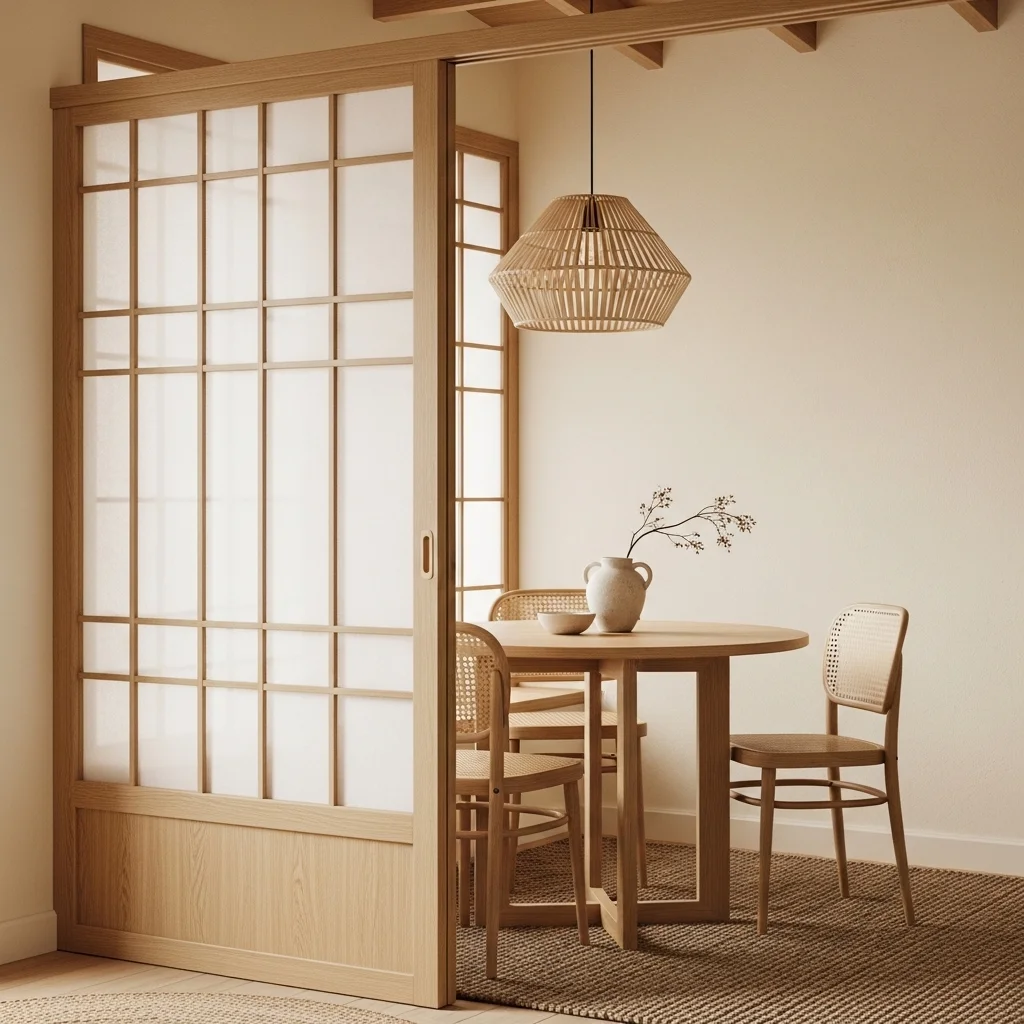
A shoji-inspired screen placed at the edge of a corner dining nook performs multiple functions simultaneously. It creates a gentle visual boundary that gives the nook a sense of enclosure and privacy without installing permanent walls. It filters light in the same soft, diffuse way that traditional japanese shoji panels do, and it adds an unmistakably japandi architectural element that elevates even the simplest furniture arrangement.
Shoji screens are now available in both permanent and temporary configurations, making them accessible for renters as well as homeowners.
Low-Profile Table with Floor Cushions for a Zen Corner
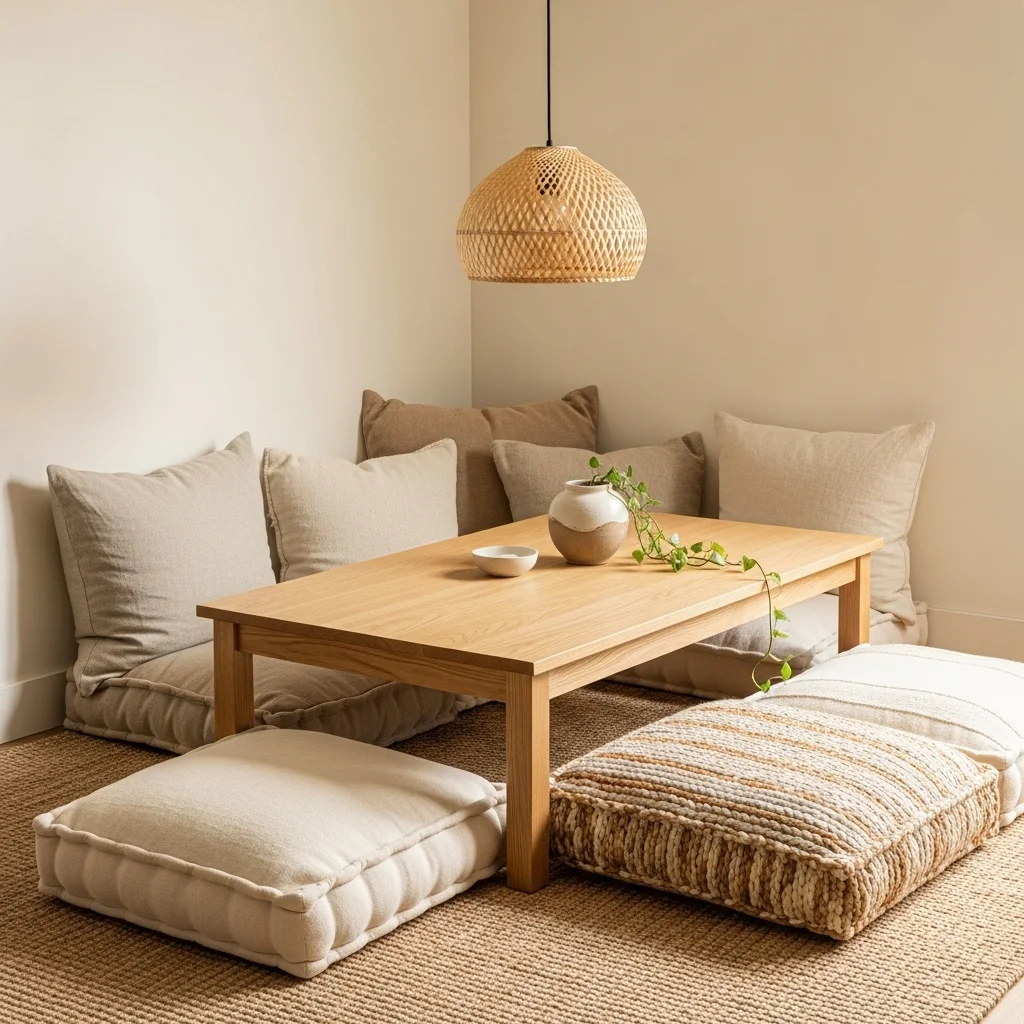
A low dining table paired with large floor cushions brings one of the most distinctive elements of traditional japanese interior design into a modern home. This arrangement suits corners particularly well because it fills the space without adding visual weight. The low profile keeps the eye level nearer to the floor, making the ceiling feel higher and the room feel more expansive than it actually is.
Wicker and Rattan Chairs for Natural Texture
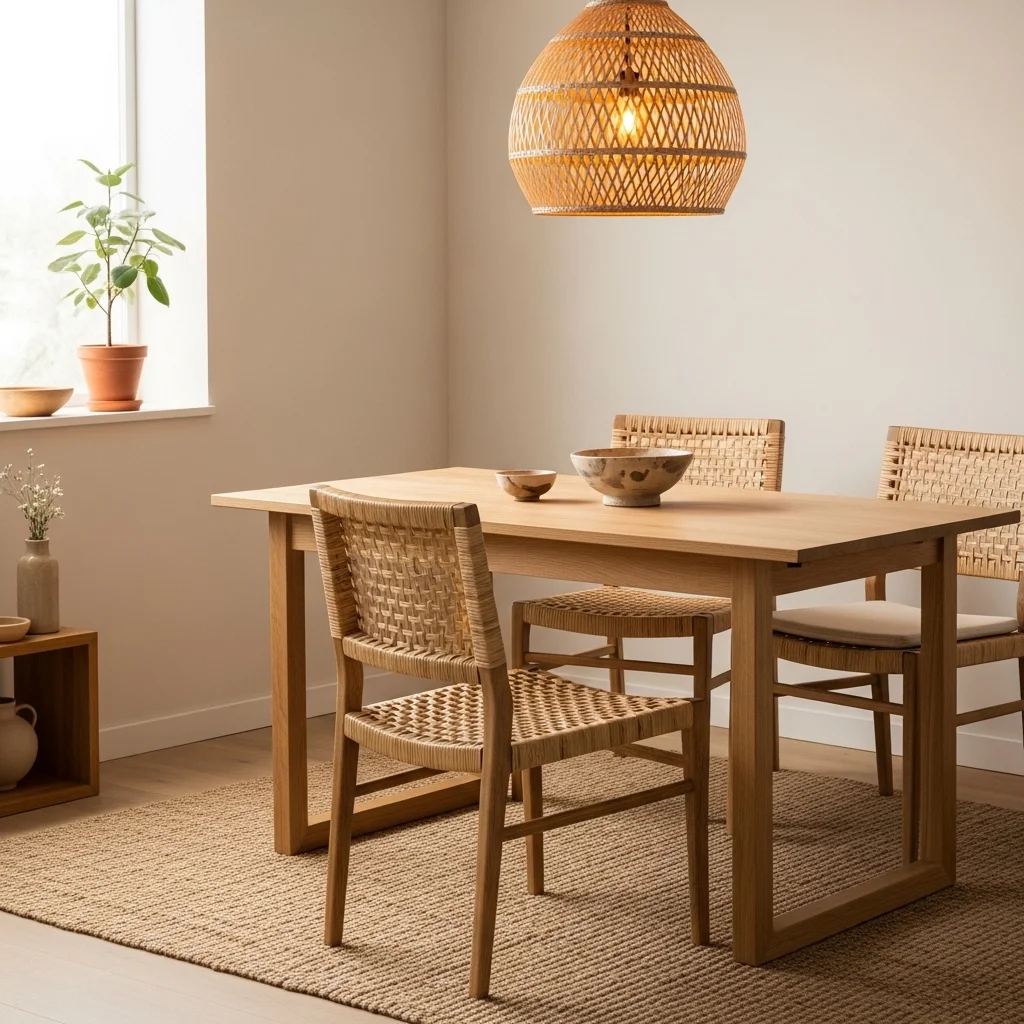
Wicker and rattan chairs are among the most reliable tools for adding organic texture to a japandi corner dining nook without increasing visual complexity. Their woven surfaces catch light gently, create subtle shadow patterns on adjacent walls, and introduce the kind of artisanal handmade quality that the wabi-sabi dimension of japandi celebrates.
Opt for rattan chairs with a clean frame rather than highly ornate construction. The frame in natural, bleached, or lightly stained wood allows the woven seat to carry the visual interest while the overall form remains simple and japandi-appropriate.
Tatami-Inspired Rug to Define the Dining Corner
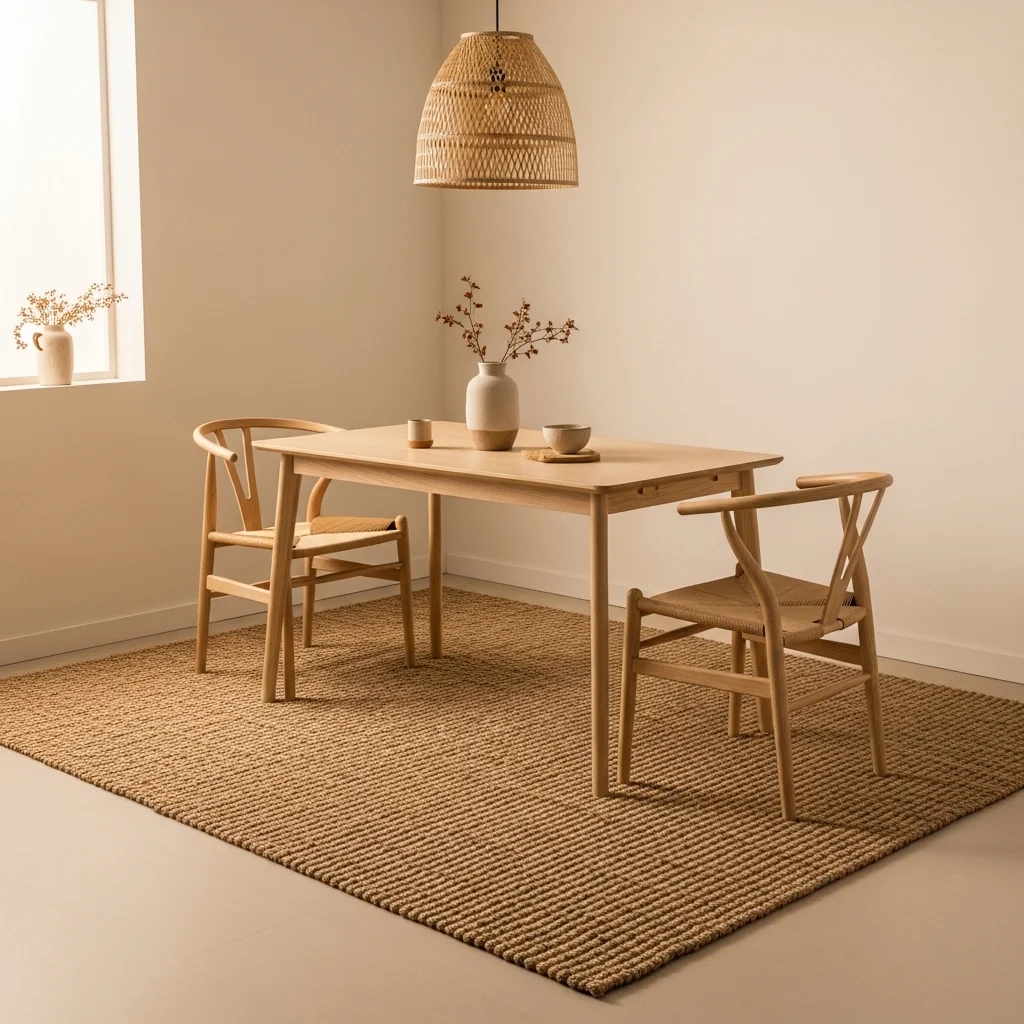
Even in a corner without walls or built-in furniture, placing a natural fiber rug beneath the dining table and chairs creates an immediate sense of spatial definition. A jute, sisal, or seagrass rug in a neutral warm tone acts as a visual floor plan for the nook, anchoring the furniture and signaling that this corner has a clear and specific purpose.
In a japandi dining room, the rug should be simple in pattern, either plain or featuring a very subtle geometric weave. Avoid rugs with bold patterns or bright colors that would compete with the quiet clarity of the materials around them.
Bamboo Pendant Light as a Focal Point
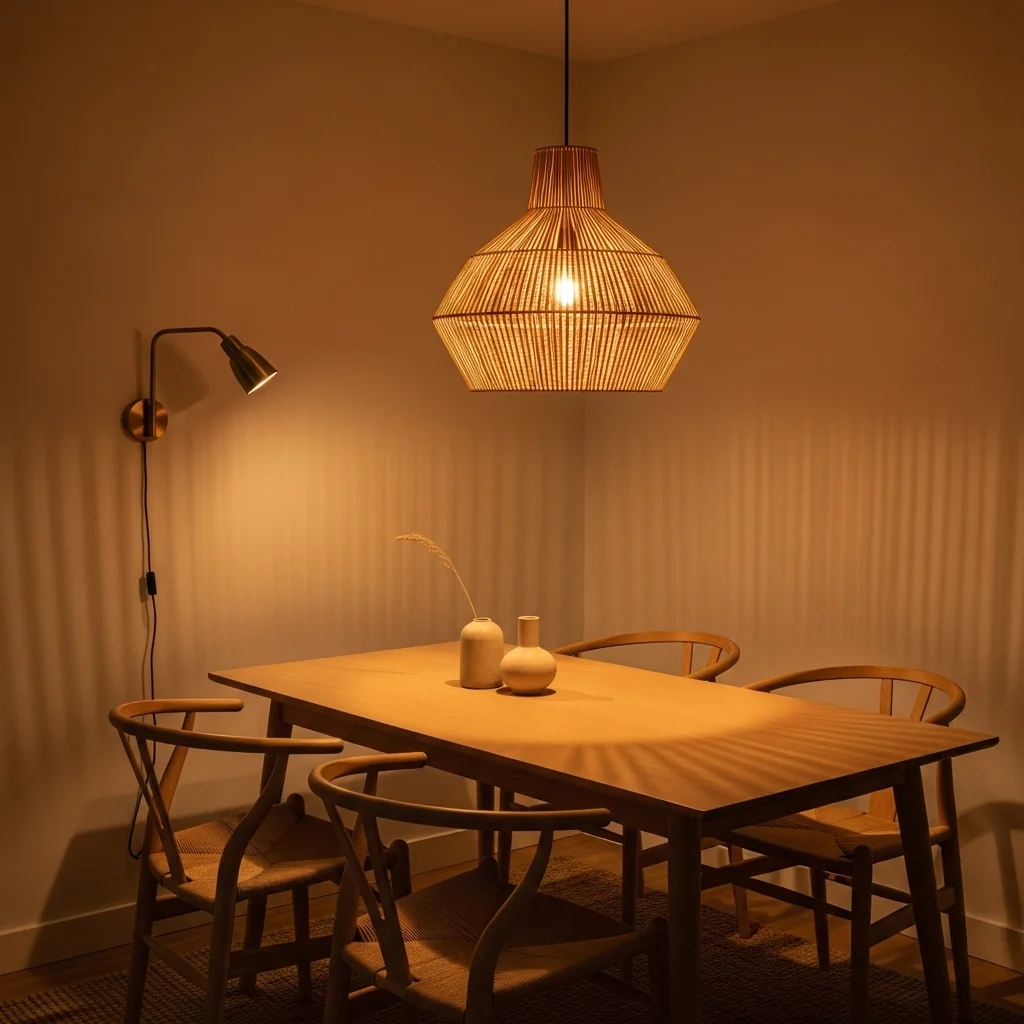
Lighting in a japandi corner dining nook should be warm, directional, and made from natural materials wherever possible. A woven bamboo or rattan pendant light hung directly above the dining table creates a focused pool of warm light that defines the nook in the evening hours and adds a beautiful organic texture to the overhead space during the day. This single light fixture can do more to establish the japandi character of a corner than almost any other element.
Position the pendant at a height where the bottom of the shade sits roughly thirty inches above the table surface. This creates intimate, face-flattering light at dinner and a visual anchor that draws the eye down into the nook.
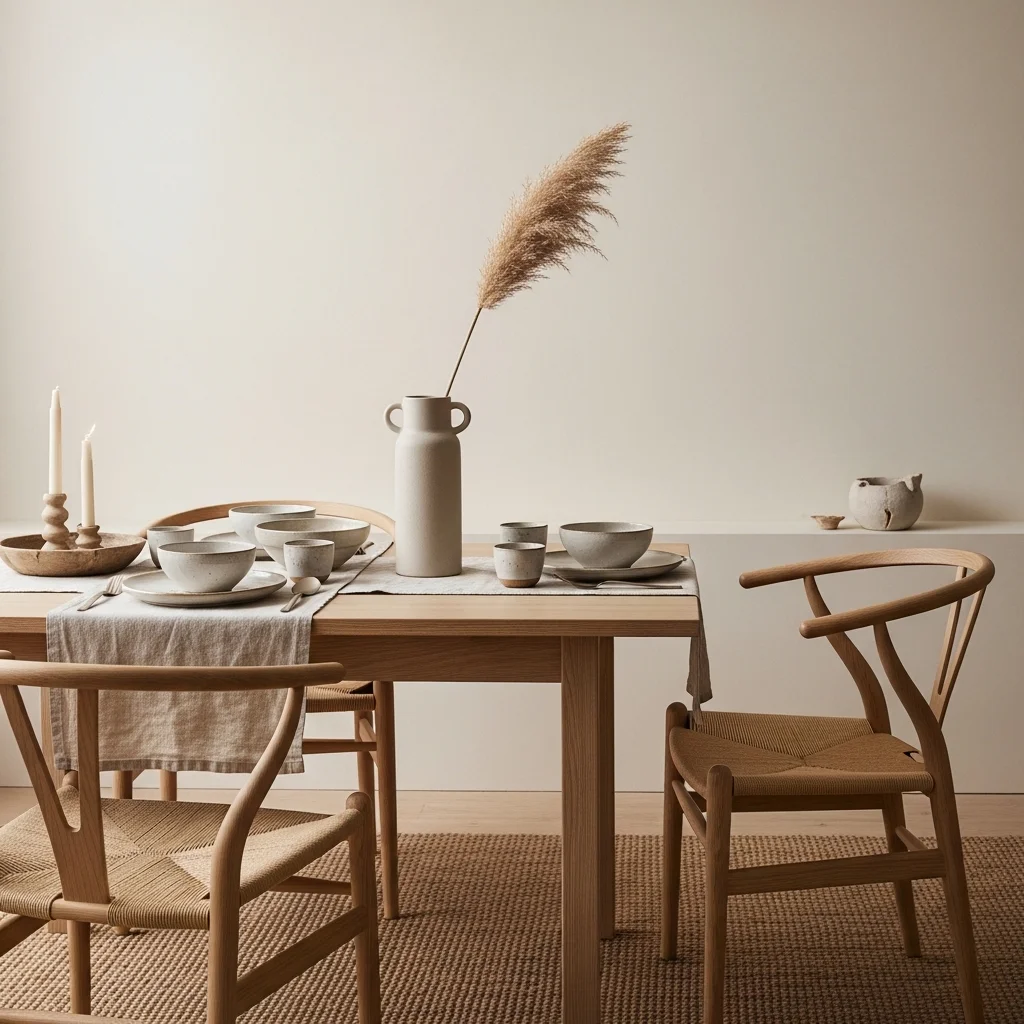
Wishbone Chair Corner with an Oak Table
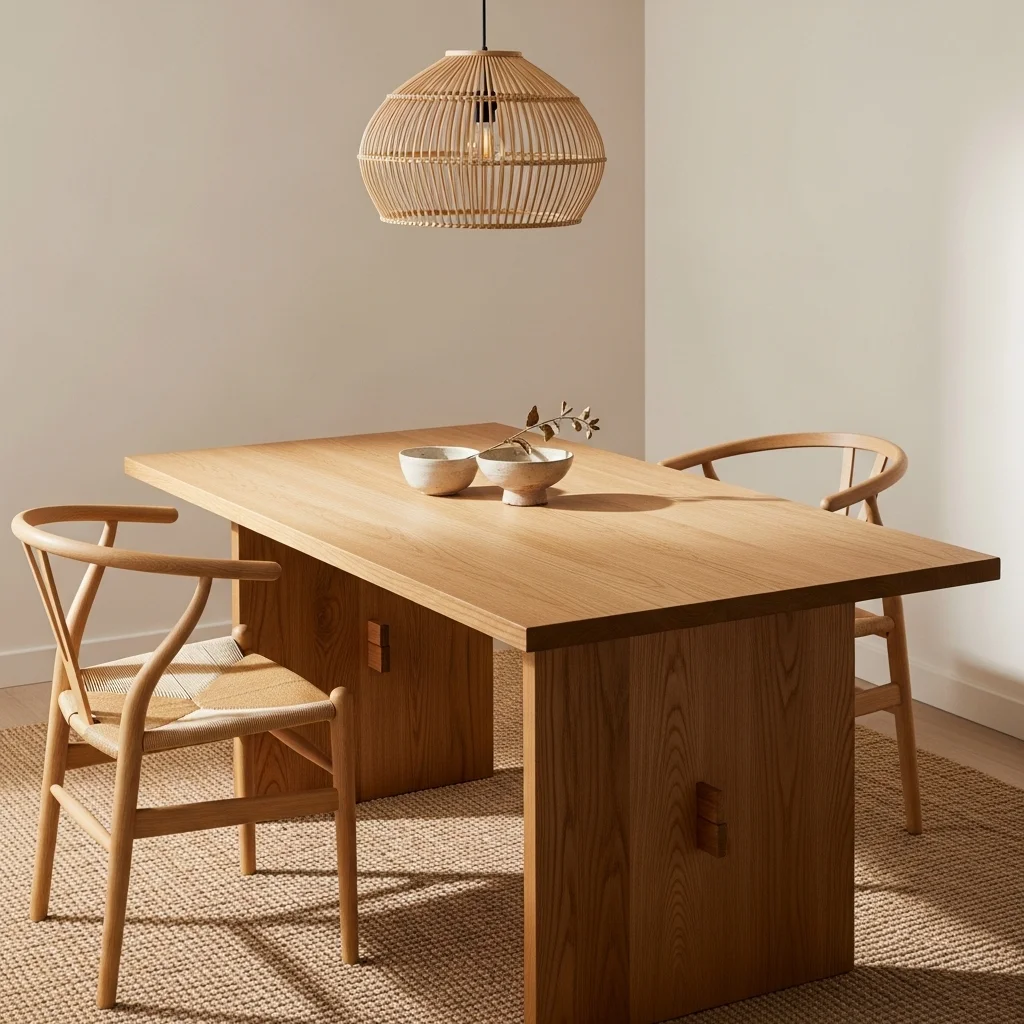
The wishbone chair, designed by Hans Wegner and long celebrated in scandinavian interior culture, is one of the most naturally japandi pieces of furniture available on the market today. Its clean Y-shaped back, gentle curves, and natural wood or painted finish align beautifully with the japandi appreciation for craftsmanship and simplicity. Paired with a solid oak table in a corner setting, a set of wishbone chairs creates a nook that is immediately recognizable as both considered and welcoming.
For the most authentic japandi expression, choose wishbone chairs in natural beech or whitened oak rather than painted versions.
Slatted Wood Wall Panel as a Corner Backdrop
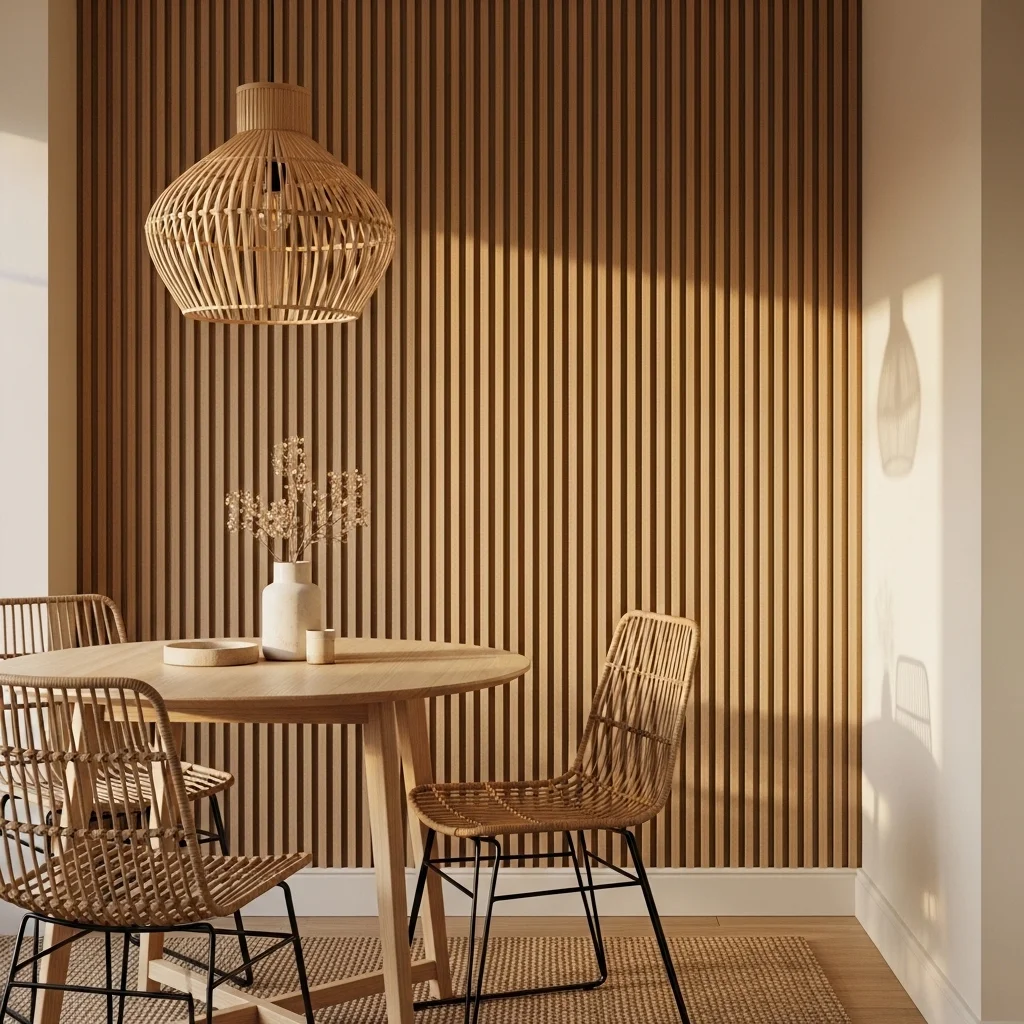
Installing a slatted wood wall panel behind a corner dining nook adds architectural depth and warmth without requiring a full renovation. Vertical wood slats in pale oak or warm pine create a rhythm on the wall that draws the eye and gives the corner an intentional, designed character. Against this backdrop, even the simplest furniture arrangement reads as thoughtfully composed.
Open Shelf Unit Integrated into the Corner
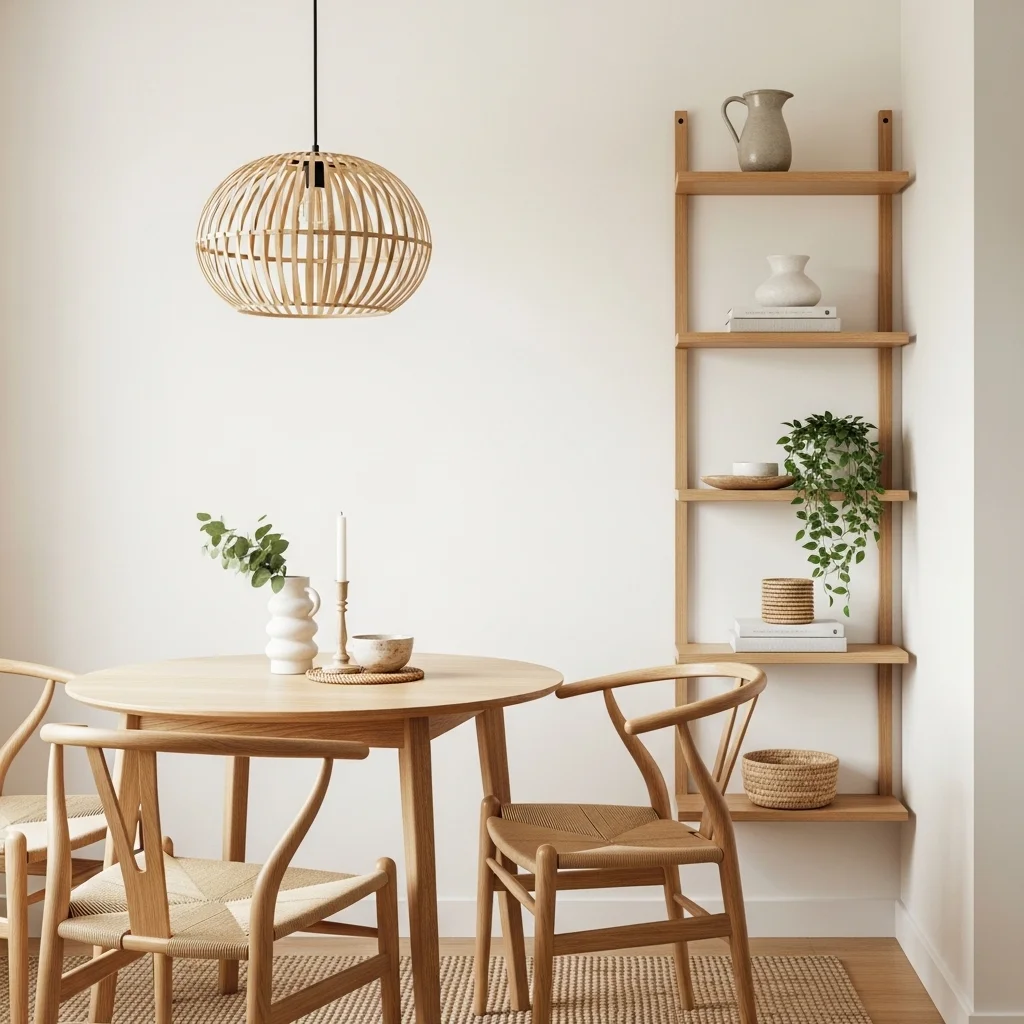
A slim open shelf unit placed beside or behind a corner dining nook provides both vertical storage and an opportunity for curated display that brings personality to the space without crowding it.
Earthy Tone Palette: Clay, Sage, and Warm Stone
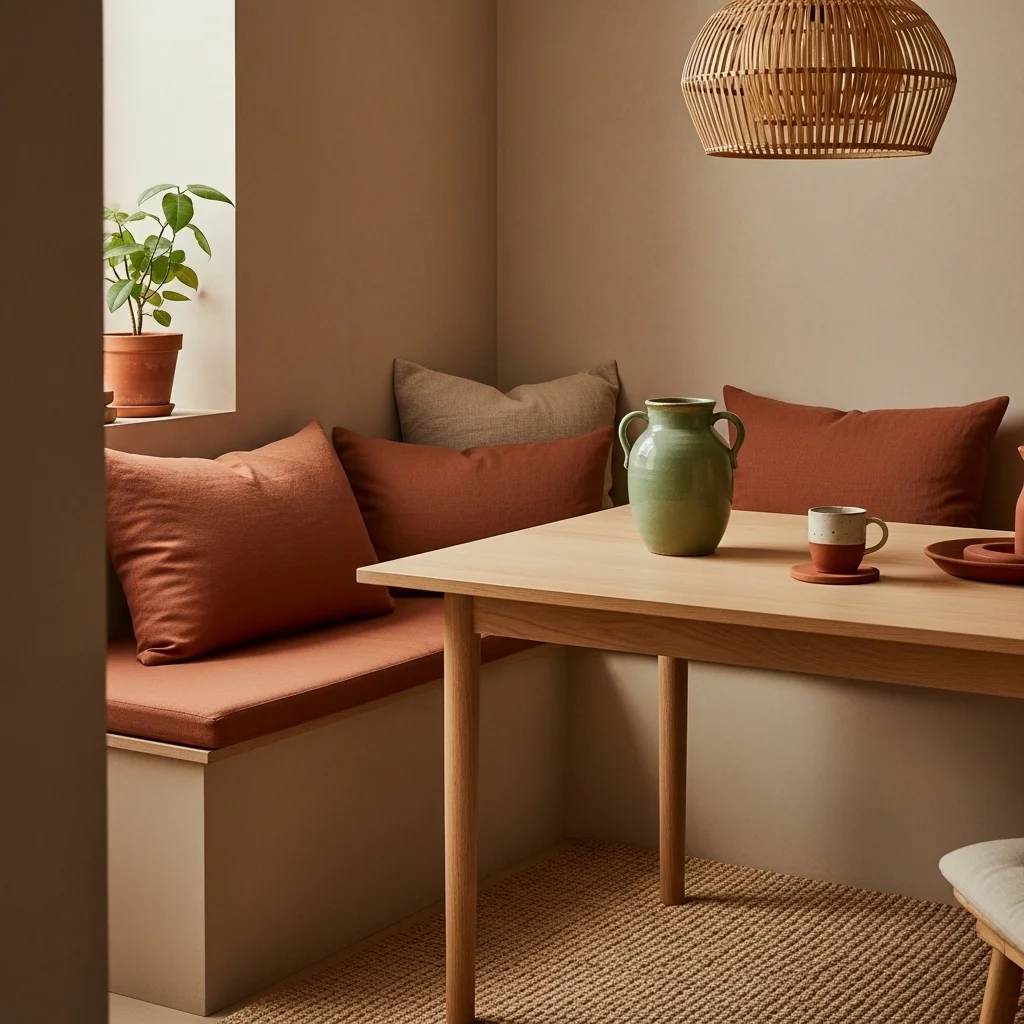
The color palette of a japandi dining room does most of the emotional work of the space. In a corner nook, where the palette is concentrated in a smaller visual field, the choice of tones is even more consequential.
Indoor Plants as Organic Softening Elements
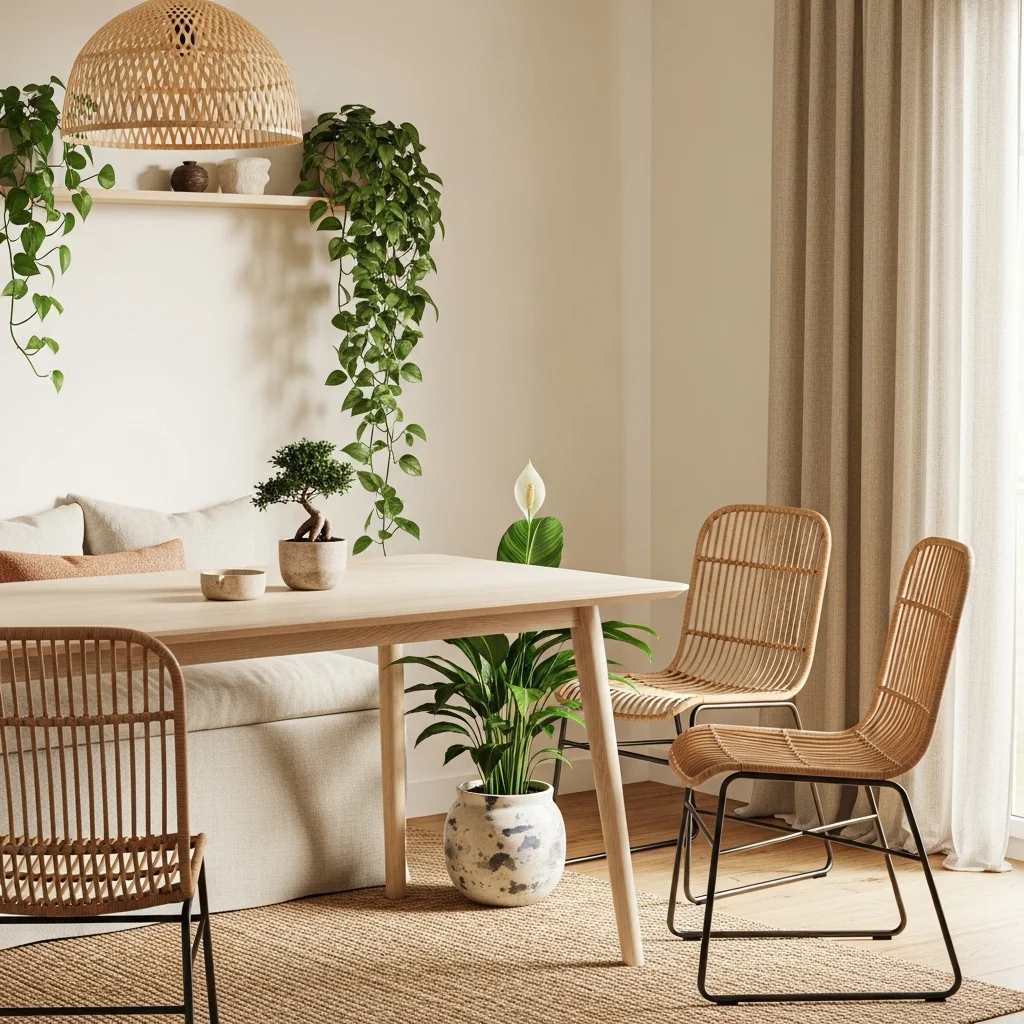
Plants are not decoration in a japandi dining room; they are essential participants in the design. They introduce living organic form into a space that might otherwise feel overly controlled, and they reinforce the connection to nature that both japanese and scandinavian design traditions celebrate.
Ceramic and Handmade Tableware as Everyday Beauty
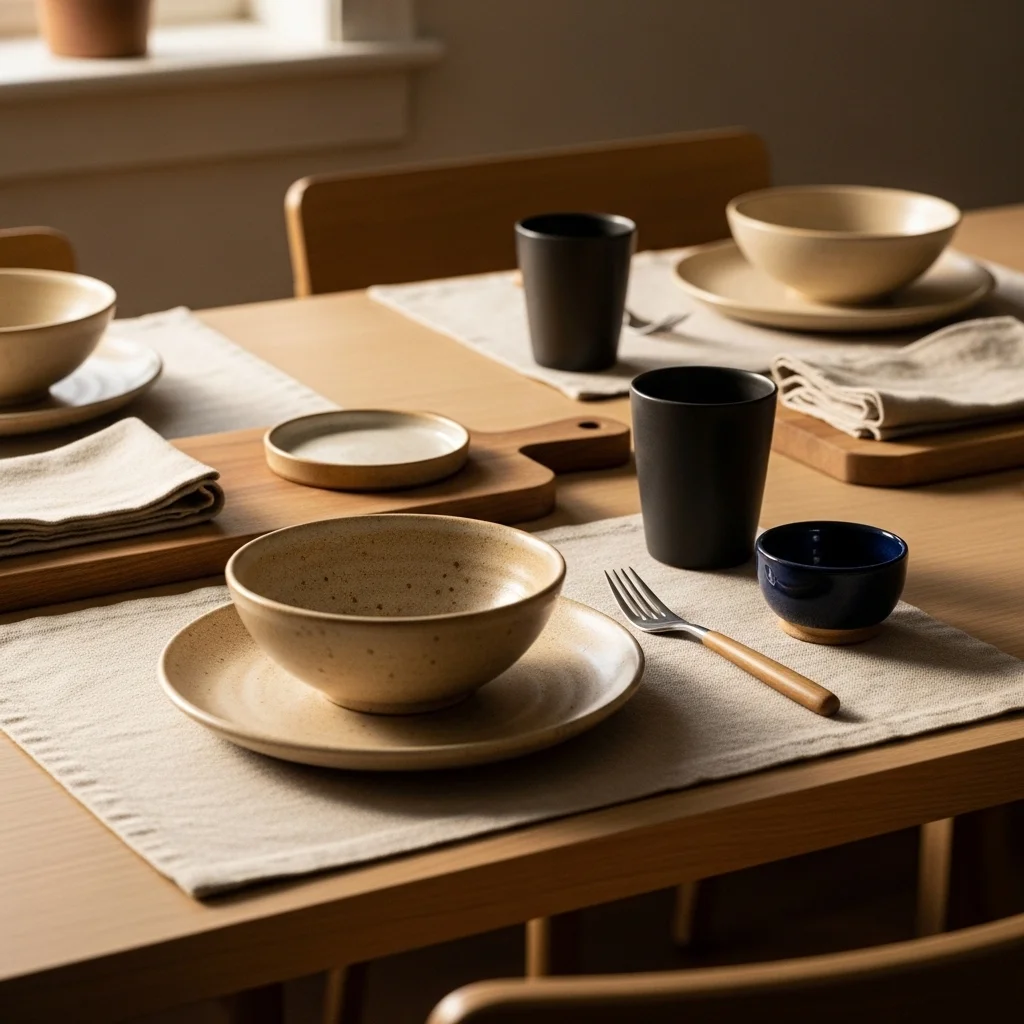
One of the most accessible and genuinely japandi ways to elevate a corner dining nook is through the choice of tableware. Handmade ceramic bowls, plates with gentle imperfections, linen placemats, and wooden serving boards bring the wabi-sabi philosophy directly to the table surface. These are objects meant for daily use, not display, which is what gives them their particular japandi authenticity.
Dried Botanicals and Branches as Minimal Centerpieces
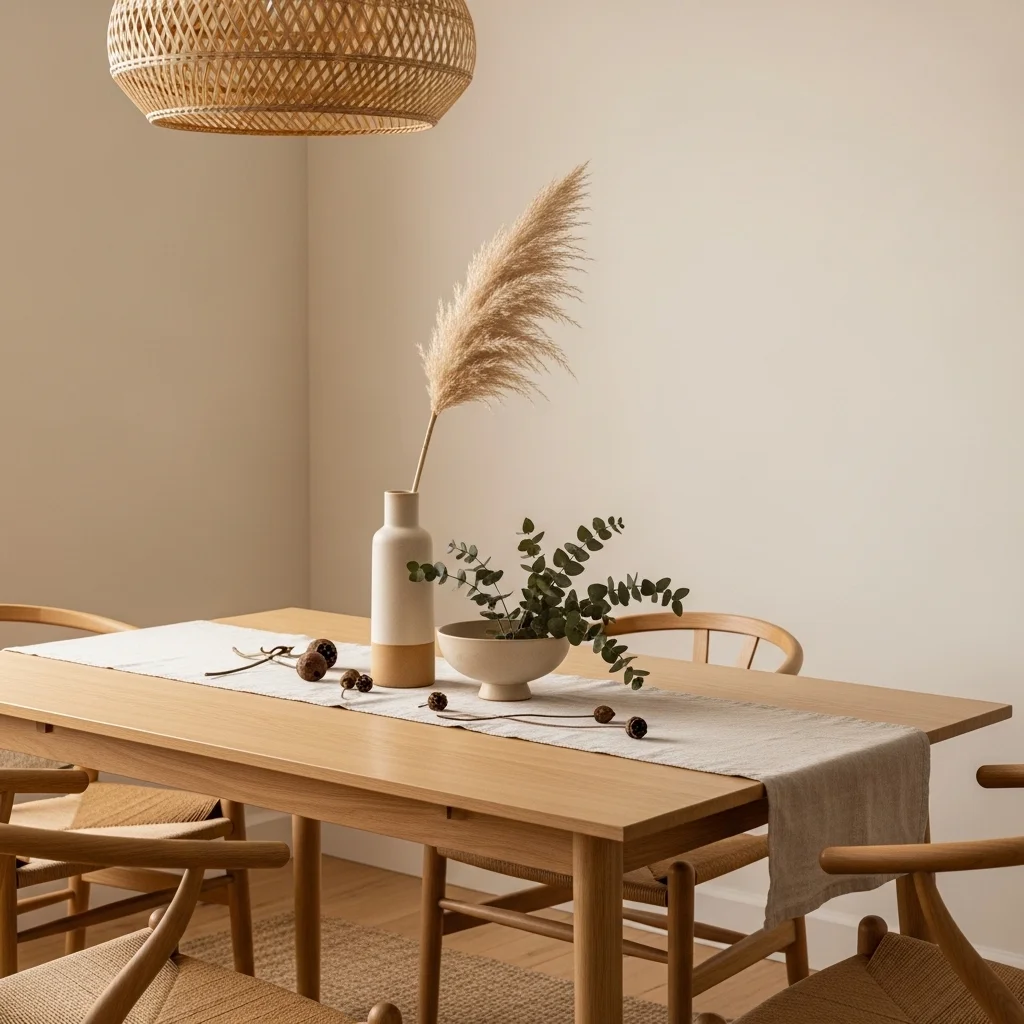
Fresh flowers are lovely, but dried botanicals and sculptural branches speak more directly to the japandi aesthetic by celebrating the beauty of things in transition, which is a central wabi-sabi value. A single dried pampas grass stem in a tall ceramic vase, a branch of dried eucalyptus.
Multifunctional Corner Nook That Doubles as a Workspace
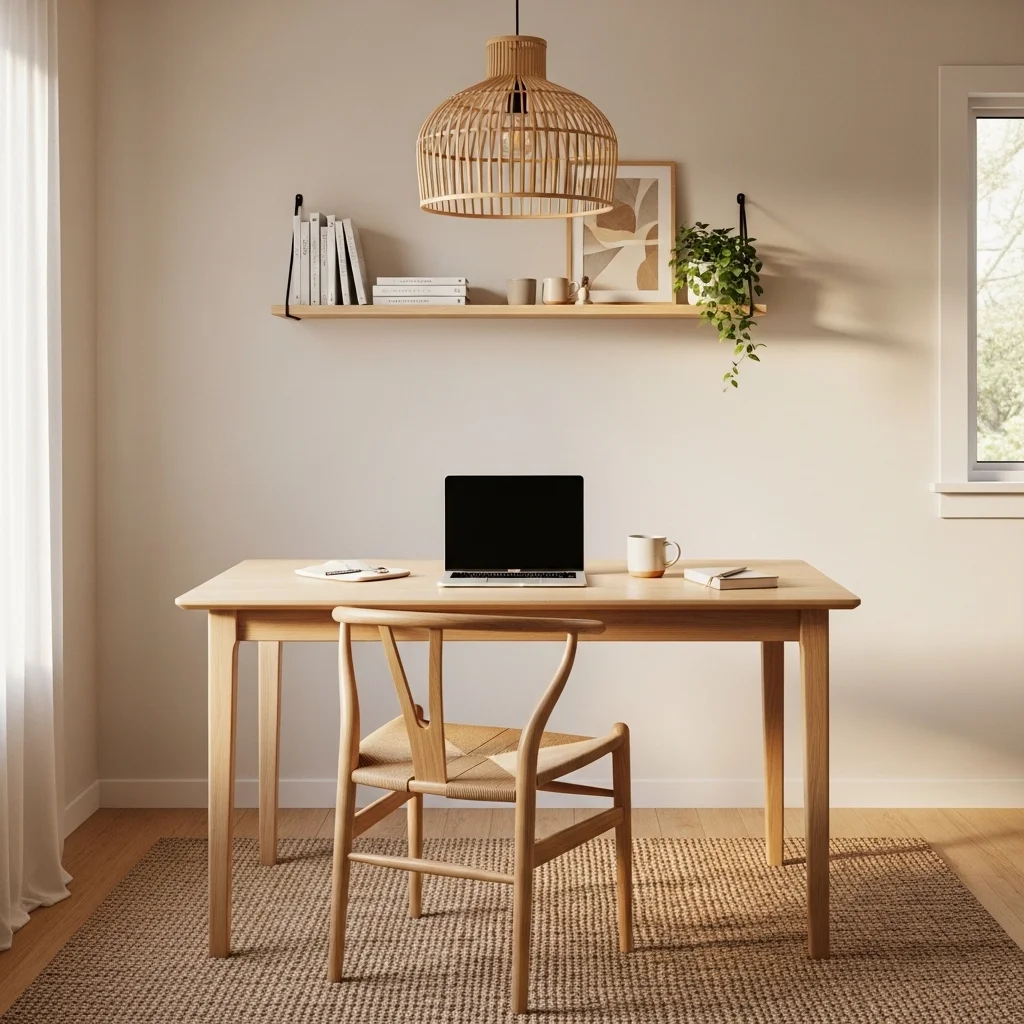
In small homes where every space must serve more than one purpose, a japandi corner dining nook can be designed from the outset to function as a work area during the day. A clean-lined table at standard dining height works equally well as a desk.
Mirror to Expand the Visual Depth of a Small Corner
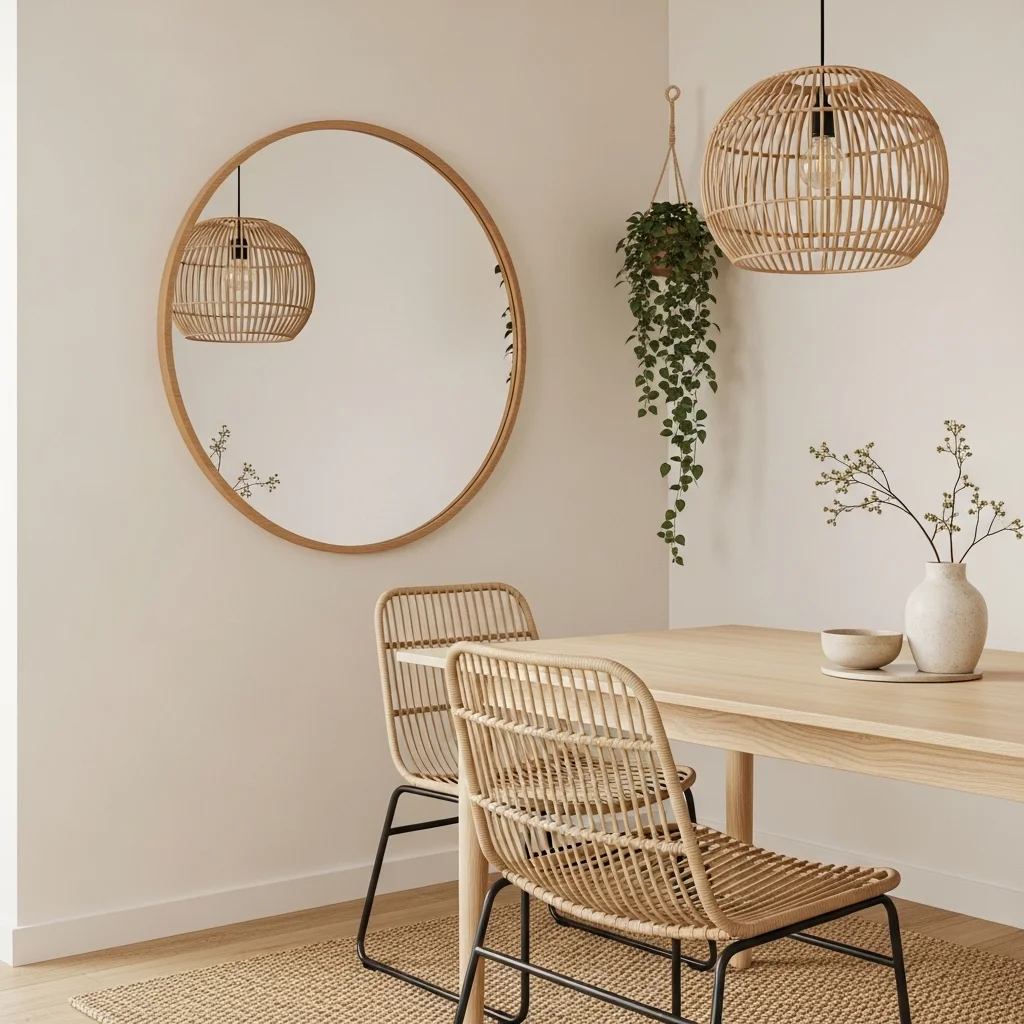
A carefully placed mirror in a corner dining nook performs the reliable small-space trick of doubling the perceived depth of the room while adding a layer of japandi-appropriate reflection and light.
Linen Curtain Divider for Corner Privacy
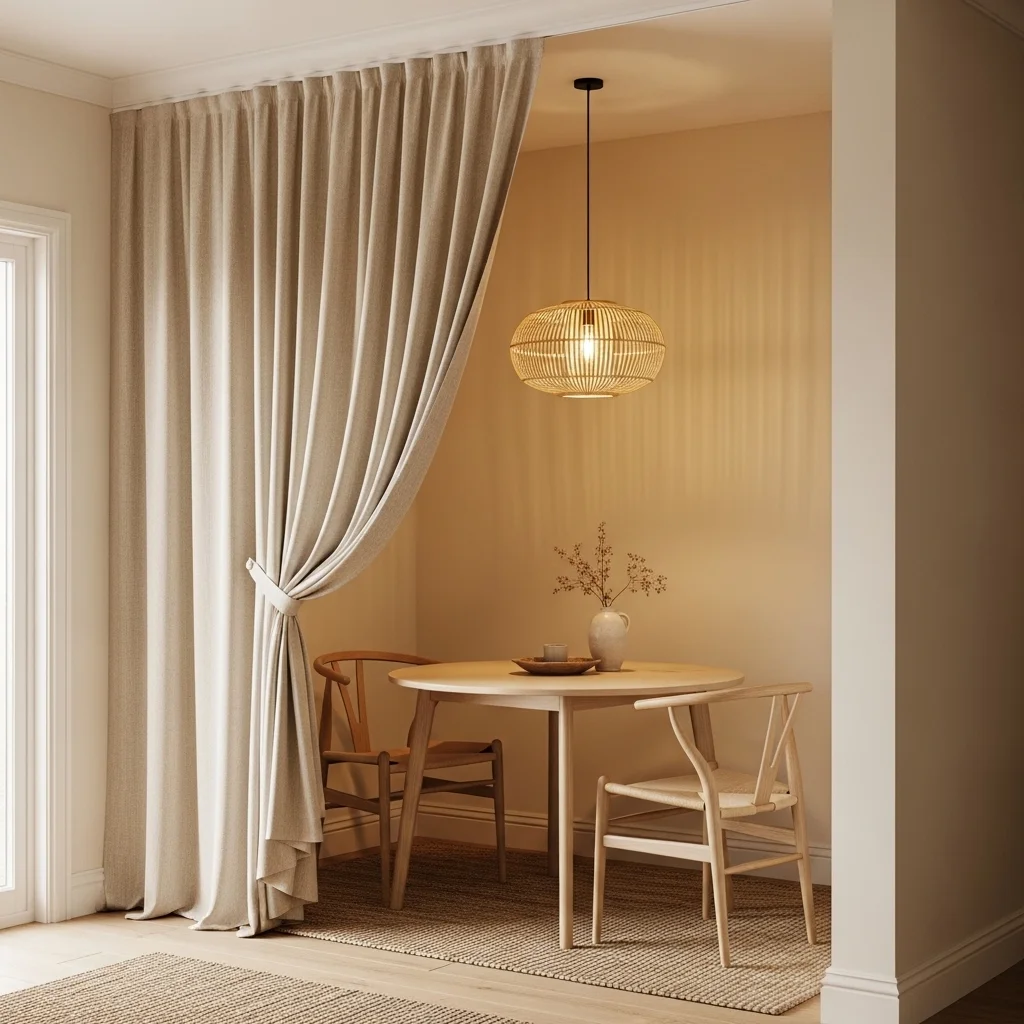
A floor-length linen curtain hung from a ceiling track can be drawn across the entrance to a corner dining nook to create a sense of enclosure and privacy without permanent construction. This idea is particularly useful in open-plan spaces where the dining corner needs to feel more intimate during evening meals.
Choose unbleached or very lightly dyed linen in warm off-white or pale sandy beige.
Floating Shelf Gallery for Curated Corner Display
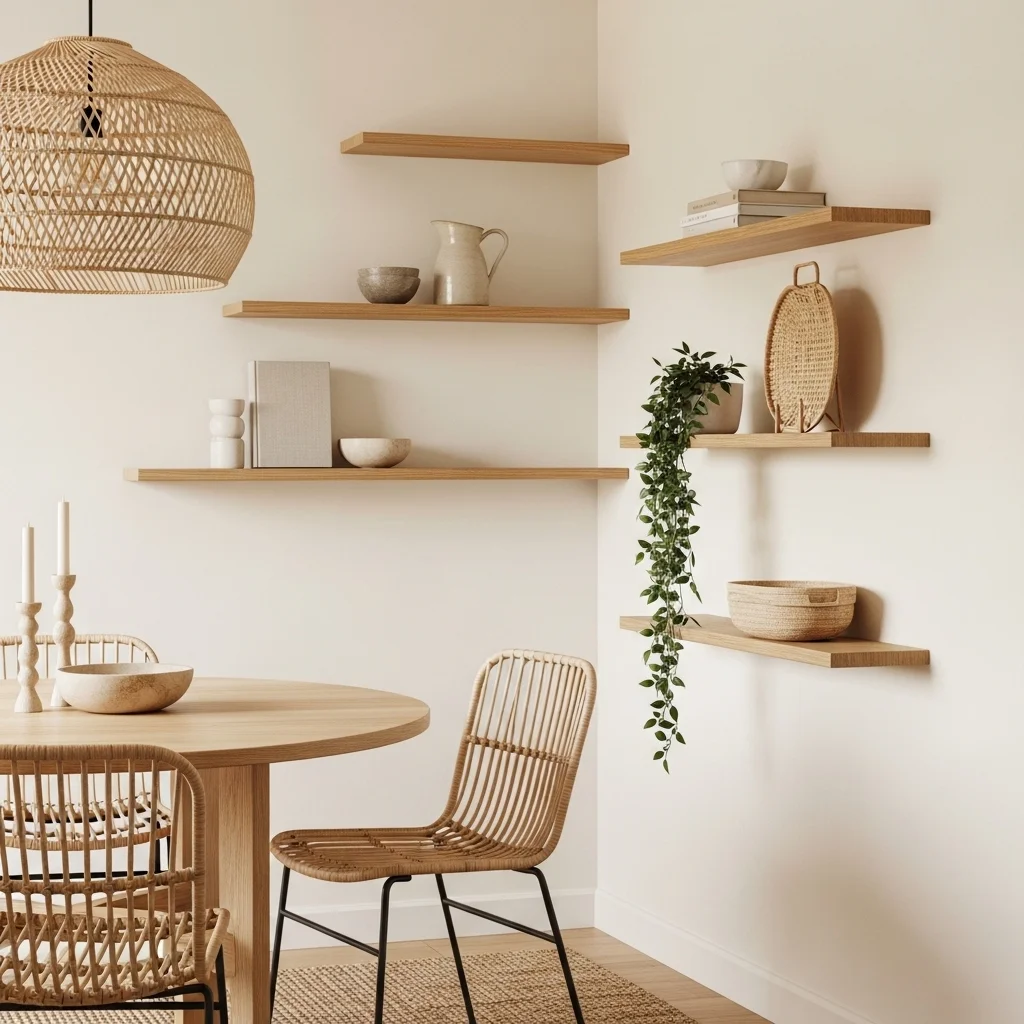
A small arrangement of floating shelves at varying heights on the wall above or beside a corner dining nook creates a vertical gallery that adds interest and personality without consuming floor space.
The arrangement of the shelves should feel considered but not symmetrical.
Muted Artwork as a Quiet Anchor
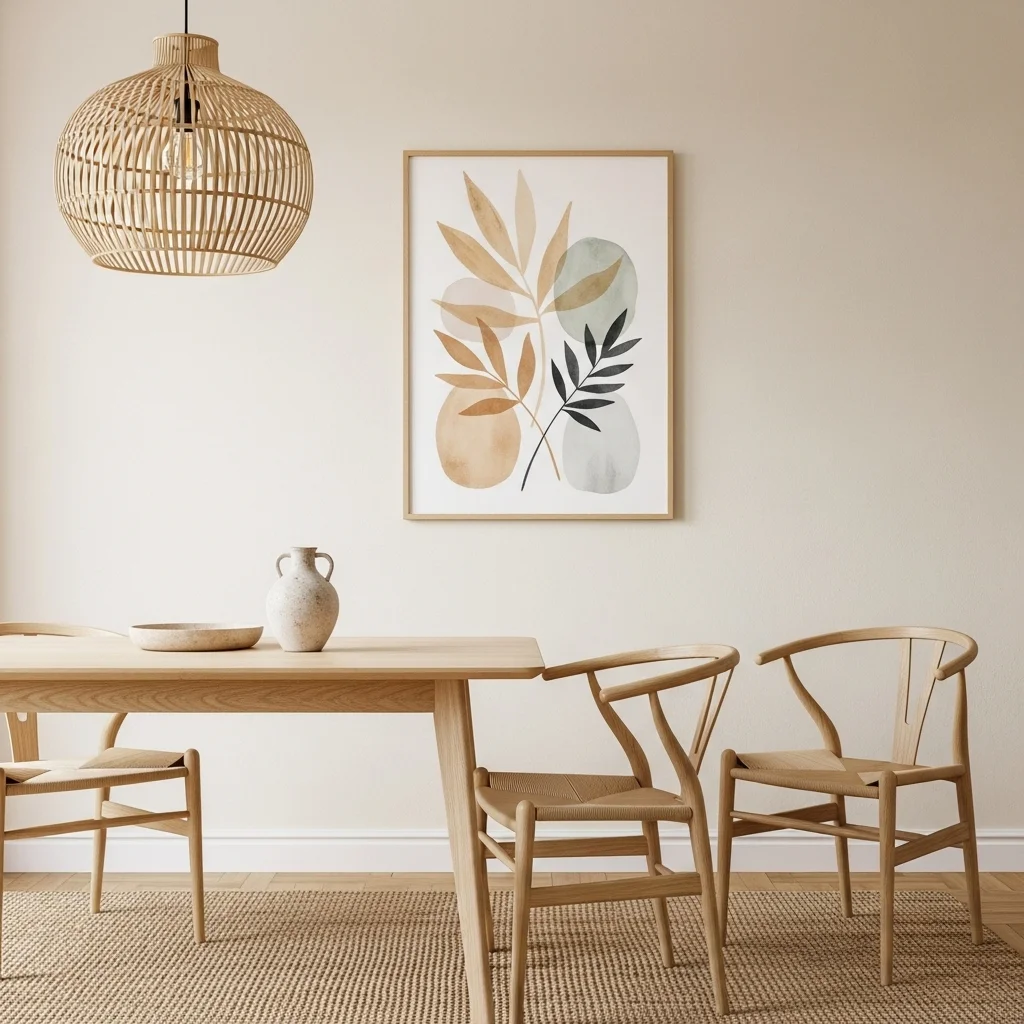
A single piece of artwork on the wall of a corner dining nook can provide the visual anchor that completes the space without dominating it. In japandi design, the artwork should evoke calm rather than excitement: abstract botanical forms, simple brushstroke compositions in ink or watercolor.
The frame should be minimal, in natural wood or a thin matte black profile, and the artwork should be hung at eye level from the seated position rather than the standing position, which is the appropriate visual axis for a dining area.
Conclusion
A japandi dining room corner nook is one of the most satisfying small-space design projects available to a homeowner or renter. The style’s core principles, natural materials, restrained color, purposeful furniture, and a deep respect for simplicity, make it uniquely well-suited to compact corners that might otherwise feel like wasted space. The 24 ideas explored in this article offer a range of approaches, from built-in banquettes and wall-mounted tables to woven rattan chairs, shoji screens, and curated shelf displays, all of which share the same underlying commitment to spaces that are genuinely calm, warm, and humanly beautiful.
Frequently Asked Questions
What is a japandi dining room?
A japandi dining room combines japanese minimalism with scandinavian warmth and functionality. It uses natural materials, clean lines, neutral color palettes, and a limited selection of purposeful furniture to create a dining space that feels calm, warm, and beautifully simple.
What furniture works best for a japandi corner dining nook in a small space?
Built-in banquette seating, wall-mounted foldable tables, round tables in light oak, and wishbone or rattan chairs all work exceptionally well. The priority is furniture with clean lines, natural materials, and modest scale that does not overwhelm a small corner.
What colors should I use in a japandi dining room?
Stick to warm neutrals such as cream, oat, warm stone, sandy beige, and warm grey. Earthy accents in clay, sage, muted terracotta, or dusty blue add depth without breaking the restrained japandi palette.
How do I make a small corner dining nook feel larger using japandi principles?
Use a round table to improve flow, maximize natural light with sheer linen curtains or bamboo blinds, add a simple mirror to increase visual depth, and keep surfaces clear of unnecessary objects. Low furniture profiles also help make ceilings feel higher.
Can japandi style work in a rented apartment where I cannot make permanent changes?
Absolutely. Wall-mounted foldable tables, linen curtain dividers, shoji screens, natural fiber rugs, pendant lights on ceiling hooks, and carefully chosen furniture all allow a complete japandi dining corner without permanent alterations to walls or floors.