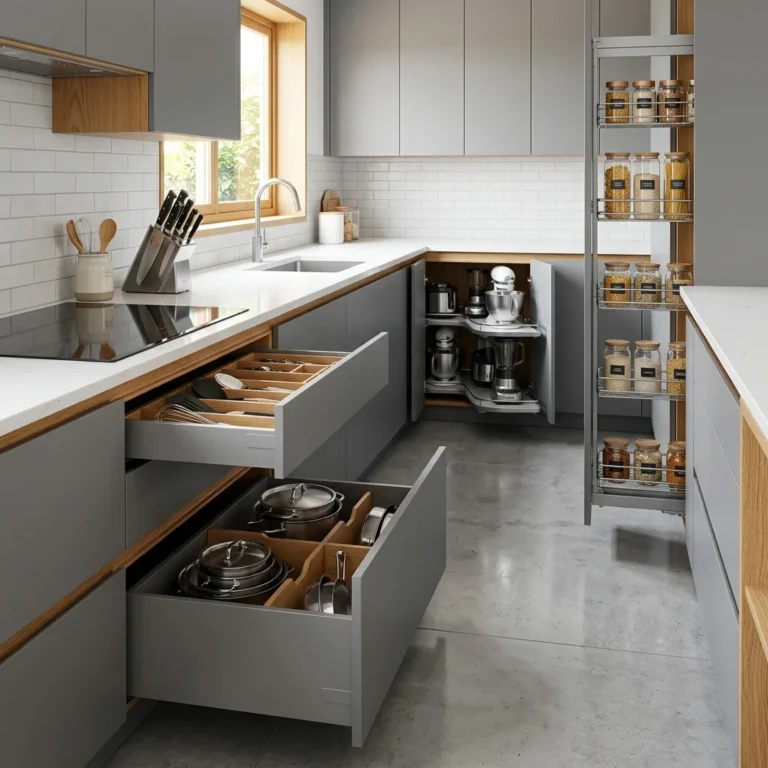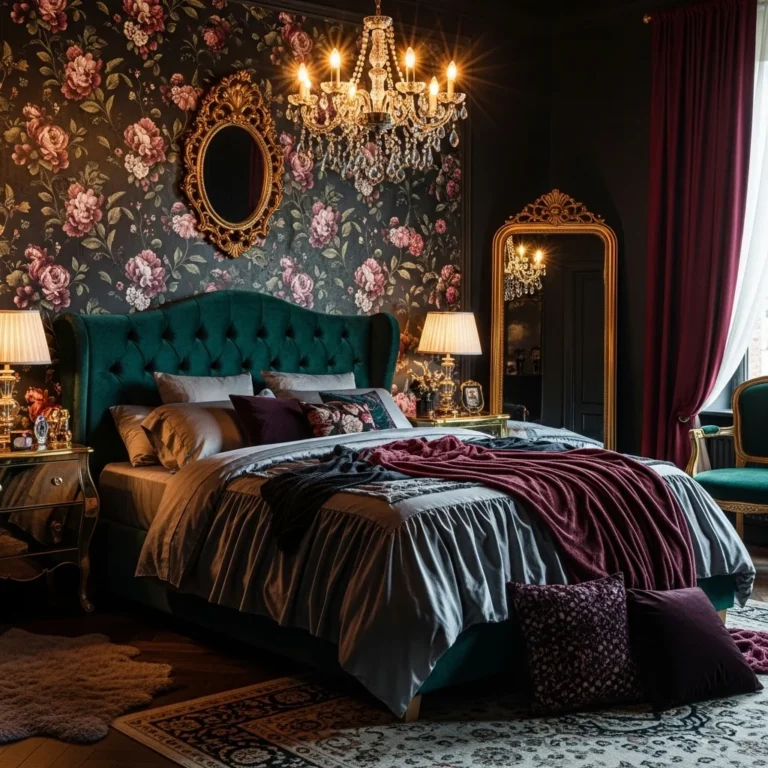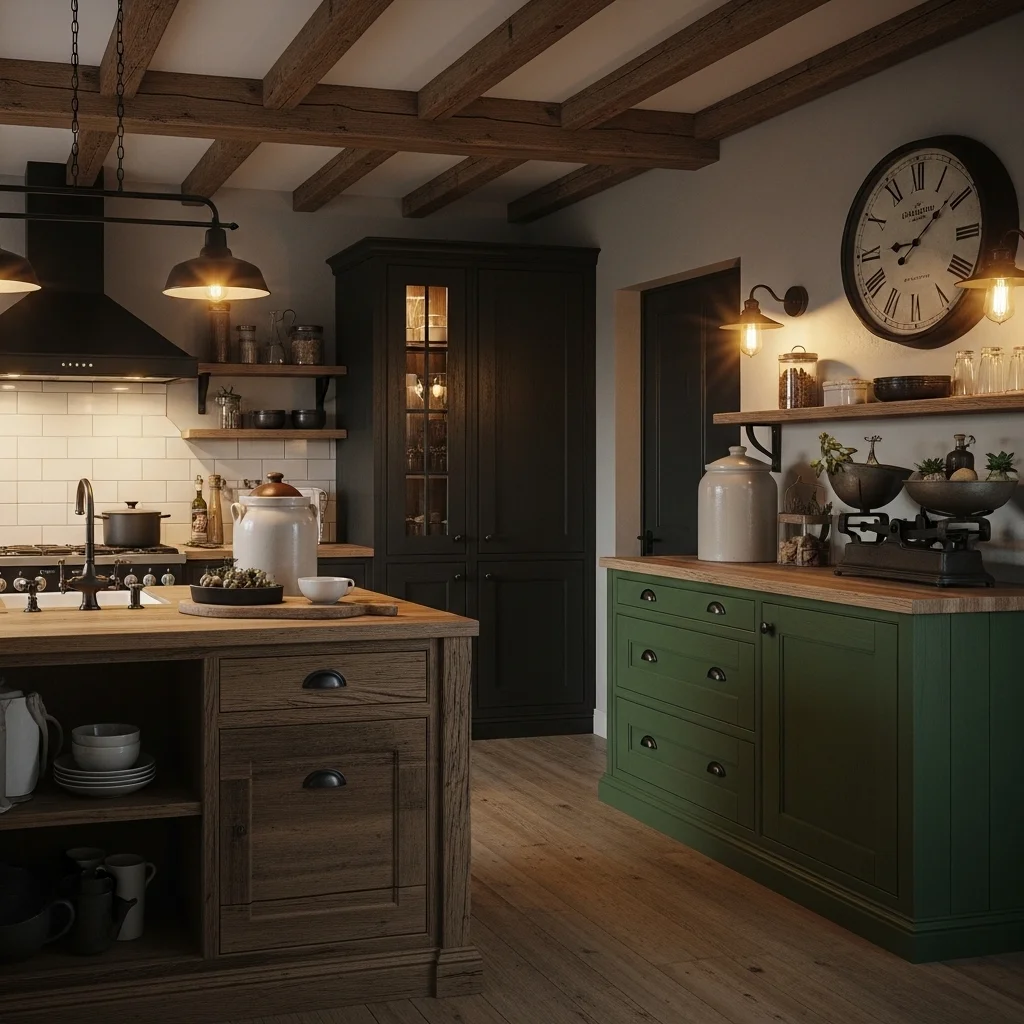
A moody farmhouse kitchen represents a refined evolution of classic farmhouse design, combining rustic charm with deeper, more dramatic tones. Instead of relying on bright whites and airy palettes, this style leans into rich colors, layered materials, and atmospheric lighting to create a space that feels both grounded and sophisticated. It is a perfect choice for homeowners who appreciate the warmth of traditional farmhouse aesthetics but want a more modern, elevated look.
What makes this style truly compelling is its balance. Dark elements provide depth and drama, while natural materials and soft textures ensure the space remains inviting. By carefully combining these components, you can design a kitchen that feels cozy yet bold, timeless yet fresh. The following ideas will guide you in creating a moody farmhouse kitchen that is both functional and visually striking.
Dark Cabinetry for a Bold Foundation
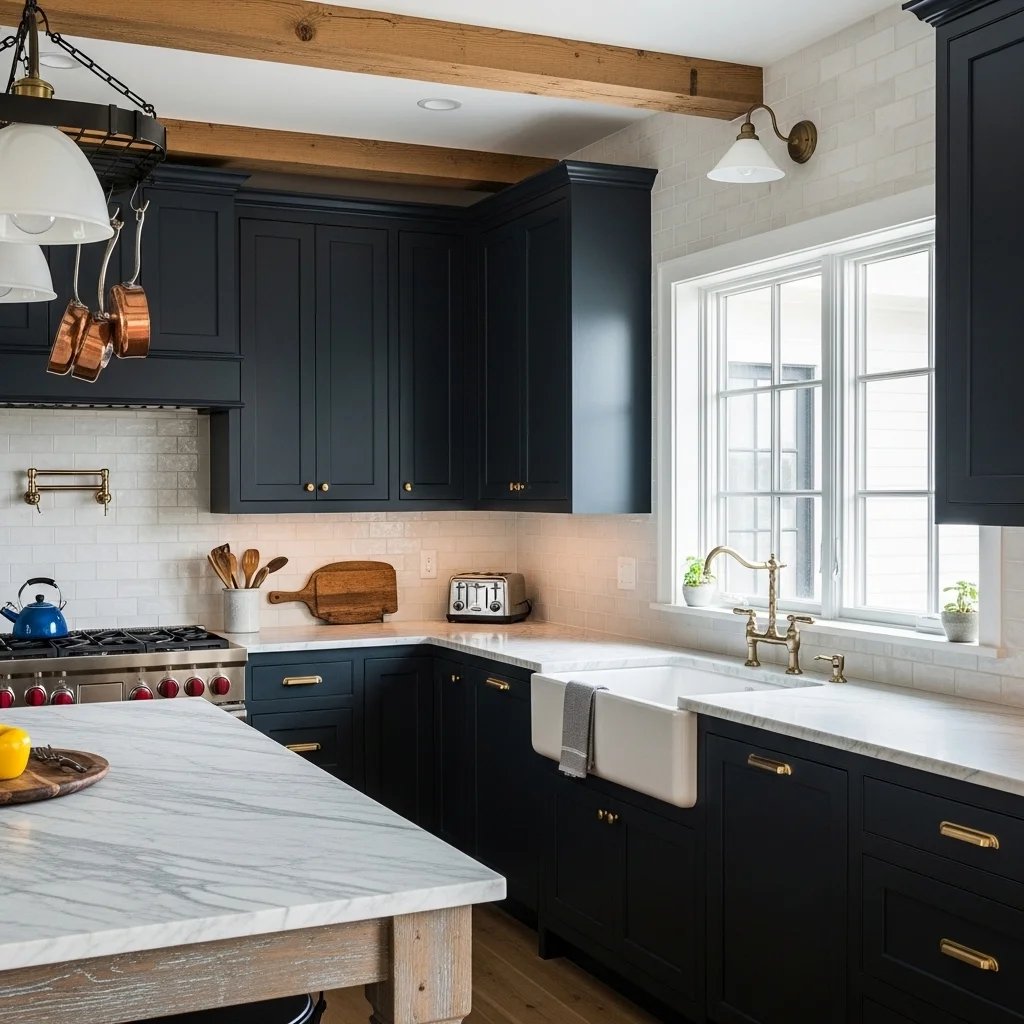
Dark cabinetry serves as the backbone of a moody farmhouse kitchen, instantly setting a dramatic tone. Shades like deep navy, charcoal gray, forest green, and matte black create a strong visual presence that anchors the entire design. These colors not only add sophistication but also make other elements, such as wood textures and metallic accents, stand out more prominently.
To prevent the space from feeling too heavy, it is important to balance dark cabinets with lighter surfaces. Pairing them with white or neutral countertops, subtle backsplashes, or even glass-front cabinets can create contrast. The result is a kitchen that feels rich and layered without becoming overwhelming, maintaining both elegance and approachability.
Reclaimed Wood for Authentic Warmth
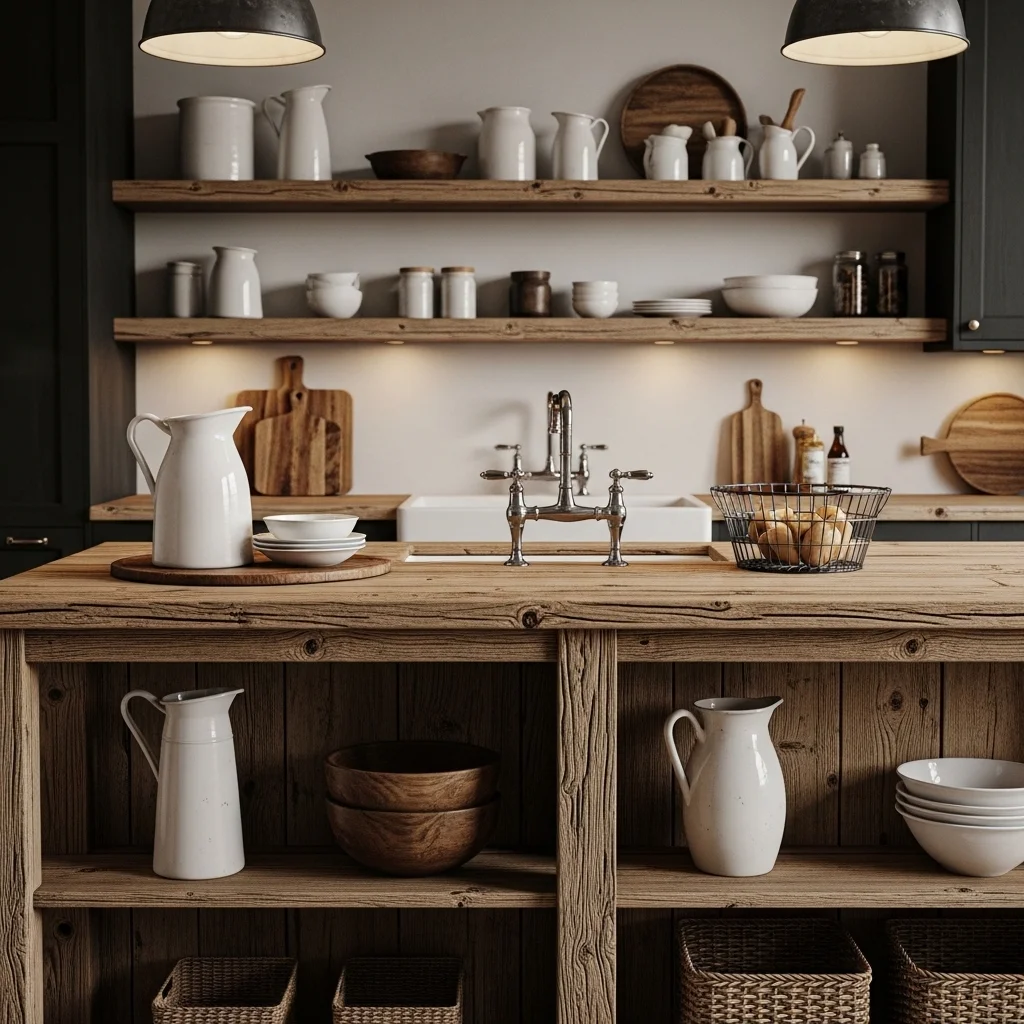
Reclaimed wood introduces an unmistakable sense of history and authenticity into a moody farmhouse kitchen. Its natural imperfections, such as knots, grain variations, and weathered finishes, add character that enhances the rustic appeal. Whether used for open shelving, ceiling beams, or an island countertop, reclaimed wood brings warmth that balances darker tones.
In addition to its aesthetic benefits, reclaimed wood contributes to a sustainable design approach. It repurposes materials that would otherwise go to waste, making your kitchen both beautiful and environmentally conscious. When paired with darker cabinetry, the contrast between aged wood and deep hues creates a layered, inviting look that feels timeless.
Statement Lighting to Set the Mood
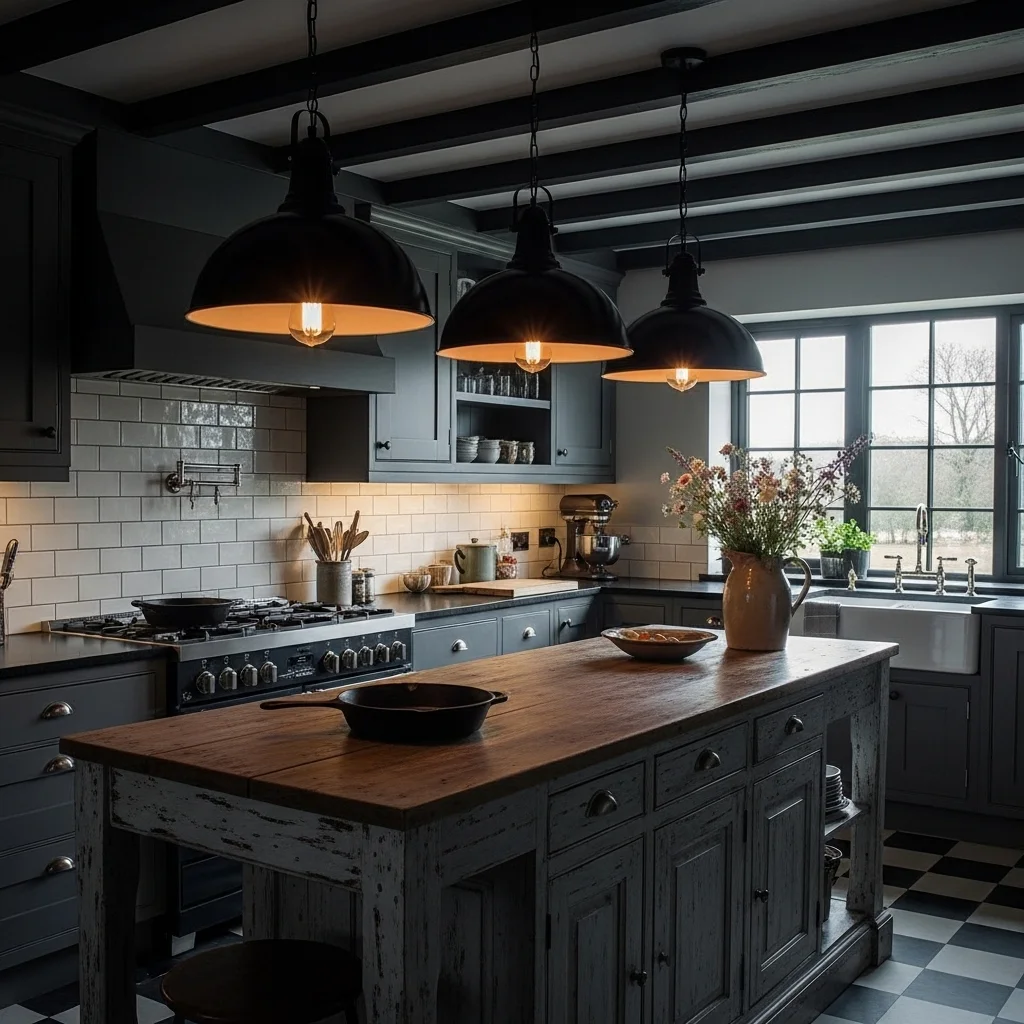
Lighting is one of the most important elements in achieving a moody farmhouse kitchen. Statement fixtures such as oversized pendant lights, wrought iron chandeliers, or industrial-style lamps can define the space and draw attention to key areas like the island or dining table. These pieces not only provide illumination but also act as decorative focal points.
Layering different types of lighting ensures both functionality and ambiance. Ambient lighting provides overall brightness, task lighting supports cooking activities, and accent lighting highlights architectural features or décor. Using warm-toned bulbs enhances the cozy atmosphere, making the kitchen feel welcoming even with darker design elements.
Farmhouse Sink with a Dramatic Twist
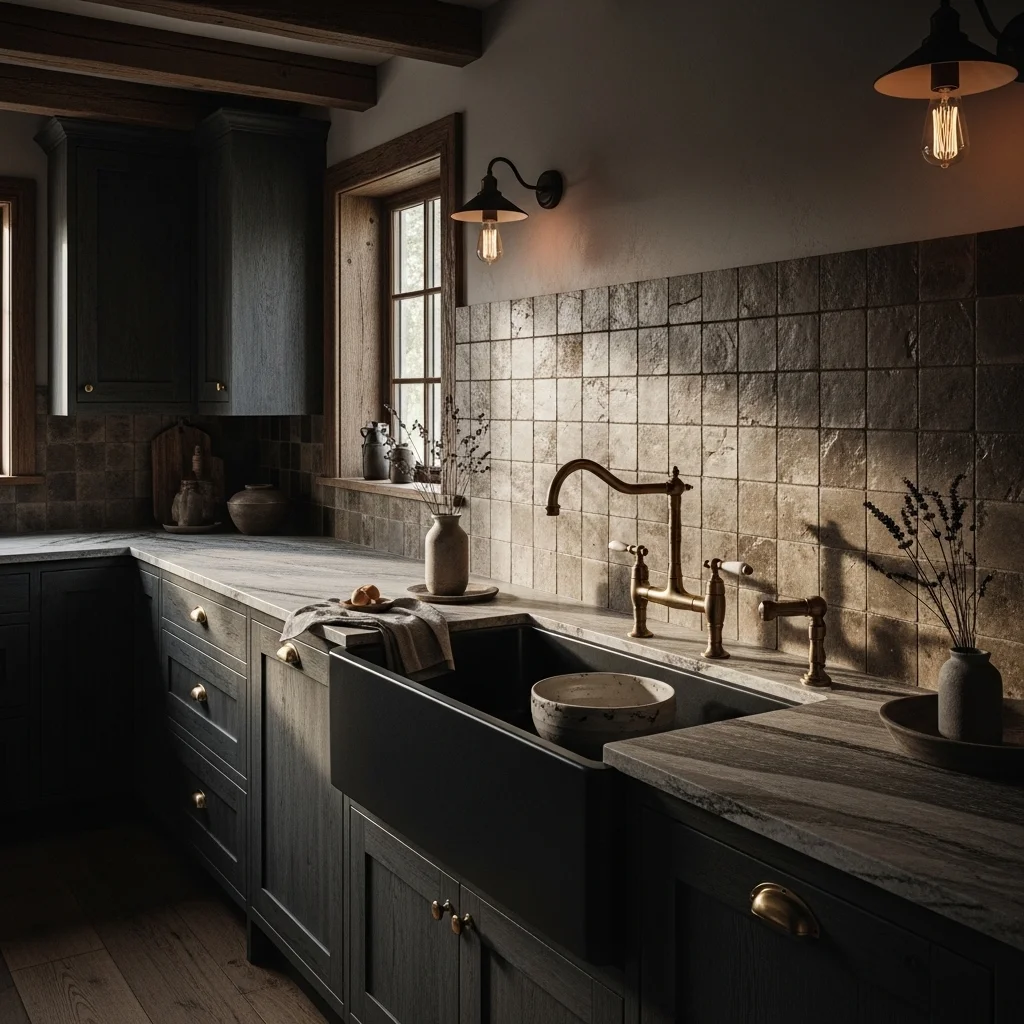
The farmhouse sink remains a central feature in this design style, but a moody kitchen allows for more creative interpretations. Instead of the traditional white apron-front sink, consider options in matte black, copper, or stone finishes. These choices add depth and align with the darker palette while maintaining the sink’s classic charm.
Pairing the sink with vintage-inspired faucets in finishes like brushed brass or oil-rubbed bronze enhances the overall look. The combination of bold materials and traditional forms creates a focal point that is both functional and visually compelling, reinforcing the balance between rustic and modern elements.
Open Shelving with Curated Decor
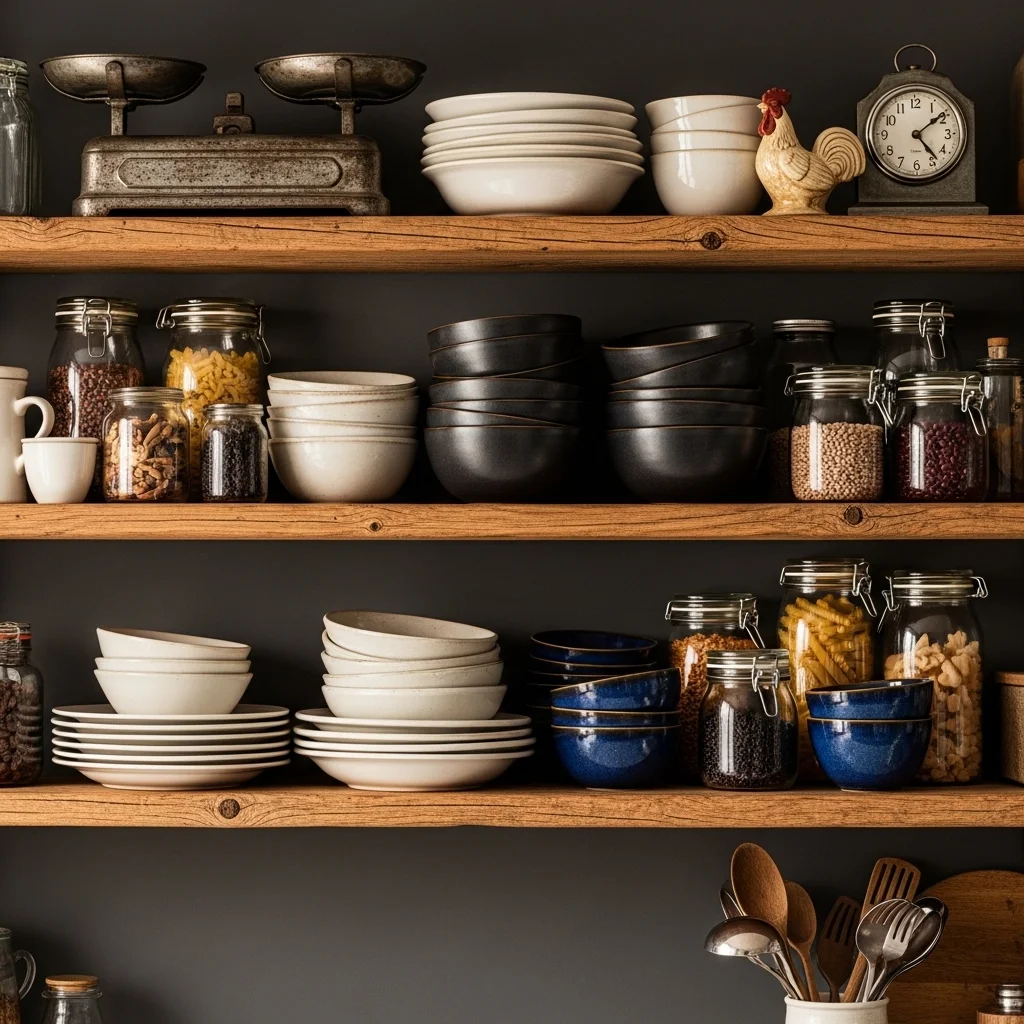
Open shelving is a practical and aesthetic addition that works beautifully in a moody farmhouse kitchen. Wooden shelves, especially those made from reclaimed or distressed wood, add warmth and break up the heaviness of dark cabinetry. They also provide an opportunity to display curated décor items.
Styling these shelves thoughtfully is key. Neutral ceramics, glass jars, vintage kitchenware, and small plants can create a cohesive and inviting display. Keeping the arrangement simple and intentional ensures the shelves enhance the design rather than cluttering the space.
Textured Backsplashes for Depth
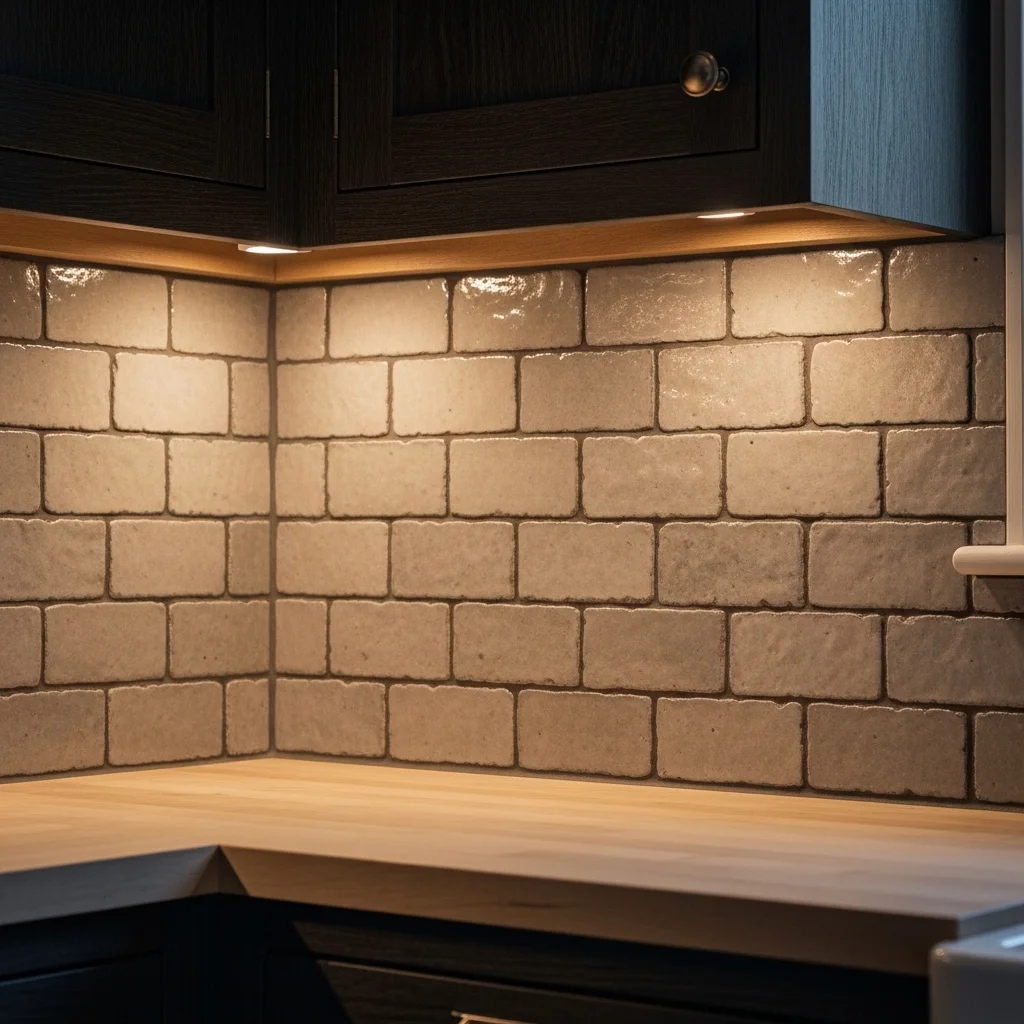
A textured backsplash adds visual interest and depth to a moody farmhouse kitchen. Materials like subway tiles with dark grout, handmade ceramic tiles, or natural stone create subtle variations that catch the light and prevent the space from feeling flat. These textures complement darker tones while adding dimension.
Choosing a backsplash that reflects light can also help balance the overall design. Even in a darker kitchen, these reflective surfaces create contrast and movement, making the space feel more dynamic and visually appealing without compromising the moody aesthetic.
Butcher Block Countertops for Balance
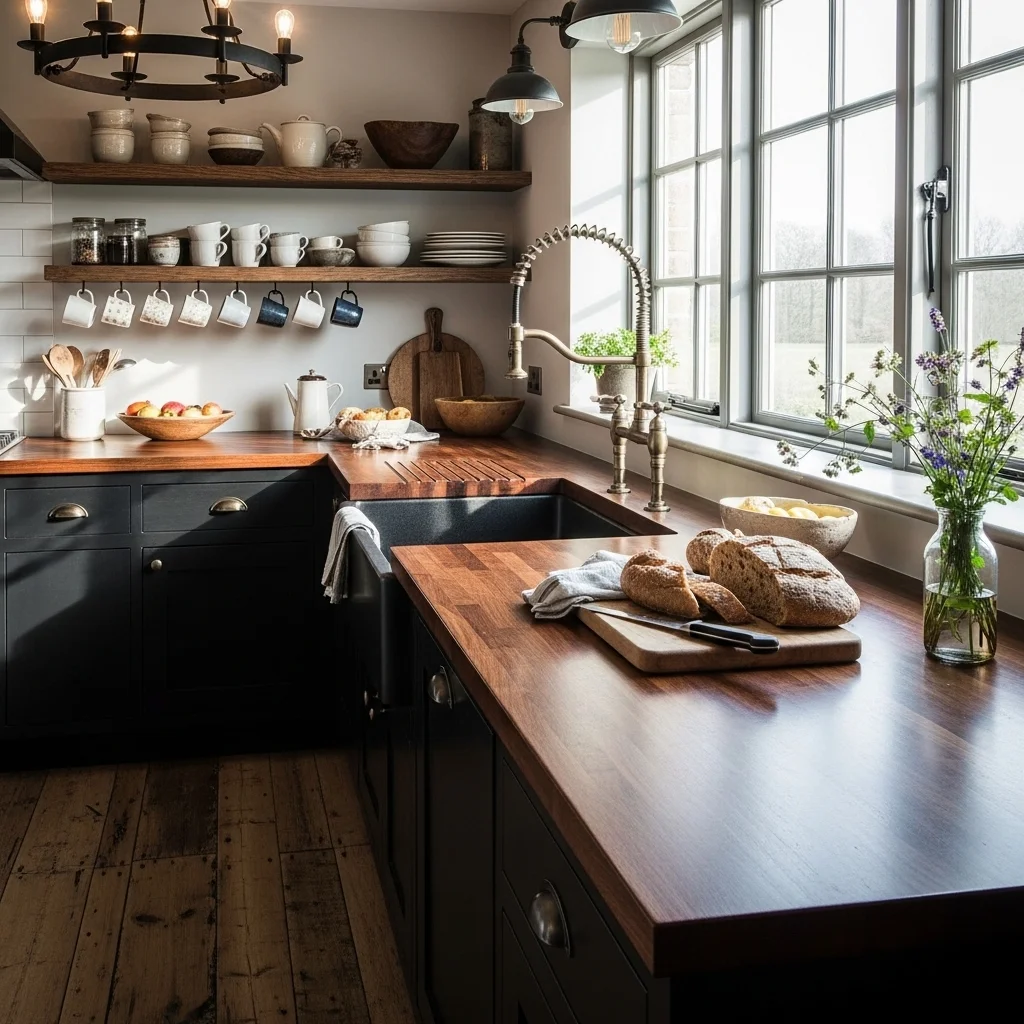
Butcher block countertops are a staple in farmhouse kitchens, and they play an important role in balancing darker elements. Their warm, natural tones soften the intensity of dark cabinetry and create a welcoming, approachable feel. This contrast is essential for maintaining harmony in the design.
Over time, butcher block develops a rich patina that enhances its character. This aging process aligns perfectly with the farmhouse philosophy of embracing imperfection and authenticity. When combined with darker features, these countertops help create a kitchen that feels both functional and full of personality.
Matte Black Hardware for a Modern Edge
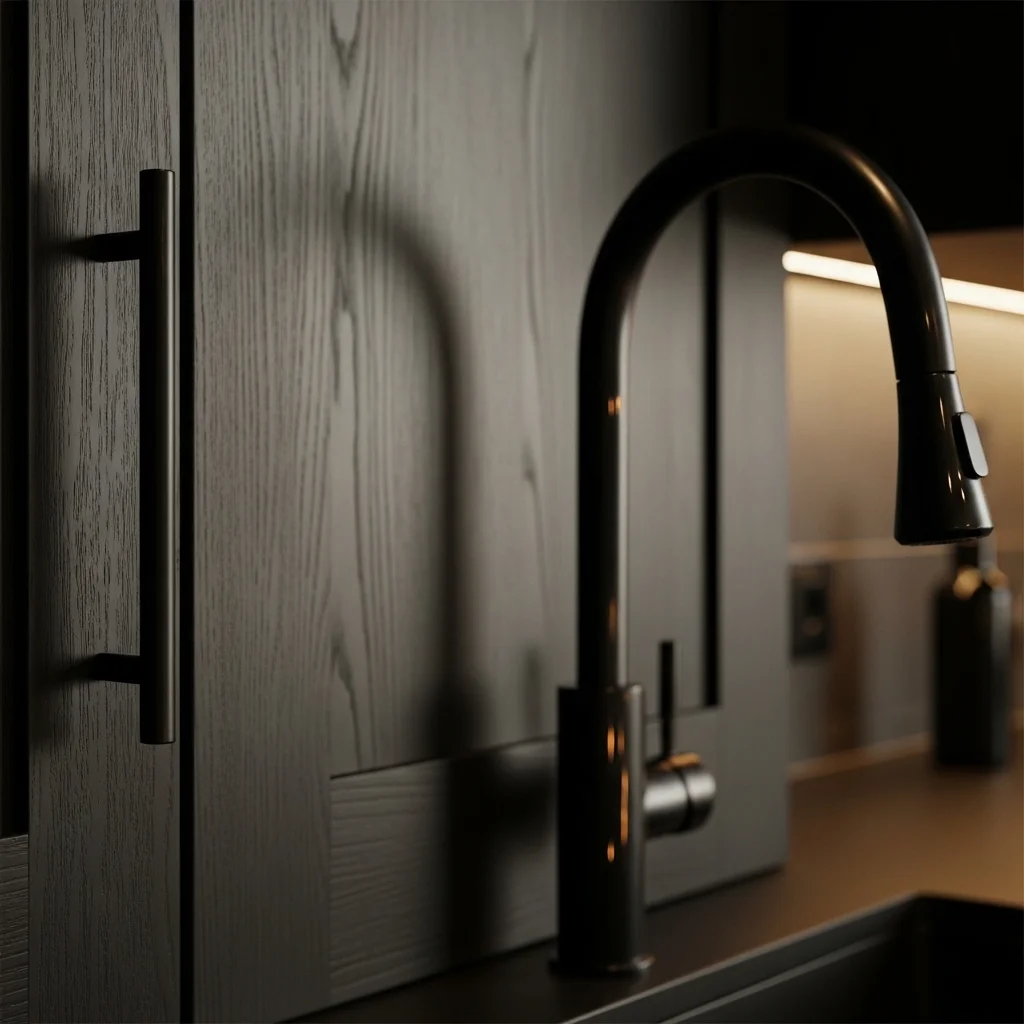
Matte black hardware is a defining detail in many moody farmhouse kitchens. It provides a sleek, modern contrast to rustic materials like wood and stone, creating a balanced and cohesive look. Cabinet handles, drawer pulls, and faucets in this finish tie the design together seamlessly.
This hardware choice is versatile and works well with a variety of color palettes. Whether paired with dark cabinets for a monochromatic look or lighter elements for contrast, matte black adds a refined touch that enhances the overall aesthetic without overpowering it.
Layered Textiles for Softness
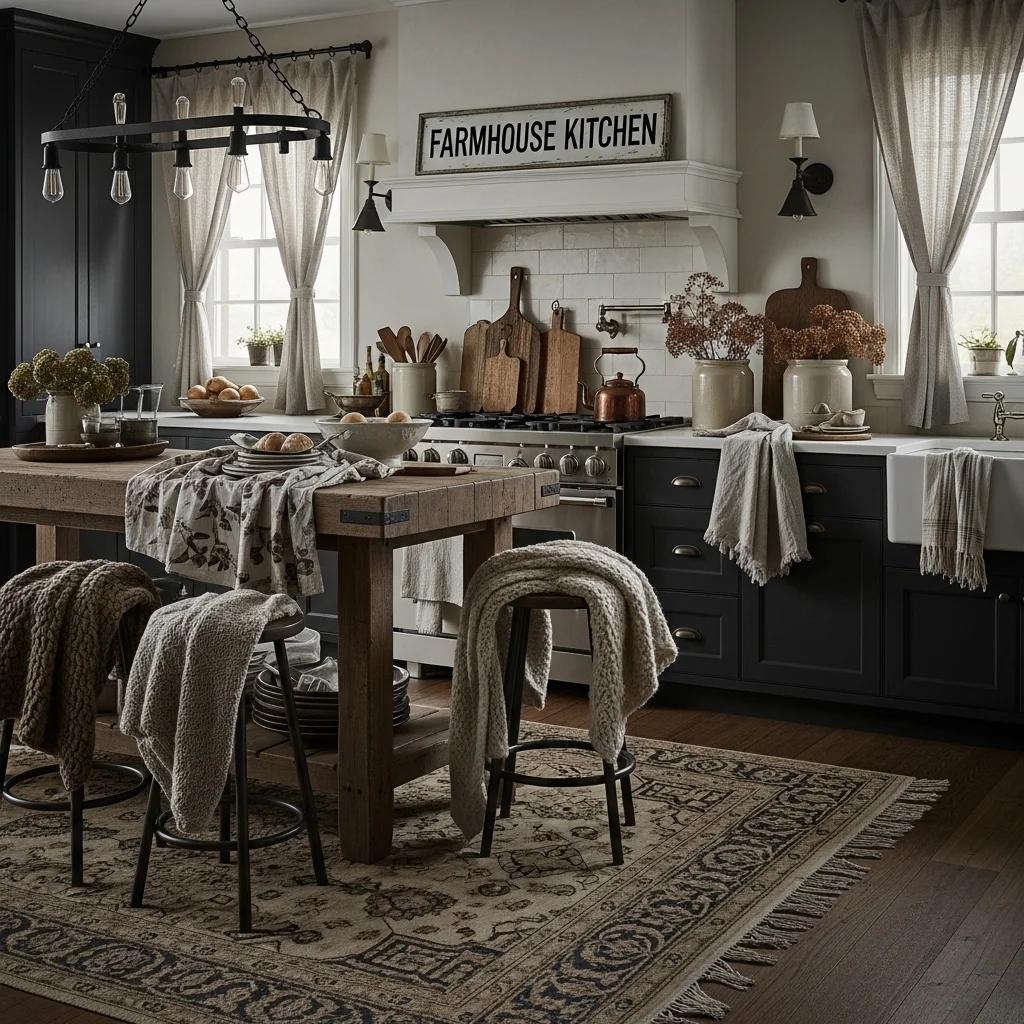
Textiles are essential for adding comfort and softness to a moody kitchen. Elements like linen curtains, woven rugs, and upholstered seating introduce texture and warmth, preventing the space from feeling too stark or industrial. These details make the kitchen more inviting and livable.
Choosing textiles in neutral or earthy tones ensures they complement the darker palette. Subtle patterns and natural materials can add depth without distracting from the overall design. This layering of textures creates a cozy atmosphere that balances the boldness of darker elements.
Vintage Accents for Character
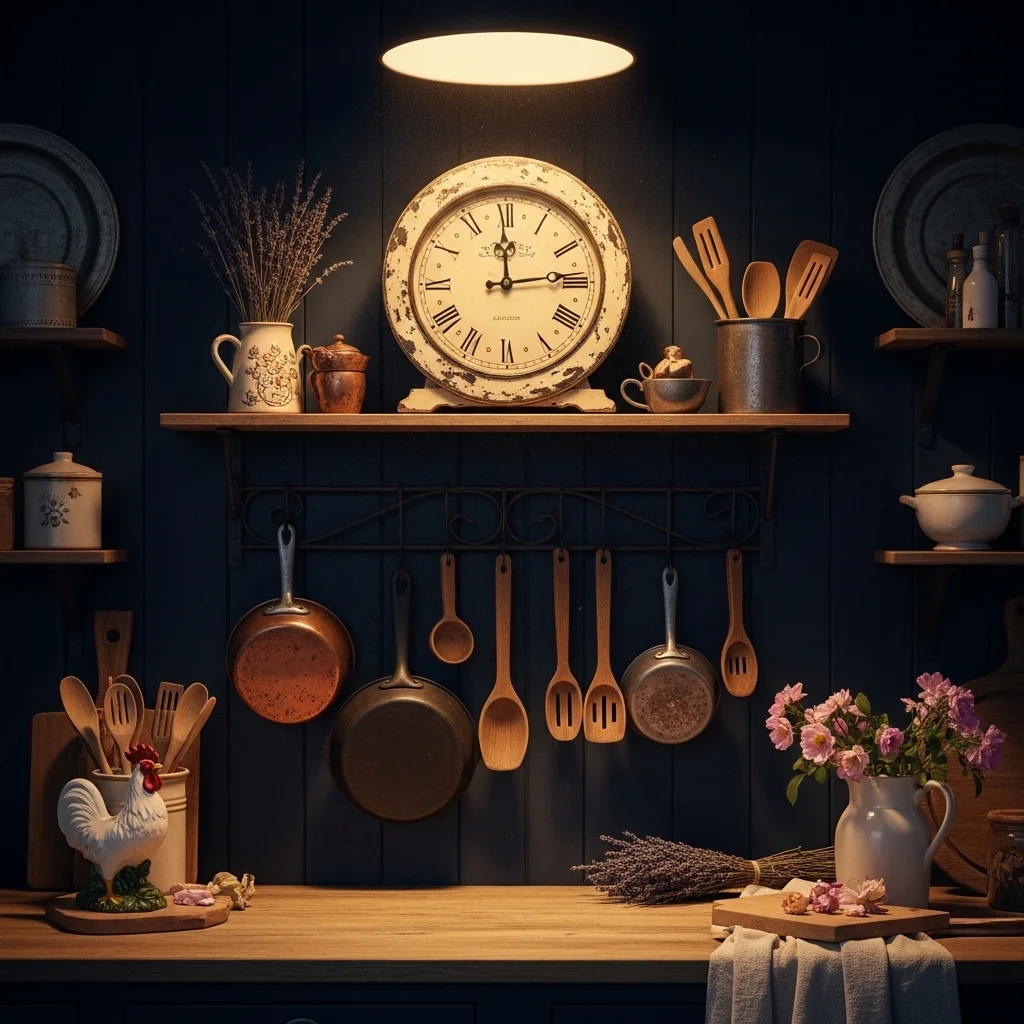
Vintage accents bring personality and history into a moody farmhouse kitchen. Items like antique clocks, weathered signs, and old kitchen tools add a sense of nostalgia that enhances the rustic charm. These pieces create focal points and make the space feel unique.
In a darker setting, vintage items stand out even more, drawing attention and adding visual interest. Incorporating a few carefully chosen pieces can transform the kitchen from a simple design into a space that tells a story and reflects personal style.
Mixed Metals for Visual Interest
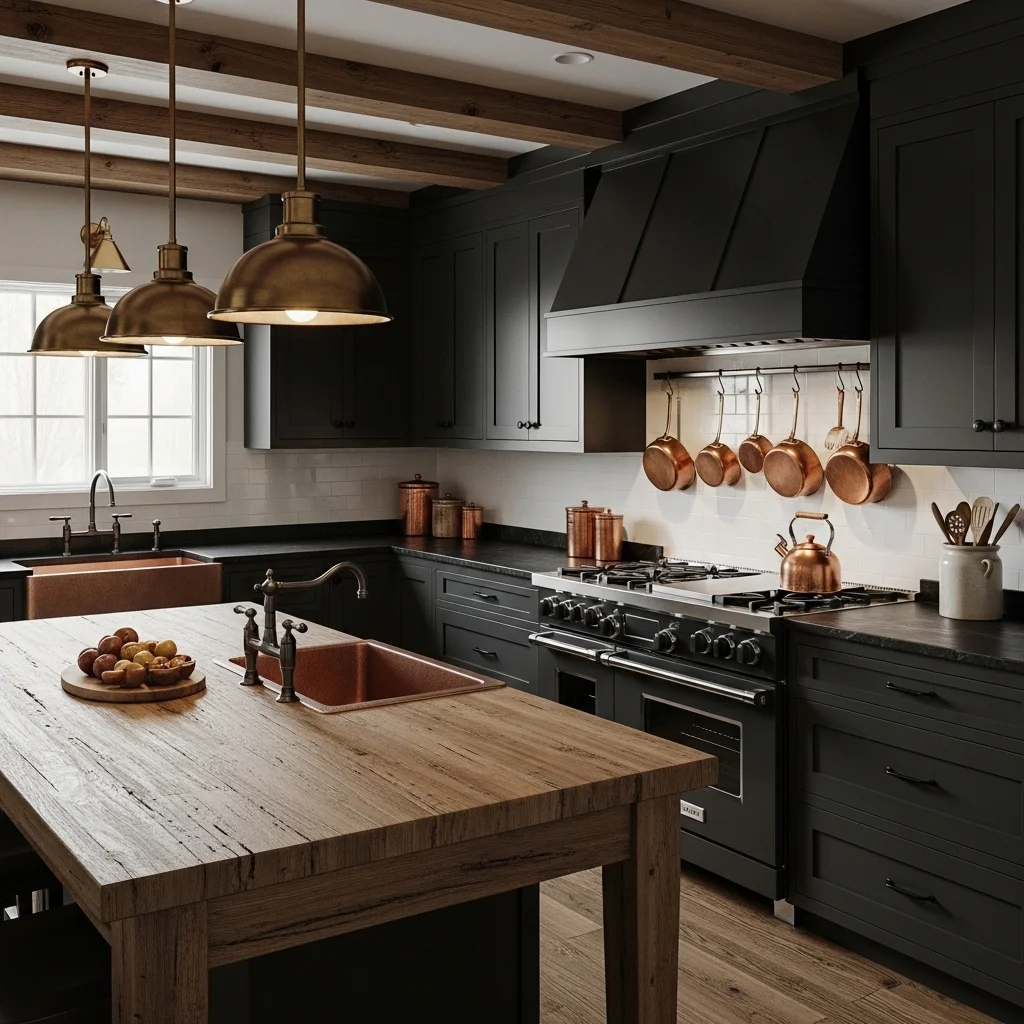
Using mixed metals is an effective way to add depth and variety to a moody farmhouse kitchen. Combining finishes like brass, copper, and black creates a layered look that feels curated and intentional. These contrasts prevent the design from becoming too uniform.
The key is to repeat each metal throughout the space to maintain cohesion. For example, brass hardware can be paired with matching light fixtures or accessories. This approach ensures the design feels balanced while still allowing for creativity and variation.
Natural Stone Elements for Texture
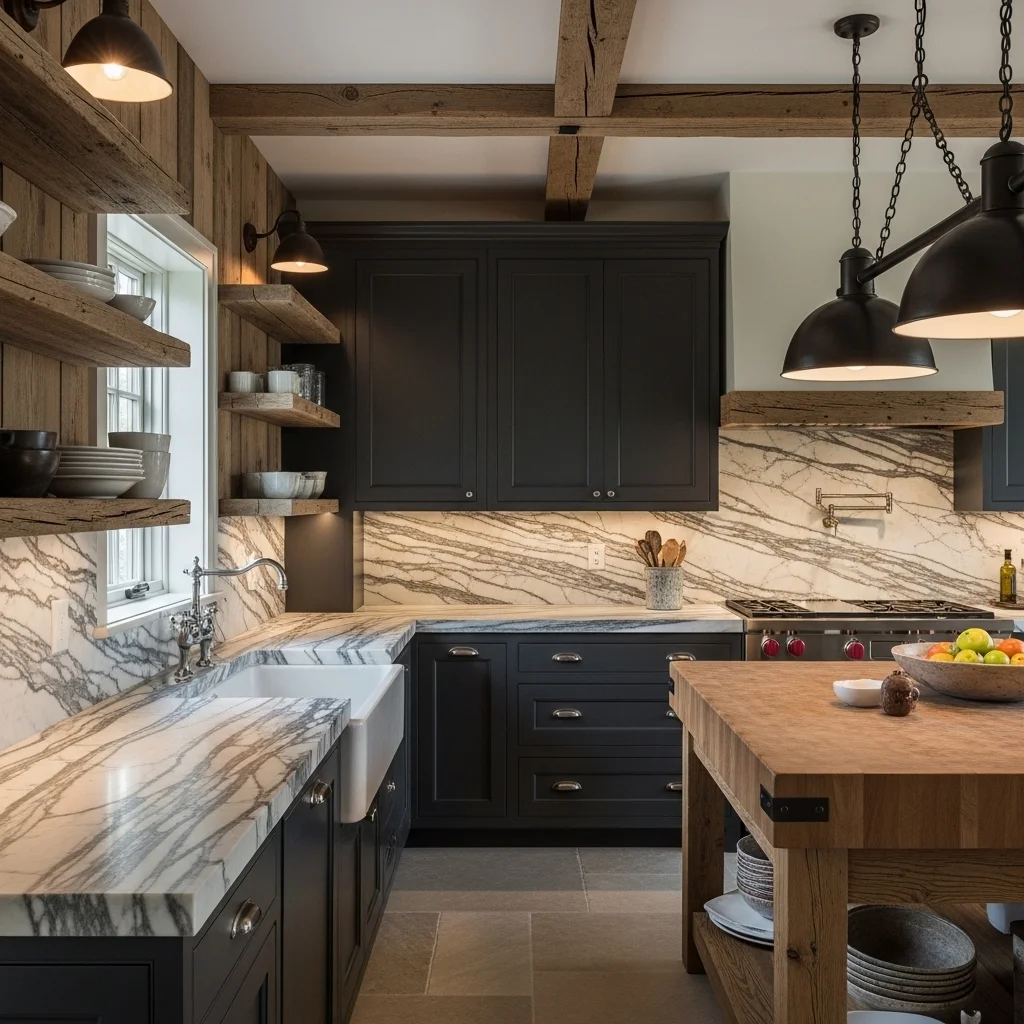
Natural stone materials such as marble, granite, or soapstone add texture and durability to a moody farmhouse kitchen. Their organic patterns and subtle color variations complement both dark cabinetry and rustic wood elements, creating a cohesive look.
These materials also enhance the timeless quality of the design. Their durability makes them practical for everyday use, while their natural beauty ensures they remain visually appealing for years to come.
Shiplap Walls with a Dark Finish
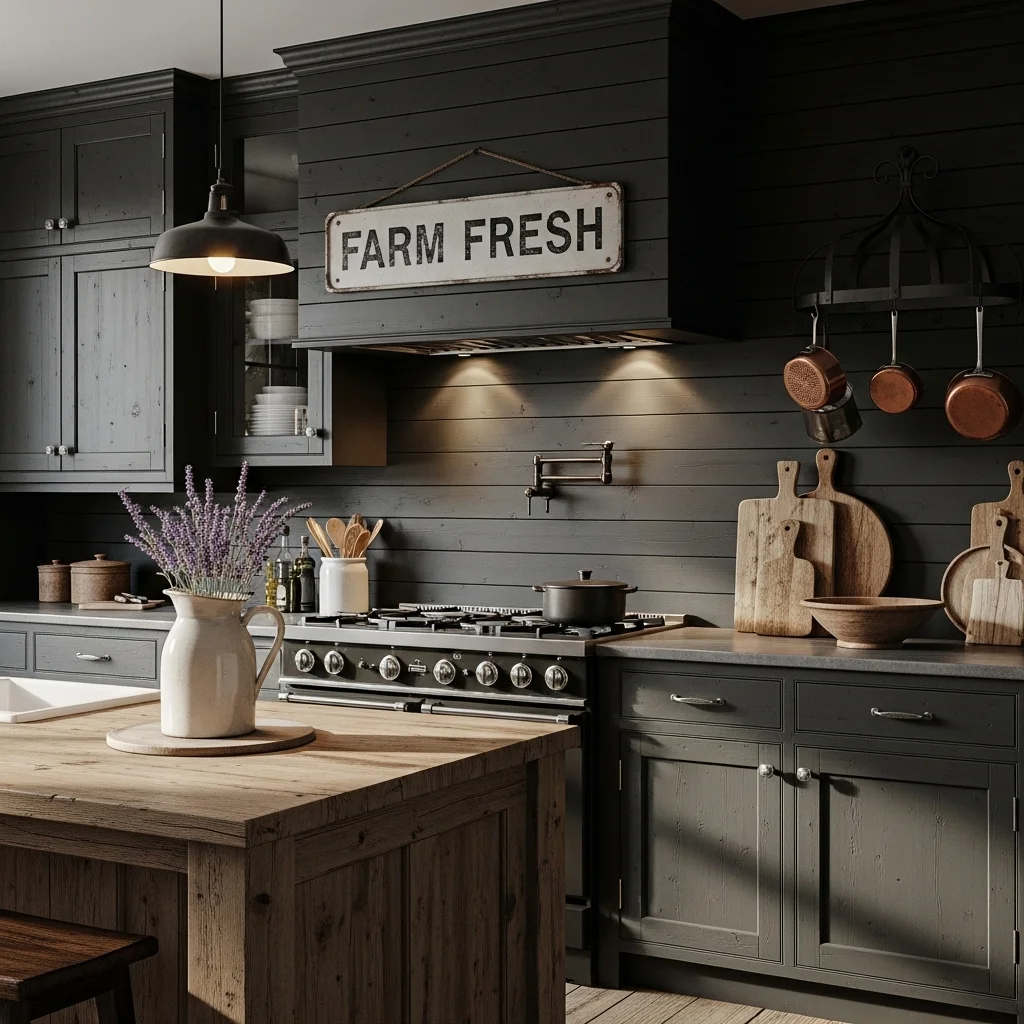
Shiplap walls are a classic farmhouse feature, but painting them in darker tones gives them a modern twist. Deep colors add depth and drama while preserving the texture and character that make shiplap so appealing.
This approach allows you to maintain the farmhouse aesthetic while embracing a more contemporary style. It is a simple yet effective way to enhance the moody atmosphere without relying solely on furniture or décor.
Industrial Touches for Contrast
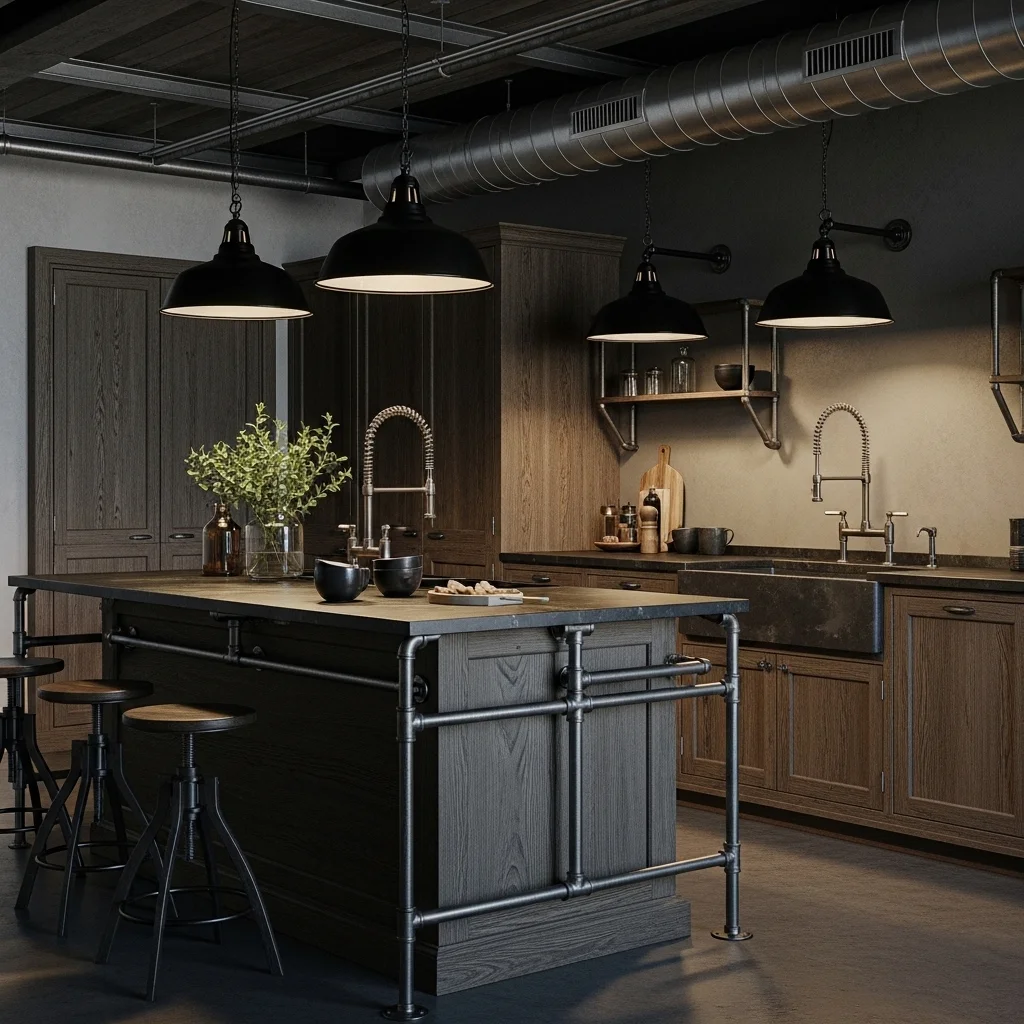
Industrial elements introduce contrast and edge to a moody farmhouse kitchen. Features like metal stools, exposed piping, and factory-style lighting add a rugged quality that balances softer, rustic materials.
When combined thoughtfully, these elements create a dynamic and layered design. The interplay between industrial and farmhouse styles adds complexity, making the kitchen feel both modern and grounded.
Deep Color Palettes for Cohesion
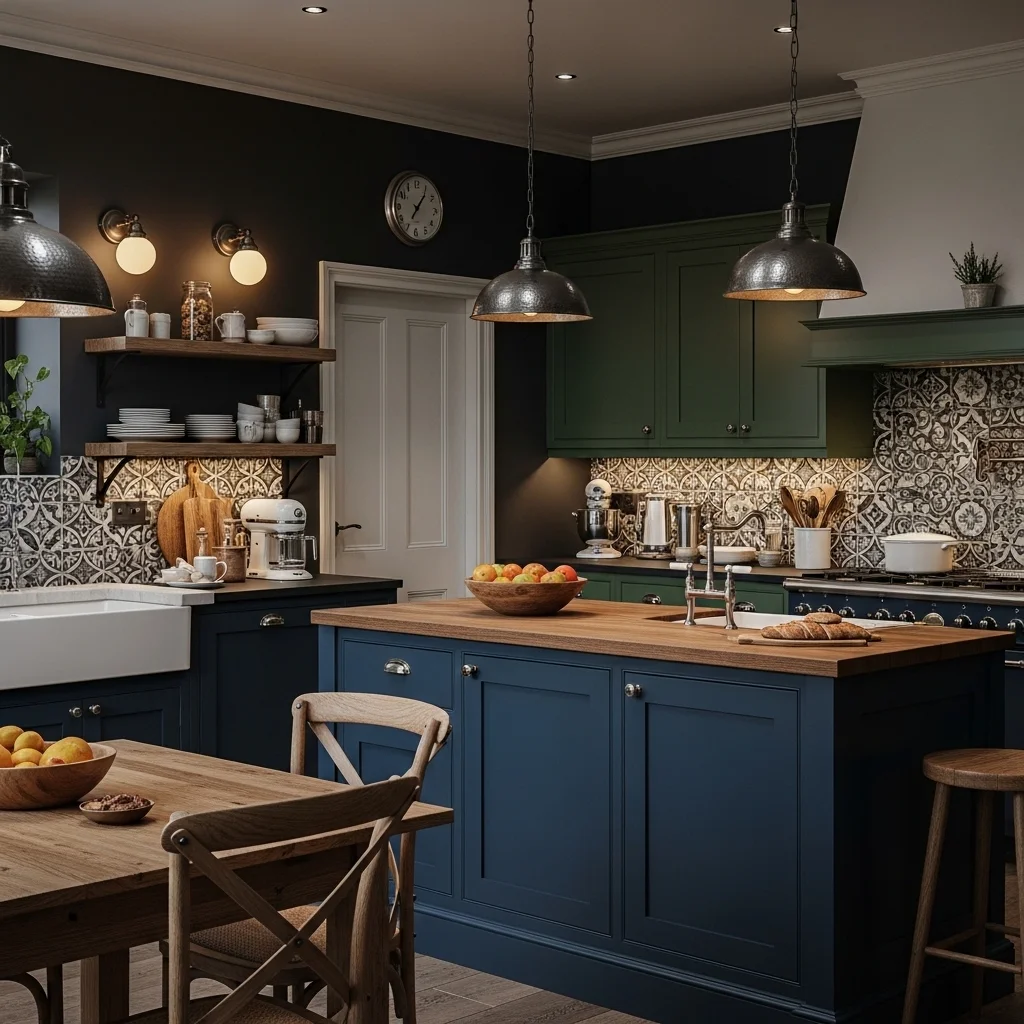
A cohesive color palette is essential for achieving a moody look. Deep tones such as navy, forest green, charcoal, and brown create a unified foundation that ties all design elements together.
Layering these colors with lighter accents ensures the space remains balanced. This thoughtful use of color creates a harmonious environment that feels intentional and visually pleasing.
Glass Elements for Light Reflection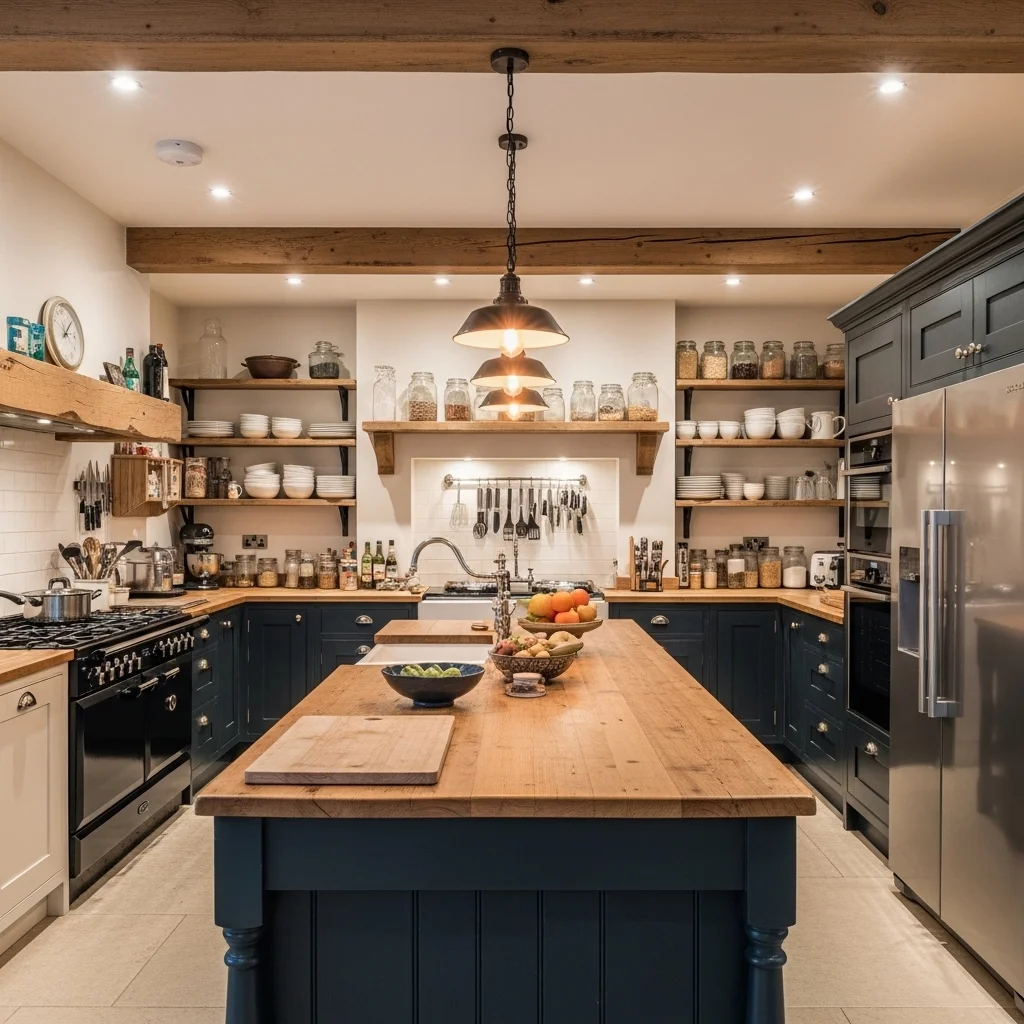
Glass elements help reflect light and add brightness to a moody farmhouse kitchen. Features like glass cabinet doors, pendant lights, and decorative jars create contrast and prevent the space from feeling too enclosed.
These elements also add a sense of openness and elegance. The interplay between light and dark surfaces enhances the overall design, making the kitchen feel more spacious and inviting.
Rustic Flooring for Grounded Appeal
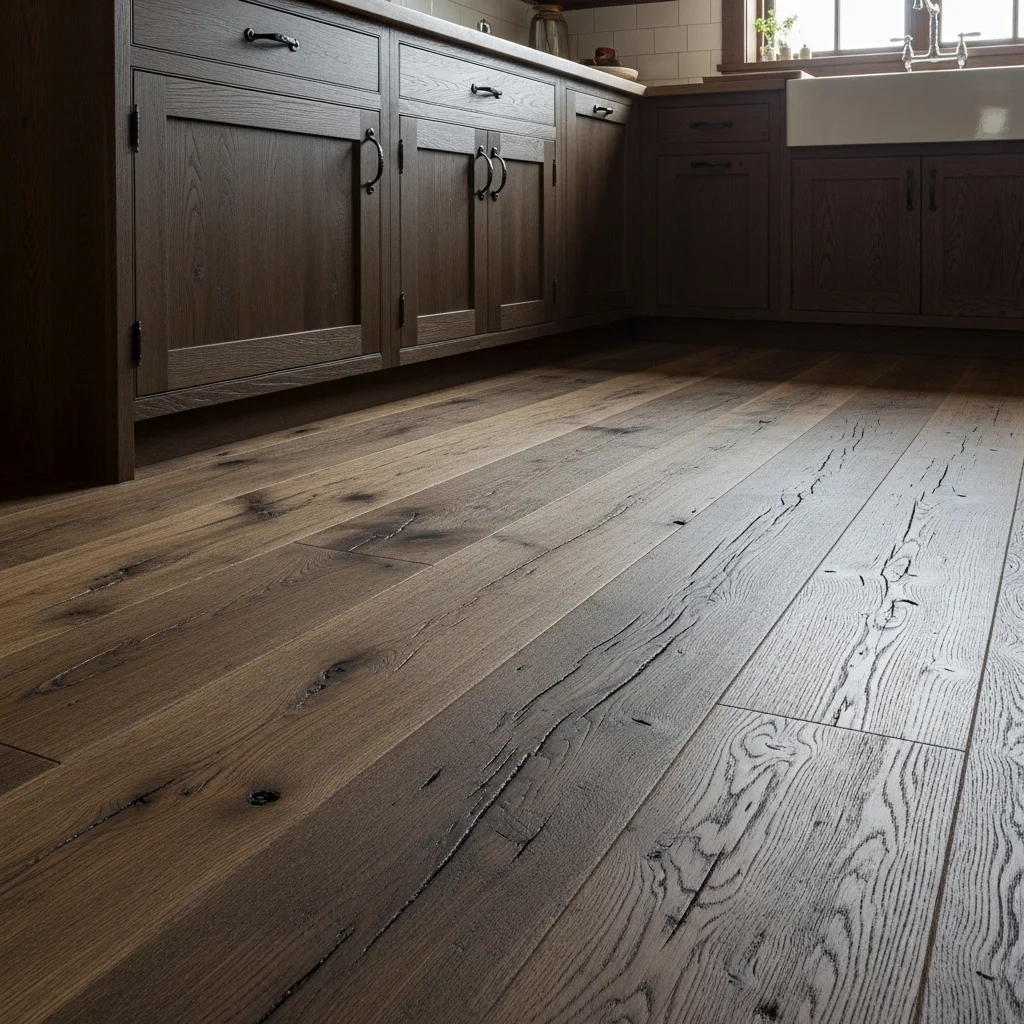
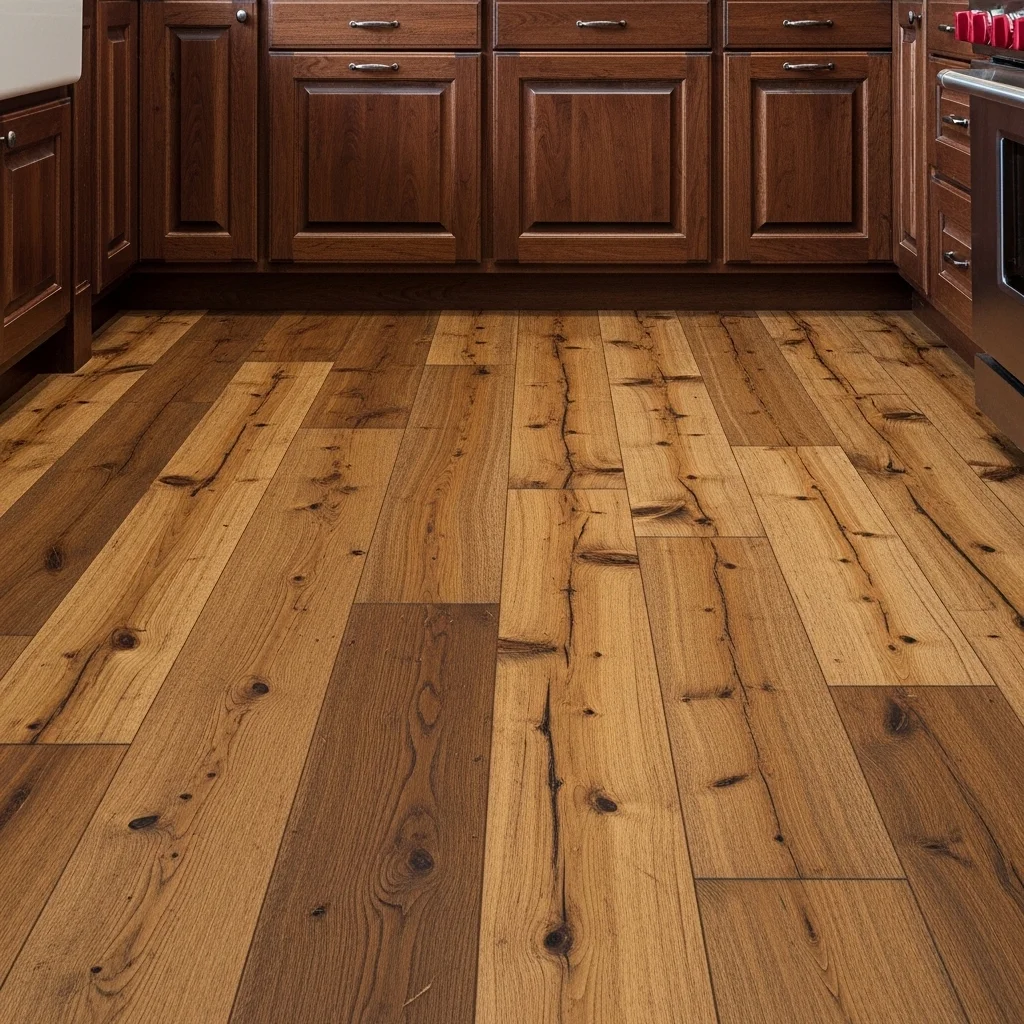
Rustic flooring options such as wide-plank wood or distressed finishes provide a strong foundation for the kitchen. These materials reinforce the farmhouse aesthetic while adding warmth and texture.
Their natural tones help balance darker elements above, creating a cohesive and grounded look. This foundation ensures the kitchen feels stable and well-designed from top to bottom.
Greenery for Fresh Contrast
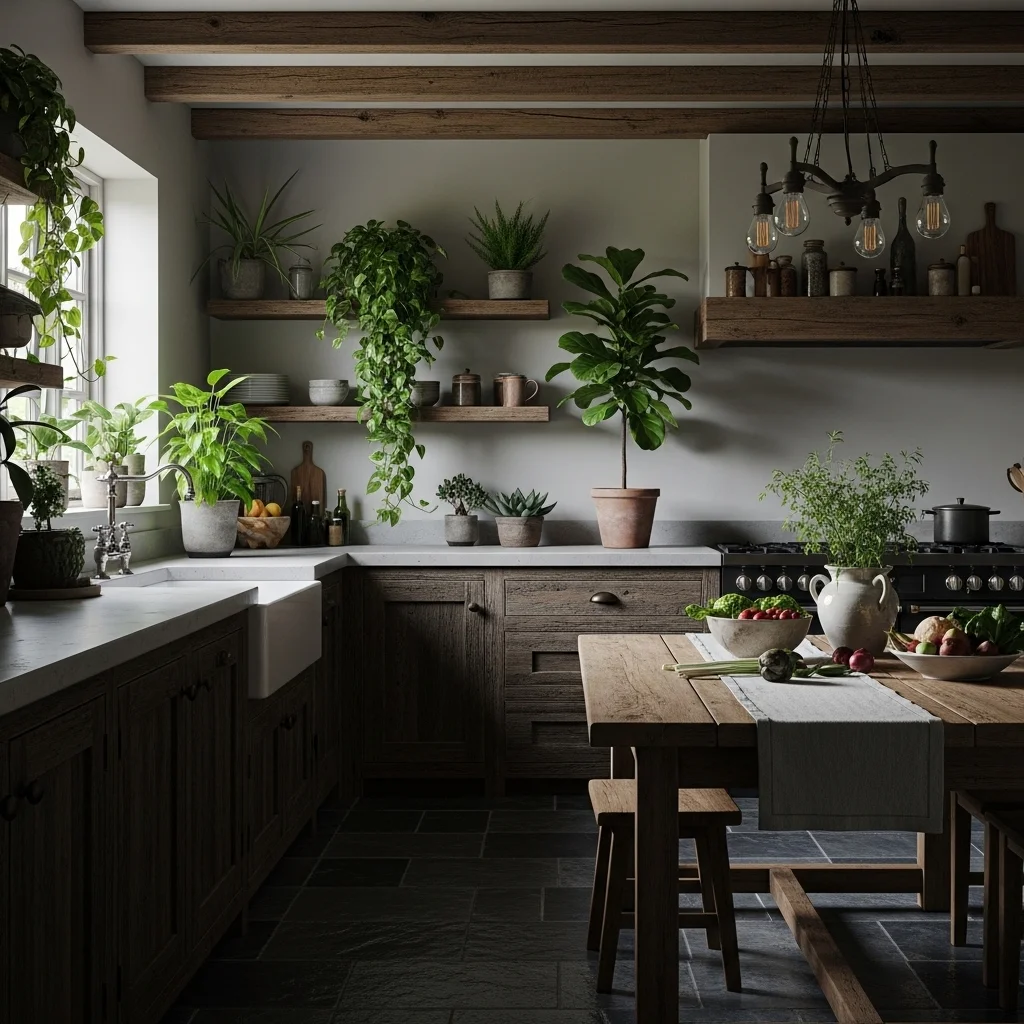
Adding greenery brings life and freshness into a moody farmhouse kitchen. Plants create a natural contrast to darker tones and soften the overall design, making the space feel more vibrant.
Whether through potted herbs, hanging plants, or simple arrangements, greenery enhances the connection to nature. This element reinforces the farmhouse aesthetic while adding a refreshing touch.
Functional Layout with Rustic Charm
A well-planned layout ensures the kitchen remains practical while maintaining its aesthetic appeal. Features like large islands, efficient work zones, and ample storage are essential for everyday use.
Incorporating rustic elements into these functional areas helps maintain consistency in design. The result is a kitchen that is both beautiful and highly usable, making it the heart of the home.
Personal Touches for a Unique Space
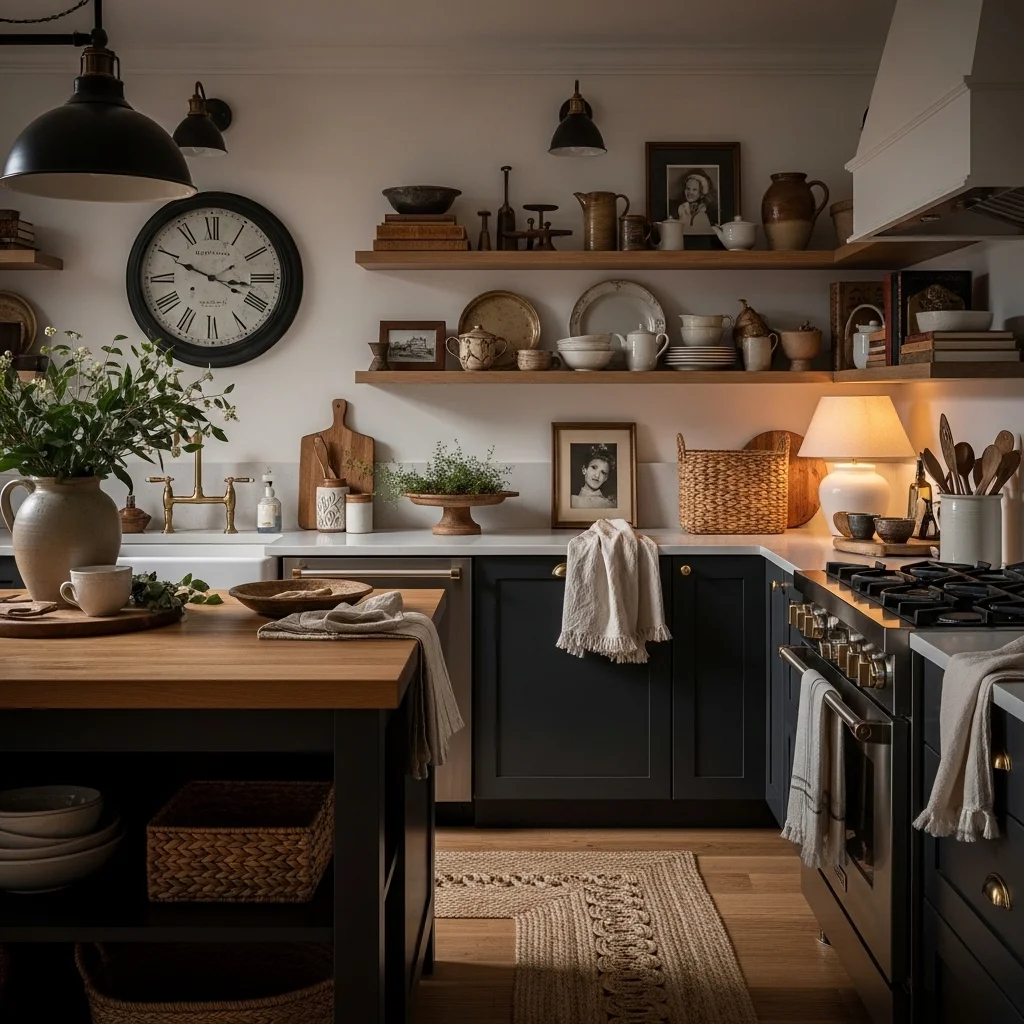
Personal touches are what make a moody farmhouse kitchen truly special. Incorporating family heirlooms, handmade items, or meaningful décor adds individuality and warmth.
These details ensure the space reflects your personality and lifestyle. They transform the kitchen into a lived-in environment that feels authentic, welcoming, and uniquely yours.
Conclusion
A moody farmhouse kitchen combines the best of rustic charm and modern sophistication. By embracing darker tones, natural materials, and layered textures, you can create a space that feels both dramatic and inviting. Each design choice contributes to a balanced and cohesive look.
The key to success is thoughtful integration. Mixing light and dark elements, combining old and new materials, and focusing on both function and style ensures your kitchen remains timeless. With careful planning, this design approach can transform your kitchen into a warm, stylish, and enduring centerpiece of your home.
FAQs
What colors work best for a moody farmhouse kitchen
Deep tones like navy, charcoal, black, and forest green work best, especially when paired with warm wood and neutral accents.
How do I brighten a moody kitchen
Use layered lighting, reflective surfaces like glass, and lighter countertops to balance darker elements.
Is this style suitable for small kitchens
Yes, but it requires careful balance. Incorporate good lighting and lighter accents to prevent the space from feeling cramped.
What materials define this style
Reclaimed wood, natural stone, matte metals, and textured fabrics are key materials that create depth and authenticity.
How can I add personality to the design
Use vintage décor, personal items, and unique accessories to make the space feel lived-in and reflective of your style.