There is something genuinely magnetic about the design sensibility of the 1950s. It was a decade defined by postwar optimism, a love of color, and a confidence in the home as a place of comfort and self-expression. Bathrooms from that era were no longer simple utility spaces. They became showcases of personality, filled with pastel hues, gleaming chrome, playful tile patterns, and furnishings that blurred the line between function and elegance. Today, homeowners and interior designers alike are revisiting these ideas with fresh eyes, rediscovering what made 1950 bathroom ideas so enduringly appealing.
Whether you are restoring a midcentury home or simply want to infuse your bathroom with vintage charm, the design vocabulary of the 1950s offers an exceptionally rich palette to draw from. This article walks through 20 distinct retro 1950 bathroom ideas, covering everything from color choices and tile work to fixtures, lighting, and accessories. Each idea is grounded in the authentic spirit of the era while remaining practical for a modern household. If you have ever wanted a bathroom that feels both nostalgic and refined, these ideas will give you exactly what you need.
Embrace the Classic Pink and White Color Scheme
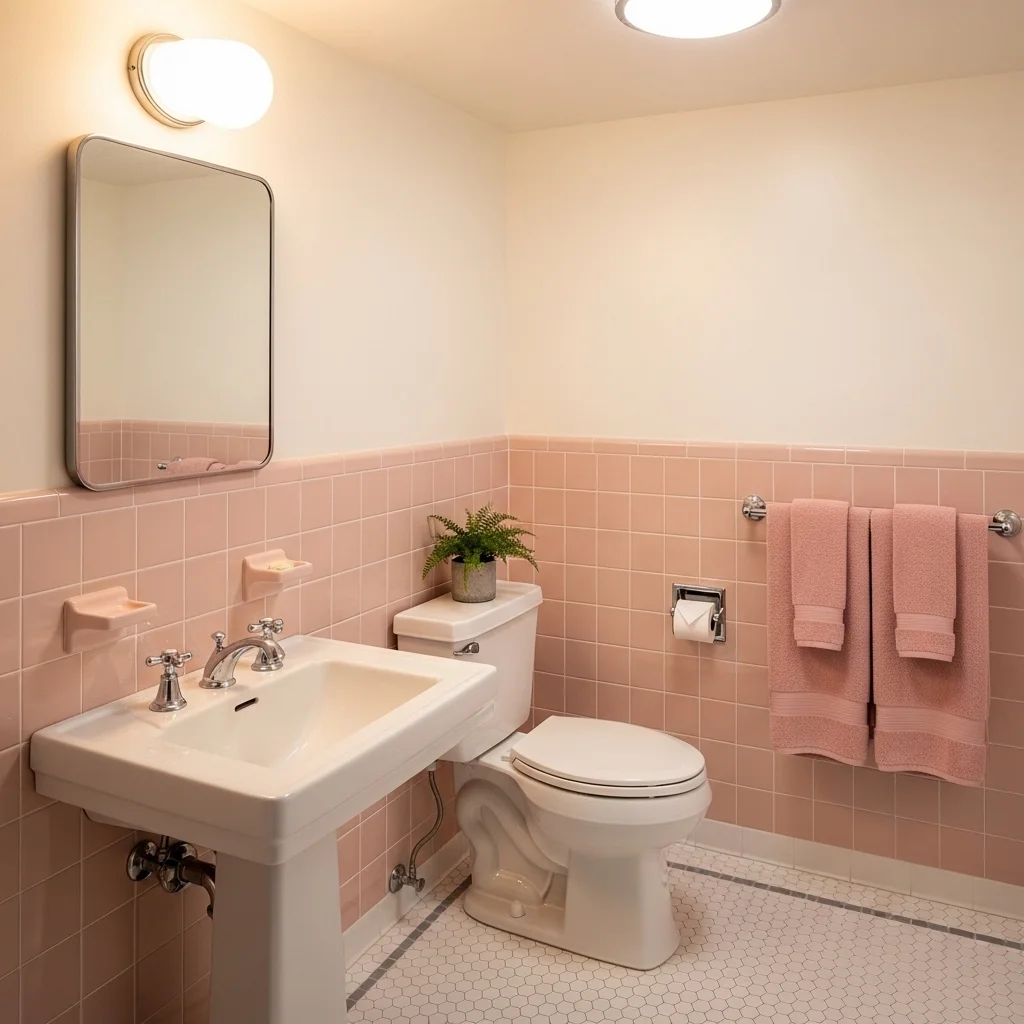
Nothing captures the spirit of 1950 bathroom ideas quite like the iconic pink and white combination. Soft blush pink walls paired with crisp white fixtures create an atmosphere of warmth and femininity that defined countless bathrooms of the era. This palette works especially well when applied to wall tiles, where alternating pink and white squares or subway tiles create a sense of ordered elegance. The contrast is clean without being stark, and the warmth of pink keeps the space from feeling clinical.
To make this palette feel intentional rather than dated, balance the pink tones with bright white grout, white porcelain fixtures, and chrome hardware.
Install Mint Green Tiles for an Authentic Retro Feel
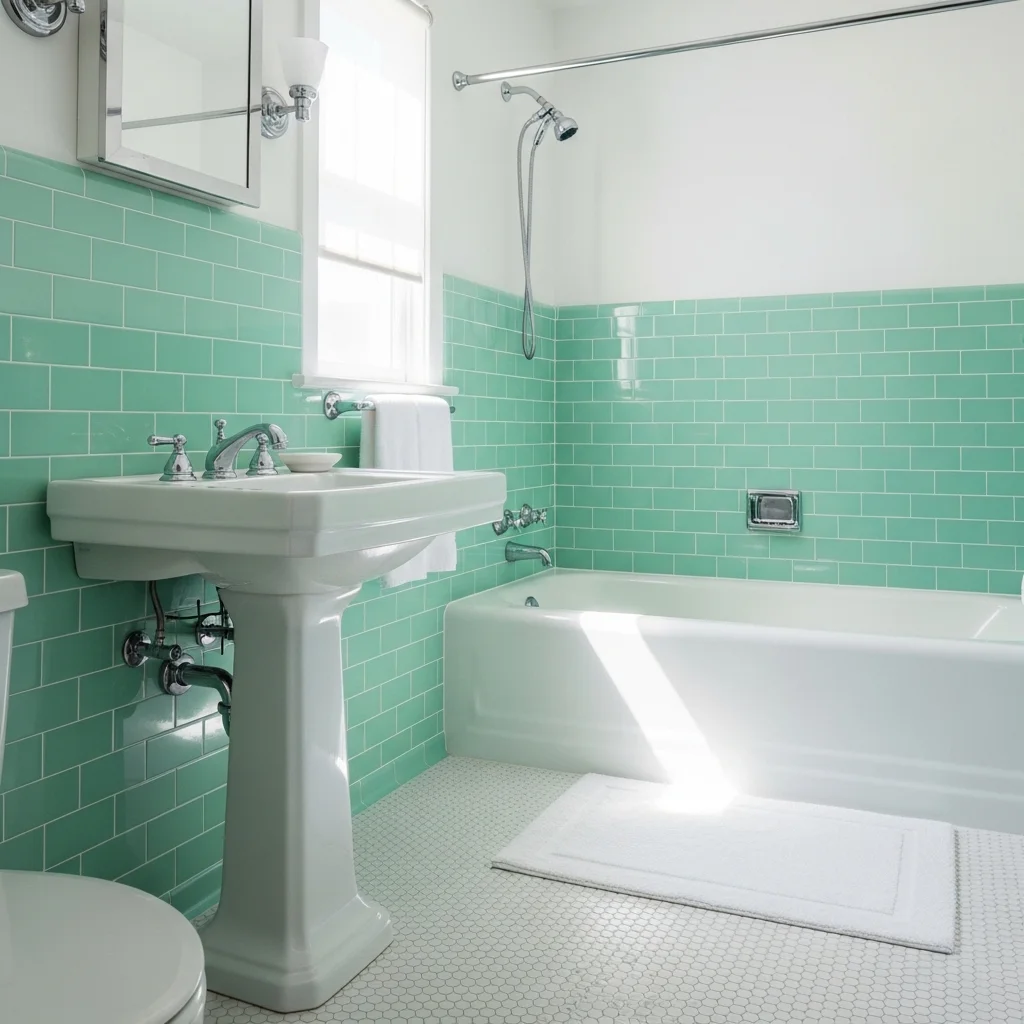
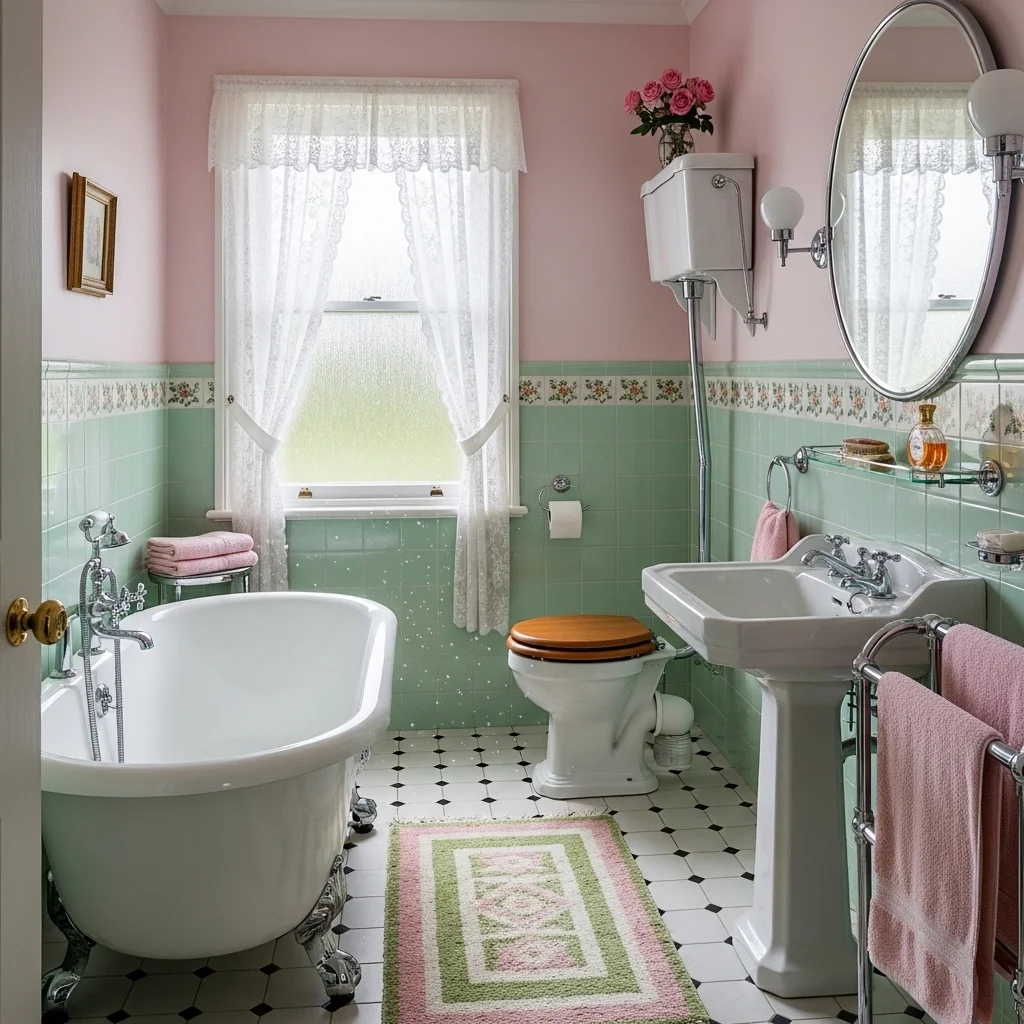
Mint green was one of the signature colors of midcentury bathroom design, appearing on tiles, fixtures, and painted walls throughout American homes during the 1950s. The color carries a freshness and lightness that makes small bathrooms feel airy and open. Pairing mint green wall tiles with white floor tiles and chrome accents creates a cohesive look that is unmistakably rooted in the decade.
You can source reproduction mint green subway tiles from many specialty tile suppliers today, making this one of the most accessible 1950 bathroom ideas to execute.
Choose a Pastel Baby Blue Palette
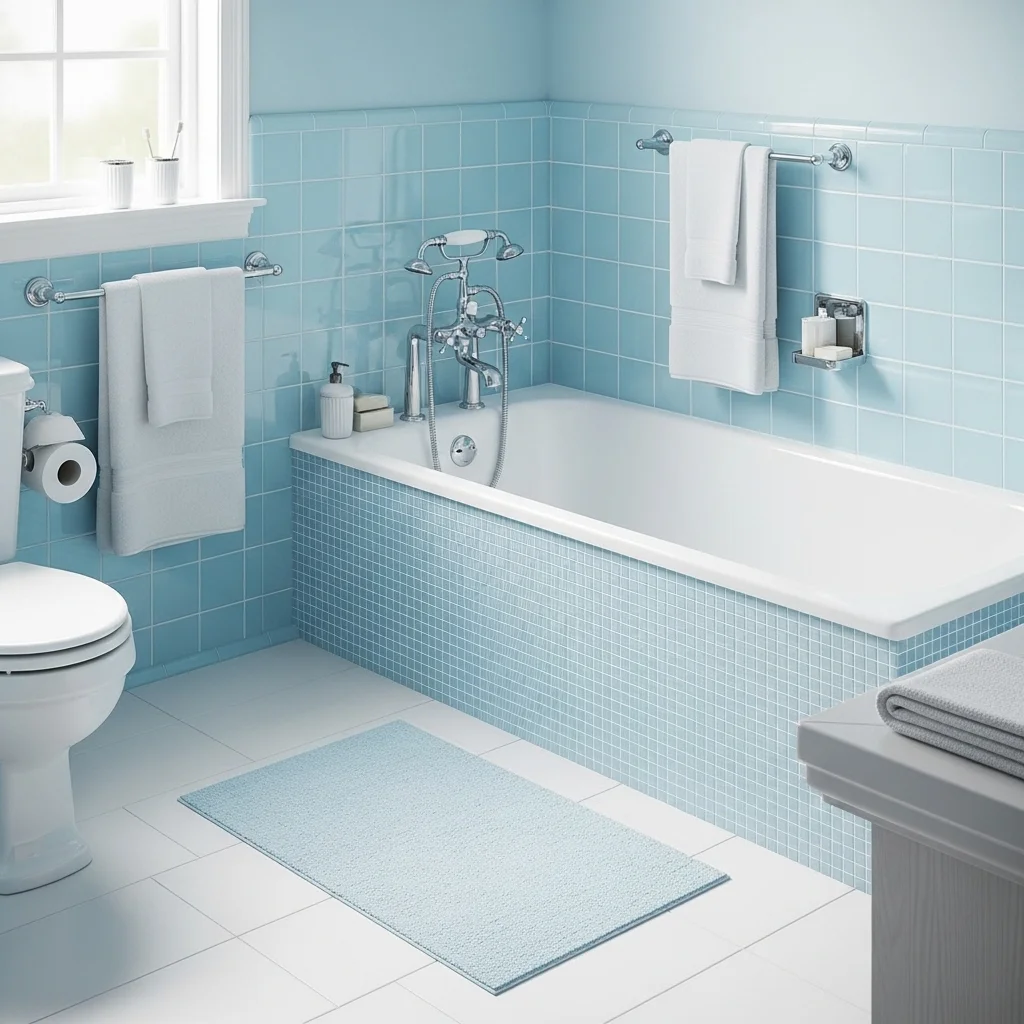
Baby blue was another cornerstone of 1950s bathroom color design, evoking the cool serenity of clear skies and calm water. Used across wall tiles, bathtub surrounds, and even painted ceilings, this shade brought a sense of tranquility to everyday bathing routines. When combined with white fixtures and polished chrome hardware, baby blue creates a bathroom that feels both fresh and timeless.
Add Black and White Checkered Flooring
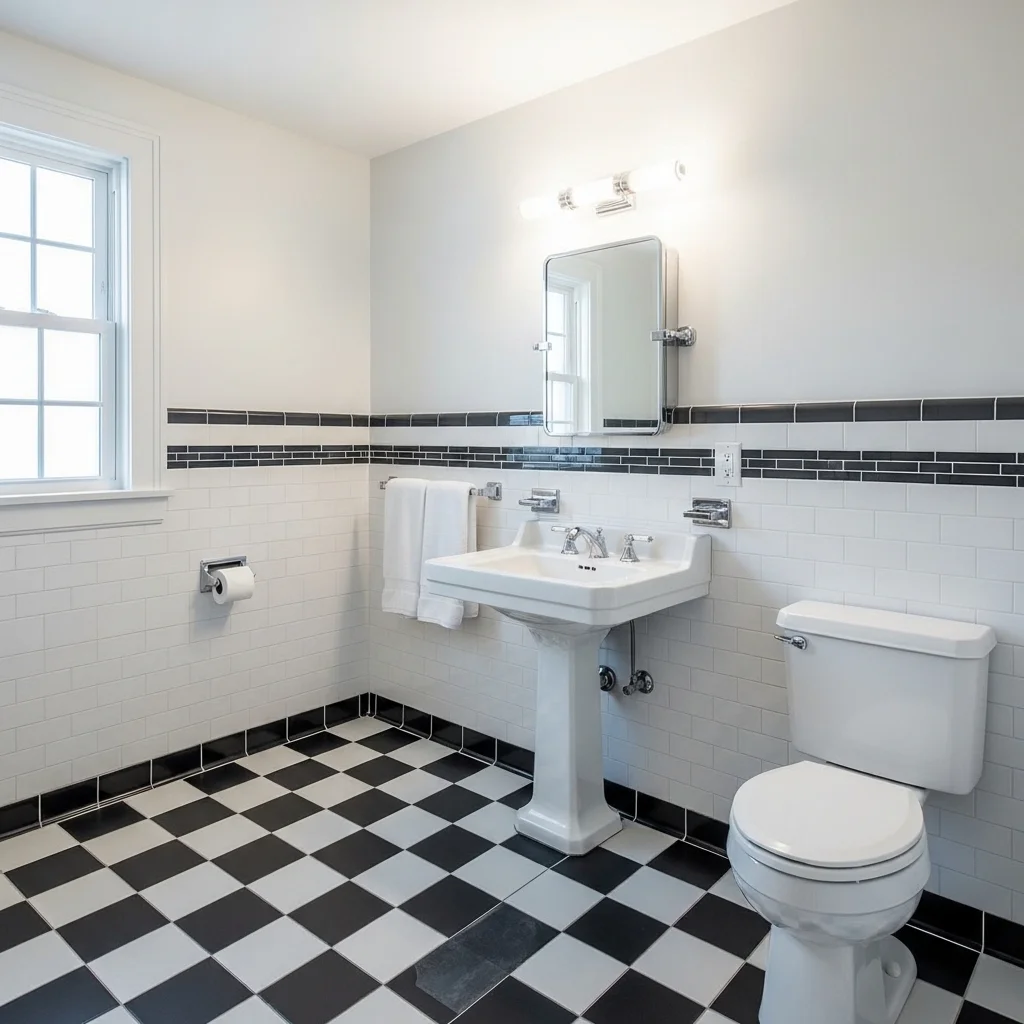
Few design choices are as instantly recognizable and as powerfully retro as black and white checkered floor tiles. This pattern was ubiquitous in 1950s homes, appearing in kitchens, diners, and bathrooms alike. It carries an energetic, graphic quality that adds visual punch to a space while remaining fundamentally classic. The high contrast of black and white also makes other colors in the room pop with greater intensity.
Traditional checkered floors used two-inch or four-inch ceramic tiles, and you can find exact reproductions in both glazed ceramic and porcelain today. For a slightly softer interpretation, consider using off-white in place of bright white, which reduces the starkness while preserving the retro feel. Pair this floor with pastel walls and chrome fixtures to anchor the entire bathroom in the midcentury era.
Install a Pedestal Sink as a Focal Point
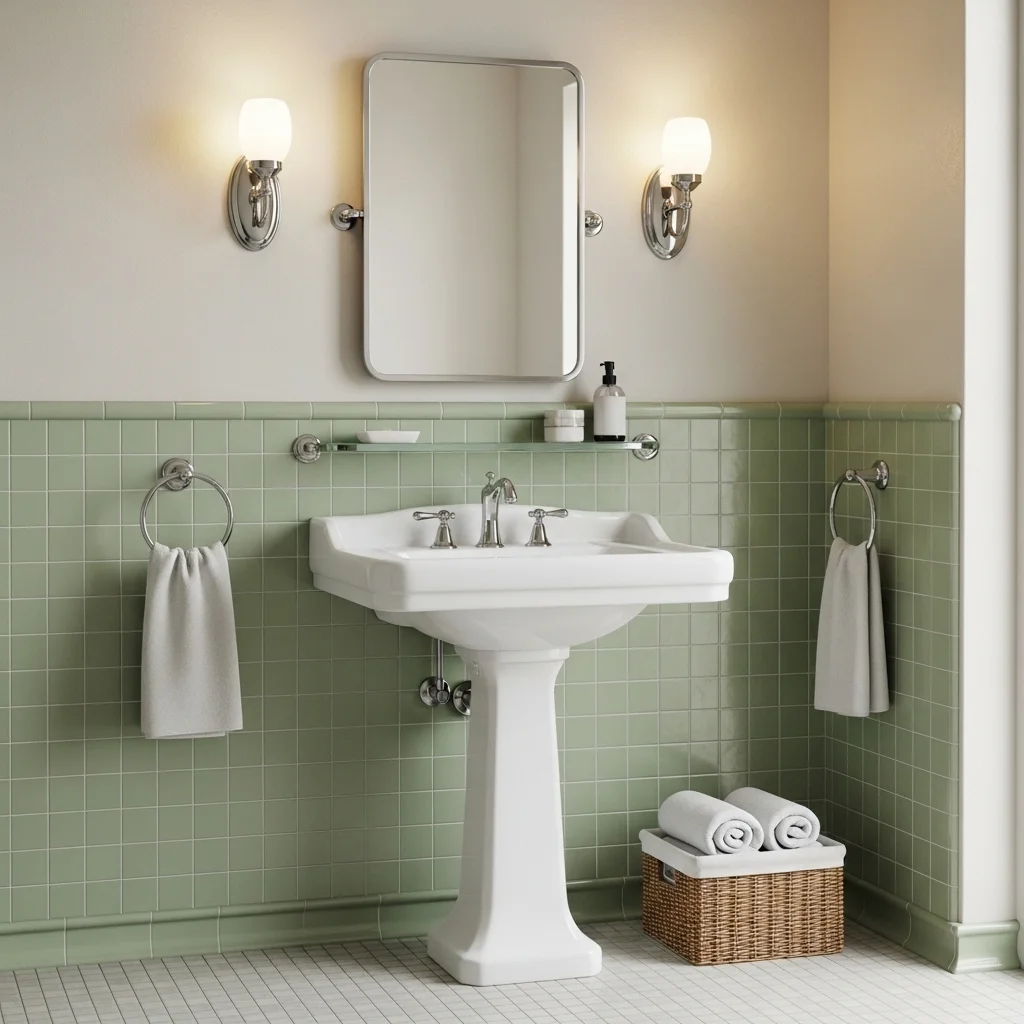
The pedestal sink is one of the most defining fixtures of early to mid-twentieth century bathroom design, and it remains one of the strongest 1950 bathroom ideas available to modern renovators. These sinks stand on a single column of porcelain, eliminating the vanity cabinet beneath and giving the room a sense of openness and purity of form. Their clean lines and elegant proportions reference a time when bathroom design was guided by simplicity and craftsmanship.
Many plumbing manufacturers today produce pedestal sinks in vintage-inspired profiles that pair seamlessly with period-appropriate hardware. Choose a model with a wide, oval basin and gently rolled edges for the most authentic look. Pair it with cross-handle chrome faucets to reinforce the retro character. The space beneath the pedestal can be used creatively, with a small wicker basket or a vintage stool holding extra towels and toiletries.
Bring in a Clawfoot Bathtub
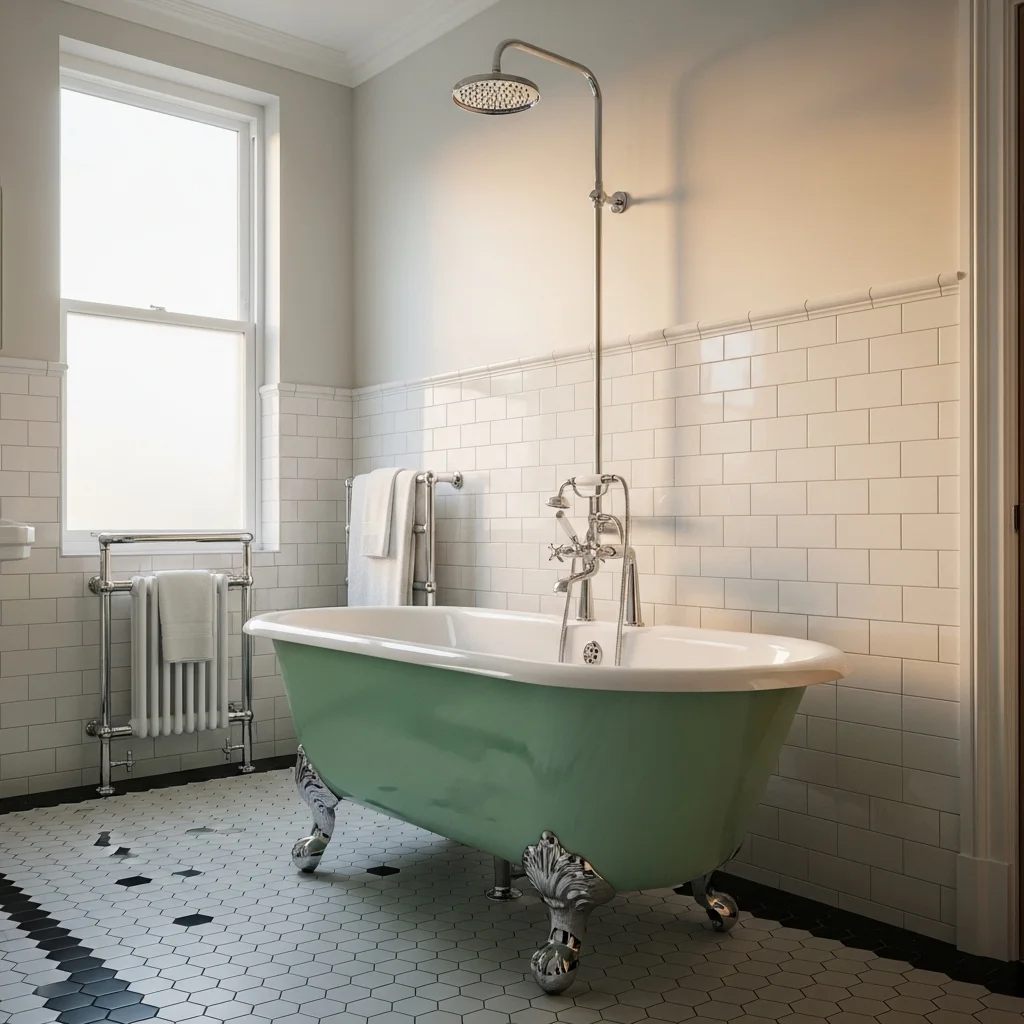
The clawfoot bathtub predates the 1950s by several decades, but it remained a beloved fixture in many homes of the era, particularly in older houses that had not been fully modernized. Its presence in a retro-inspired bathroom instantly elevates the space with a sense of luxurious nostalgia. Standing freely in the room, a clawfoot tub becomes a sculptural centerpiece that commands attention and invites long, leisurely soaks.
Original cast iron clawfoot tubs can be found through antique dealers and salvage yards, though they require professional refinishing before installation.
Use Subway Tiles on the Walls
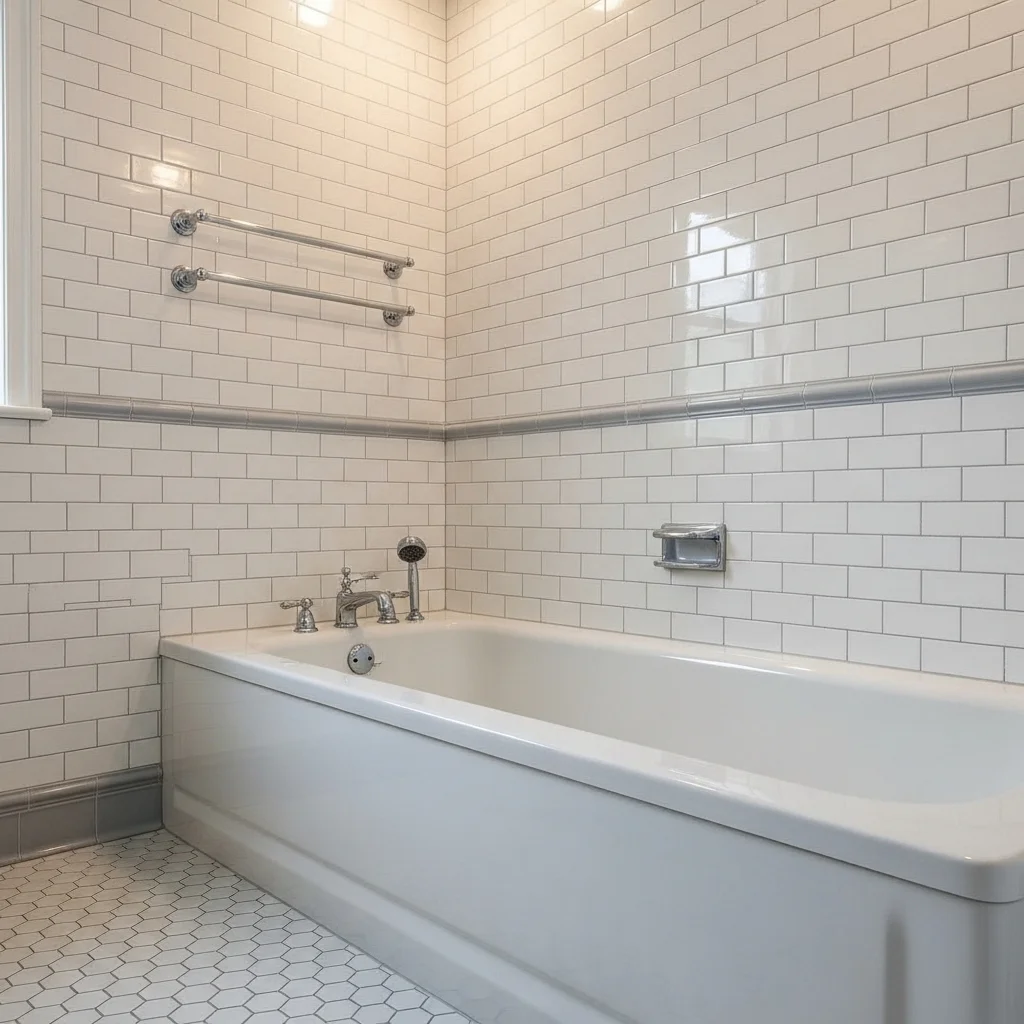
Subway tiles have a long history in American bathrooms, and by the 1950s they had become a standard element of both residential and commercial bathroom design. Their rectangular, glazed surface reflects light beautifully and lends a clean, ordered appearance to walls. Laid in a classic brick pattern with white grout, subway tiles create a backdrop that is both timeless and deeply connected to midcentury aesthetics.
To make your subway tile installation feel authentically retro, choose tiles in a pastel color such as seafoam green, dusty rose, or warm ivory rather than the standard bright white.
Incorporate Vintage Chrome Hardware Throughout
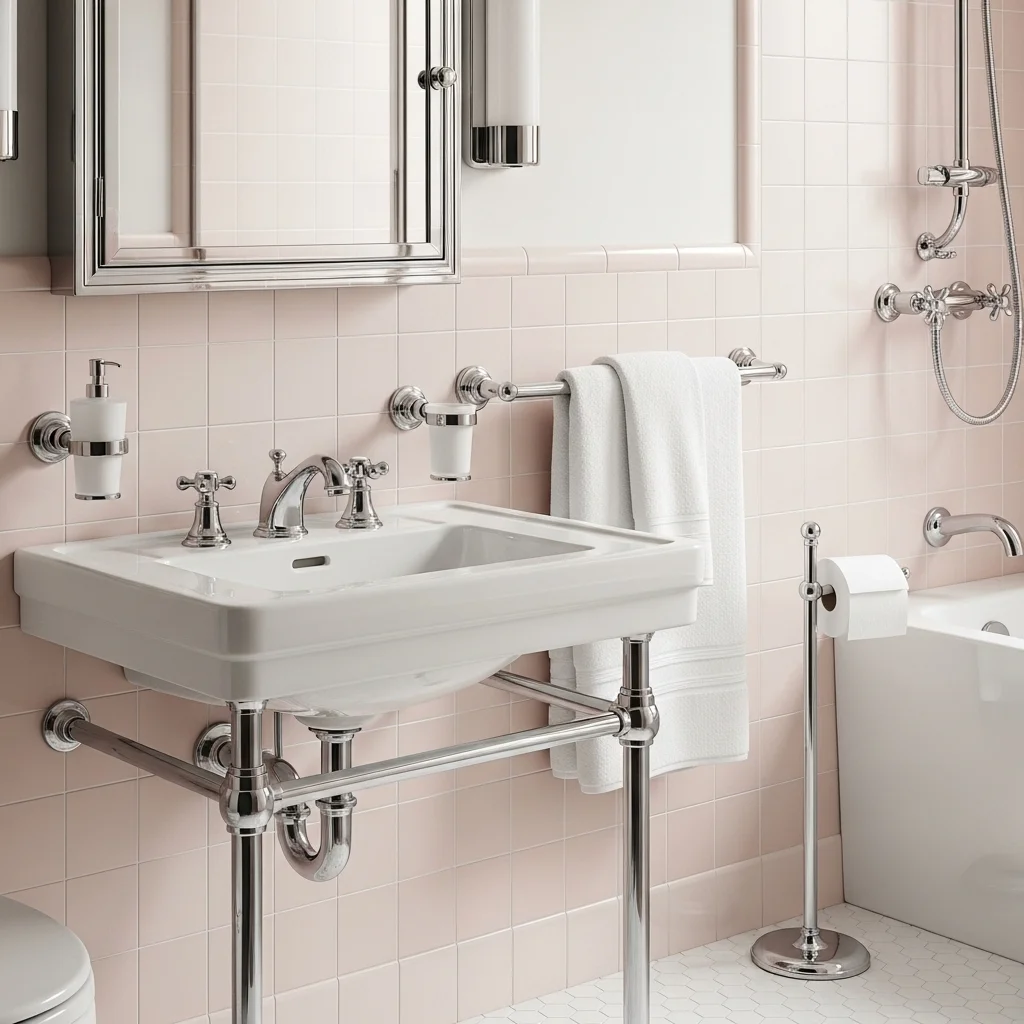
Chrome was the metallic finish of choice in 1950s bathroom design, appearing on faucets, towel bars, toilet paper holders, medicine cabinet frames, and showerheads. Its bright, reflective quality contributed to the era’s love of shine and cleanliness, and it paired naturally with the pastel color palettes that dominated the decade. Replacing modern brushed nickel or matte black hardware with polished chrome is one of the most cost-effective ways to shift a bathroom toward a retro character.
Hang Retro Wallpaper with Bold Patterns
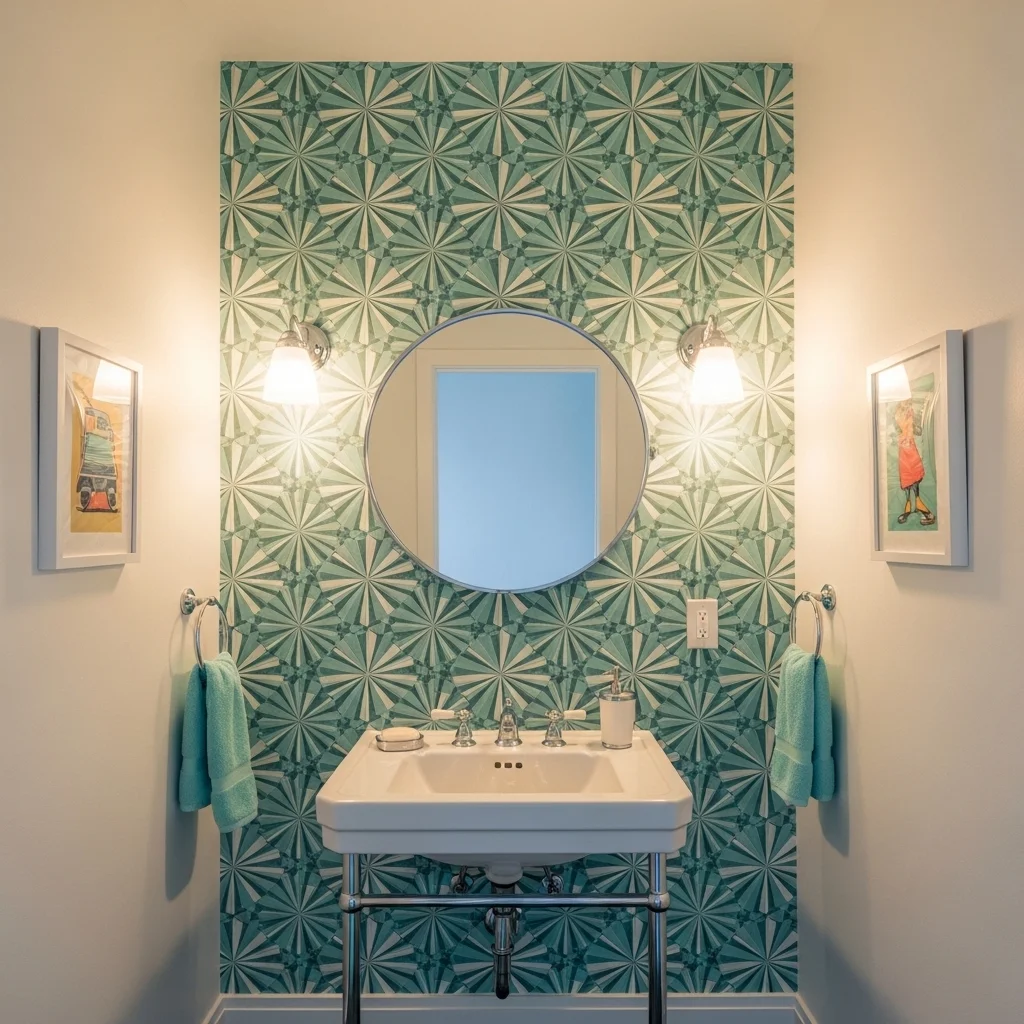
Wallpaper enjoyed enormous popularity in American interiors during the postwar decades, and bathrooms were no exception. Retro wallpaper patterns from the 1950s feature atomic starburst motifs, abstract boomerang shapes, small floral repeats, and geometric designs in muted pastels or vibrant two-tone combinations. Applying a vintage-inspired wallpaper to a bathroom today is a bold design move that immediately establishes the decade’s visual language.
Add a Built-In Vanity with Tapered Legs
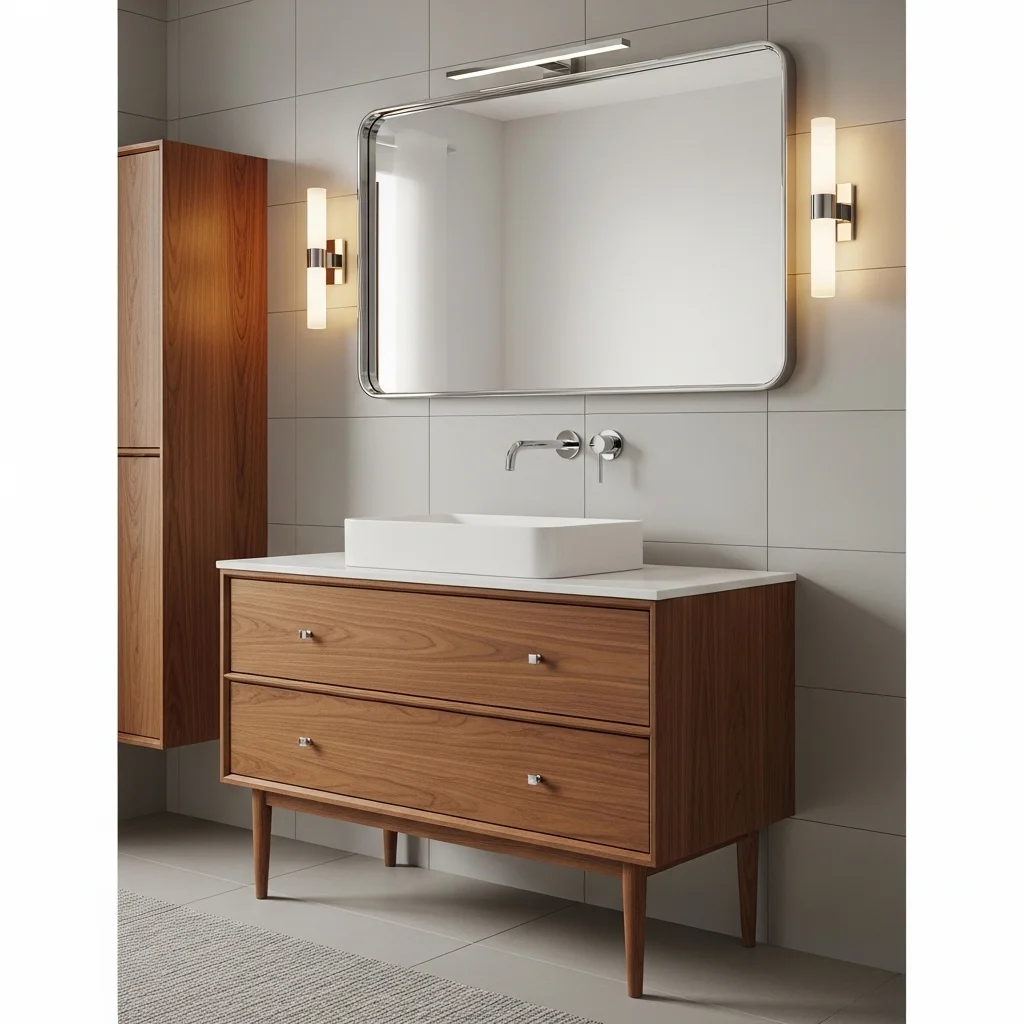
The midcentury modern vanity, characterized by clean horizontal lines, warm wood tones, and slender tapered legs, was a defining piece of 1950s bathroom furniture. Unlike the heavy, floor-mounted cabinets common in later decades, these vanities appeared to float above the floor, creating a sense of lightness and visual space. The combination of natural wood grain with chrome hardware was a hallmark of midcentury taste, balancing warmth and modernity.
Install a Mosaic Tile Accent
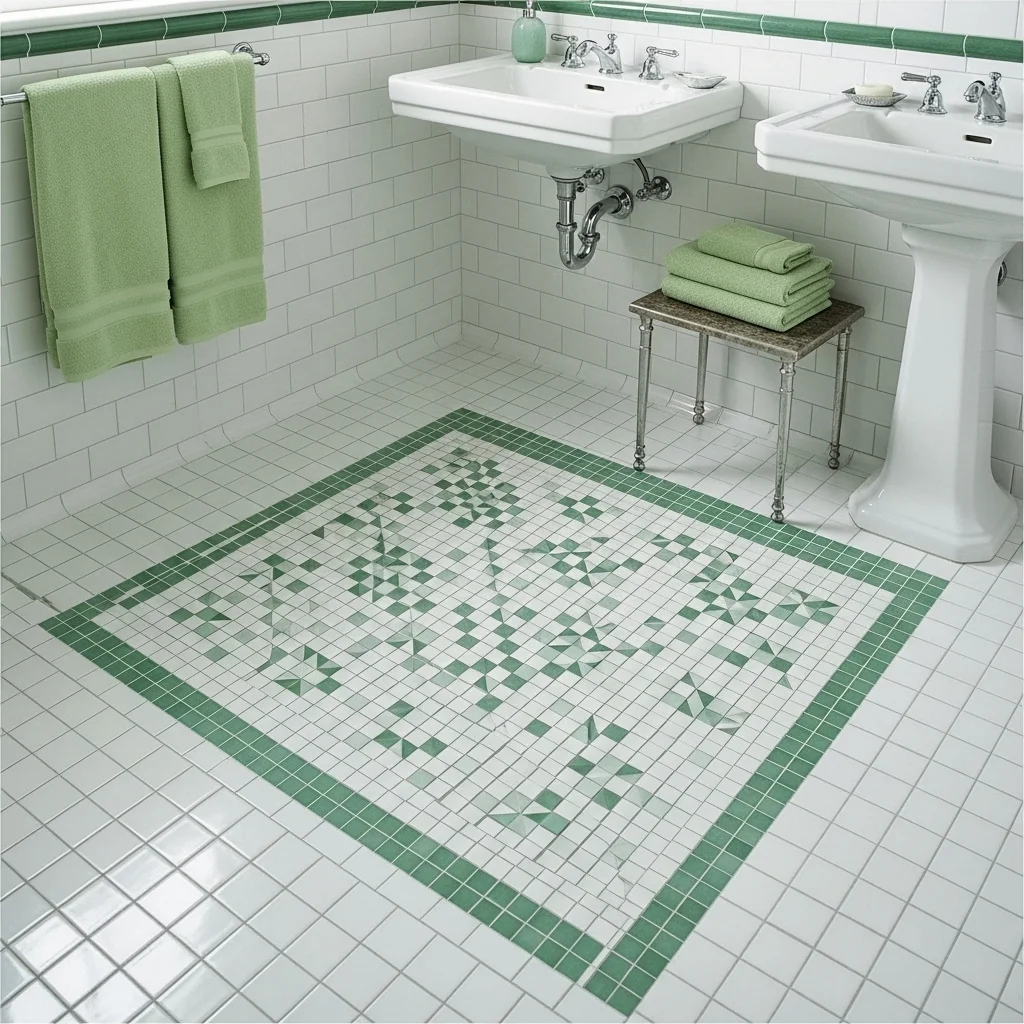
Small mosaic tiles, particularly in one-inch square format, were a signature decorative element of 1950s bathrooms. Often used on floors, shower floors, and feature walls, these tiles created intricate patterns ranging from simple single-color fields to complex geometric designs. The grout lines between mosaic tiles gave surfaces a handcrafted texture that contrasted pleasingly with the smooth surfaces of fixtures and walls.
Use a Colored Bathtub as a Statement Piece
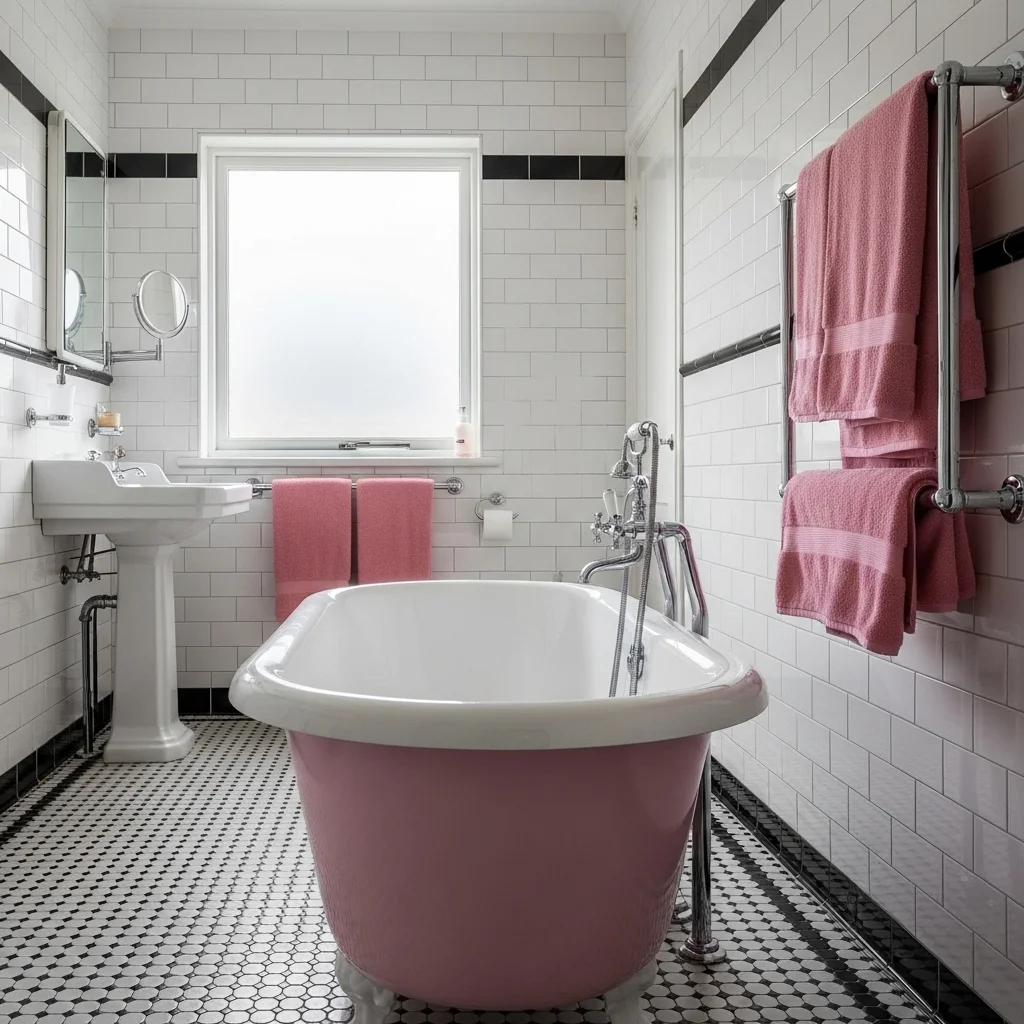
One of the most distinctive features of authentic 1950s bathrooms was the use of colored plumbing fixtures. Bathtubs, toilets, and sinks in shades of pink, mint green, powder blue, yellow, and even charcoal were standard product offerings from major manufacturers of the era. A colored bathtub in a period-appropriate hue is perhaps the single most powerful statement a homeowner can make in favor of genuine vintage authenticity.
Add a Vintage Medicine Cabinet with a Mirror
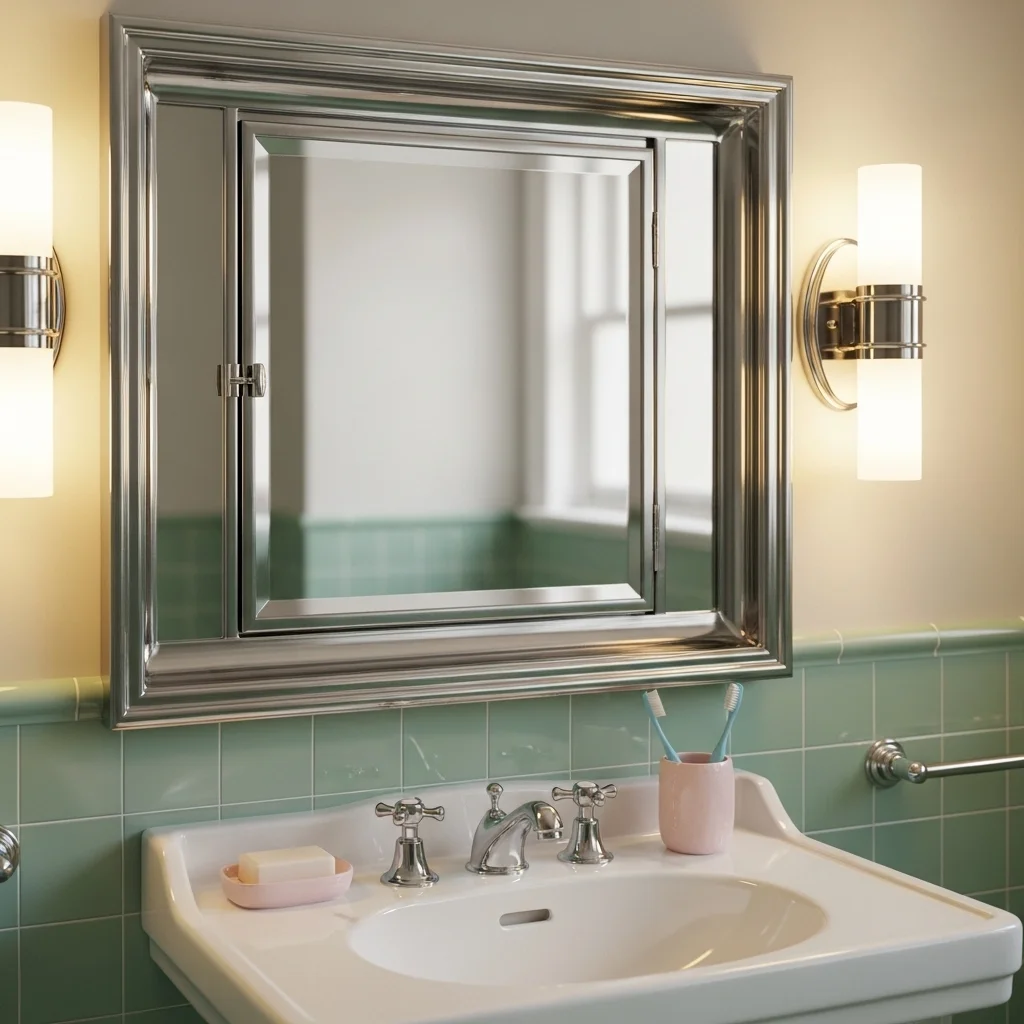
The recessed medicine cabinet with a mirrored door was a standard bathroom fixture throughout the midcentury period, and it remains both practical and period-appropriate today. Vintage examples often feature chrome frames, beveled mirror edges, and interior shelving with chrome rails. Mounting a reproduction or original piece above the sink provides essential storage while reinforcing the retro character of the space..
Incorporate Retro Lighting Fixtures
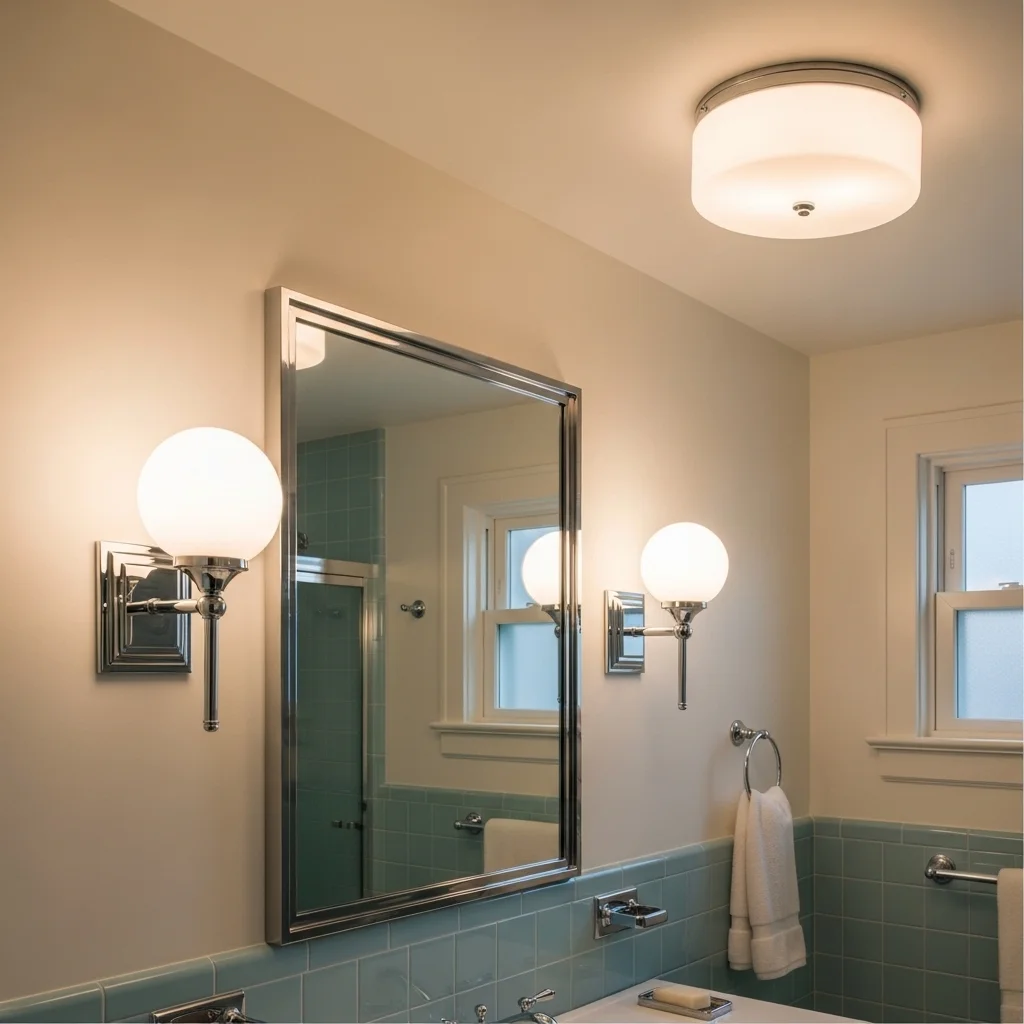
Lighting in 1950s bathrooms was characteristically functional but often incorporated decorative elements that reflected the decade’s love of streamlined elegance. Globe-style sconces flanking the medicine cabinet mirror, ceiling-mounted drum fixtures with frosted glass shades, and vanity bars with multiple bulb sockets were all common fixtures of the era. Choosing lighting in these formats immediately shifts the visual register of a modern bathroom toward the midcentury.
Lay Hexagonal Floor Tiles
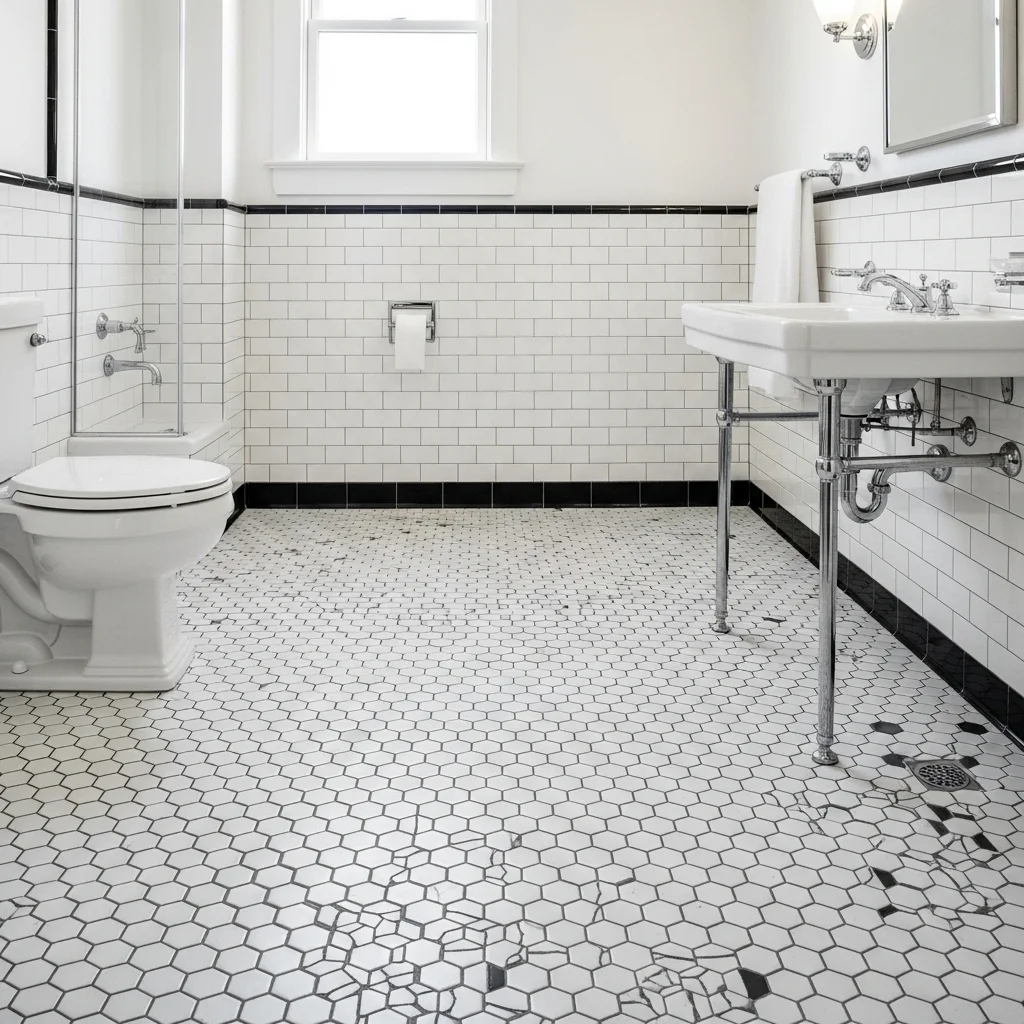
Hexagonal floor tiles were a beloved choice in American bathrooms throughout the early and mid-twentieth century, and they carry a strong period association for anyone familiar with vintage home design. Small white hexagonal tiles laid in a close-fitting pattern with dark grout create a floor surface that is both visually interesting and deeply rooted in midcentury aesthetics. The geometric regularity of hexagons also references the era’s interest in pattern and structure.
Bring in a Dressing Table or Vanity Stool
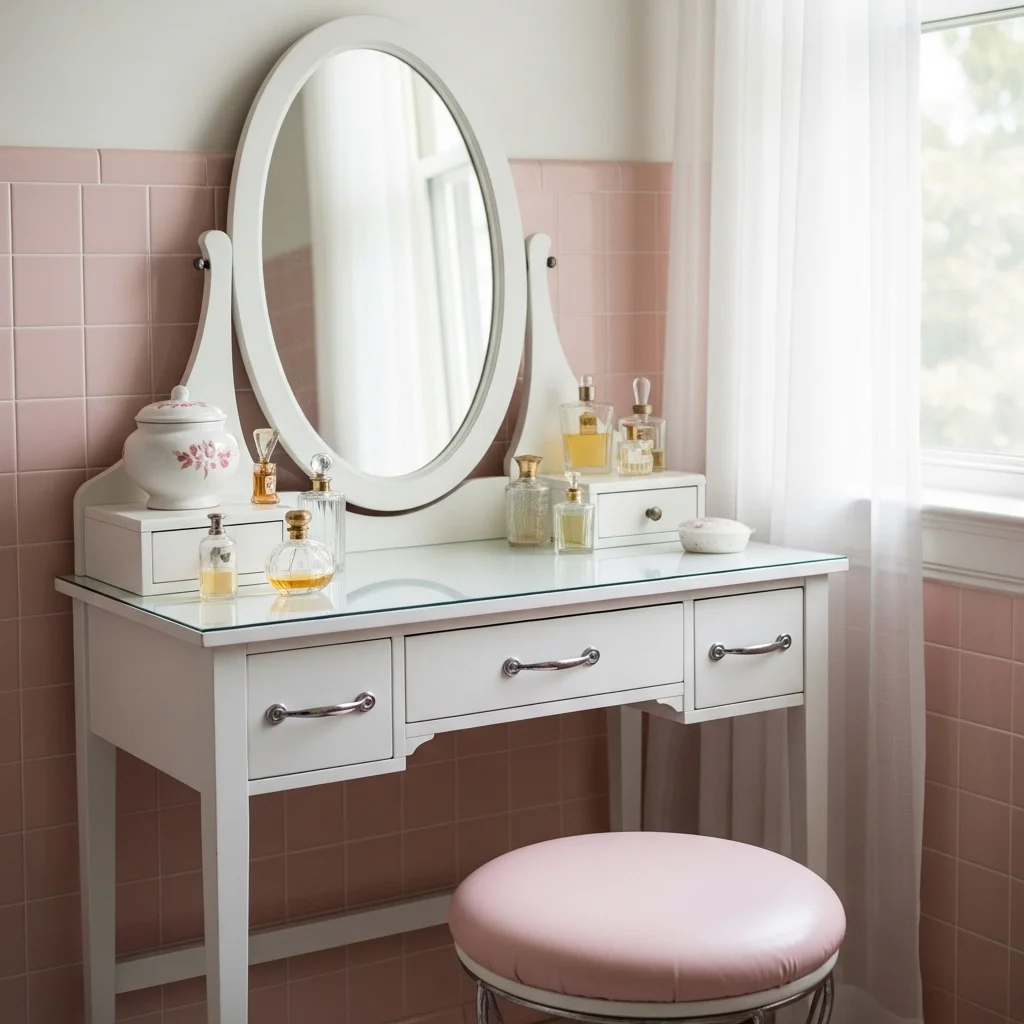
One of the charming social customs of the 1950s was the integration of personal grooming into the bathroom experience, reflected architecturally in the built-in or freestanding dressing table. These pieces, often featuring a hinged mirror, small drawers, and a padded stool, allowed occupants to sit comfortably while applying makeup or styling hair. Including a dressing table in a modern retro bathroom adds both function and a layer of period storytelling that purely utilitarian bathrooms cannot offer.
Use Wainscoting with a Two-Tone Wall Treatment
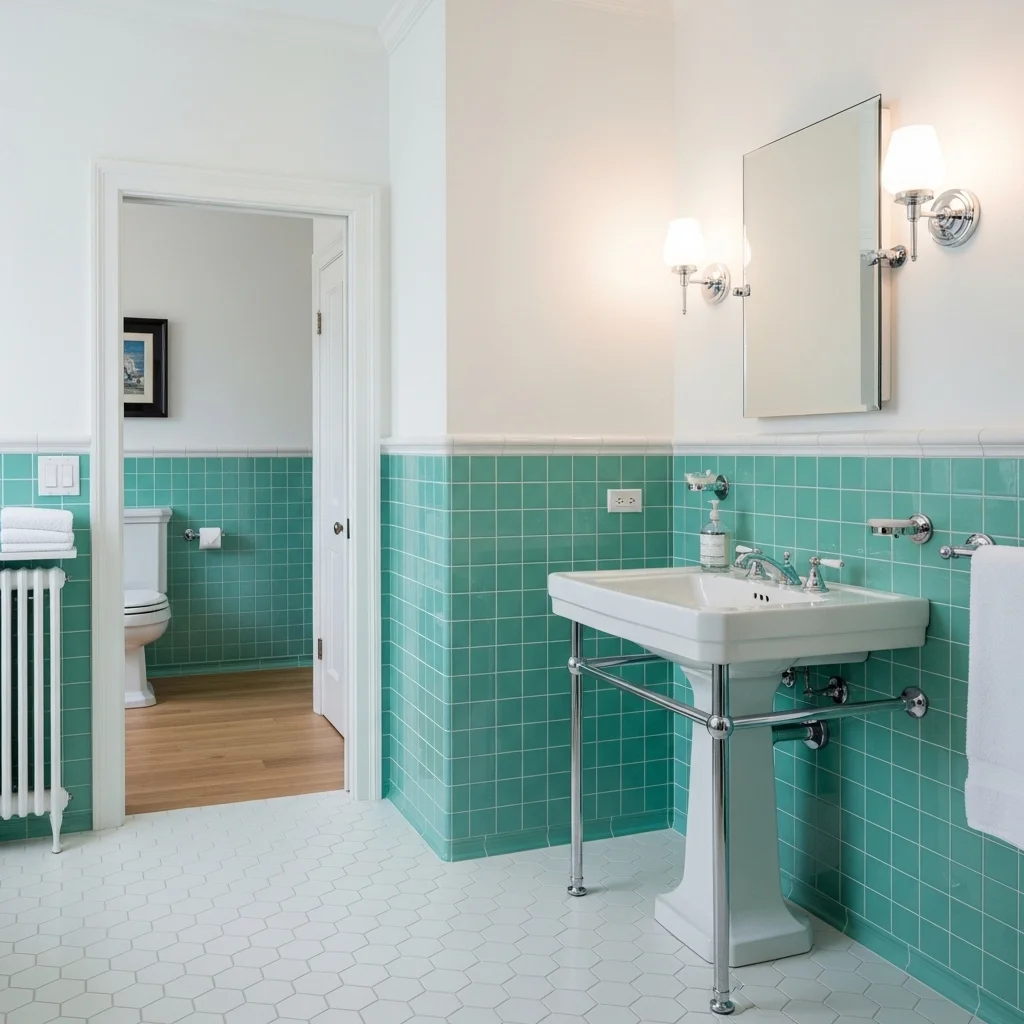
A two-tone wall treatment, where the lower portion of the wall is covered in tile or painted in a darker shade and the upper portion is painted white or a lighter pastel, was an extremely common design strategy in 1950s bathrooms. This approach created a visual boundary that grounded the space and gave it a sense of proportion and order. Wainscoting with tile on the bottom half and painted plaster above remains one of the most practical and authentic 1950 bathroom ideas available.
Display Vintage Bathroom Accessories
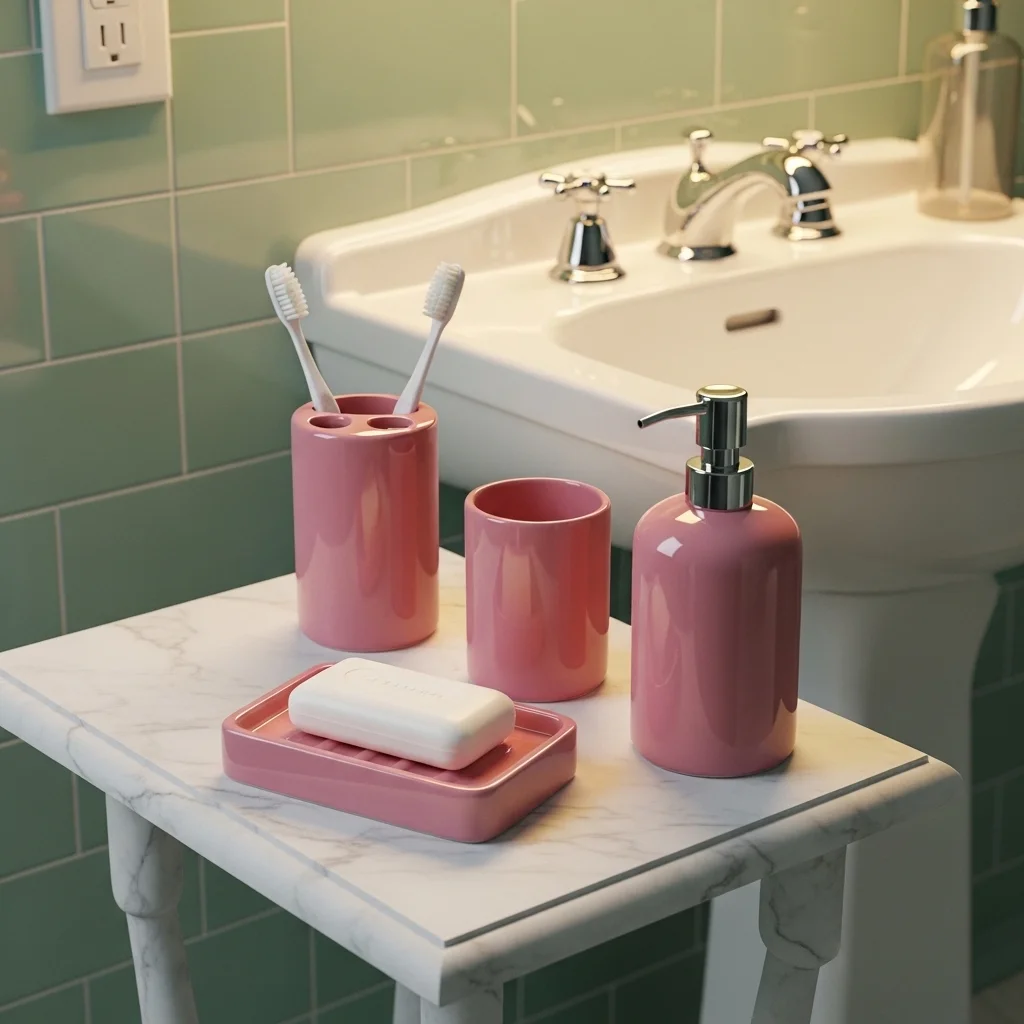
The finishing touches in a 1950s bathroom were as carefully considered as the architecture and fixtures. Soap dishes, toothbrush holders, tumbler cups, and waste bins were often sold as matching ceramic sets in coordinating colors, giving the bathroom a curated, unified appearance. Displaying a set of vintage ceramic accessories in a period-appropriate color on your vanity surface is one of the simplest and most affordable ways to reinforce the retro aesthetic.
Add a Retro-Style Shower Curtain
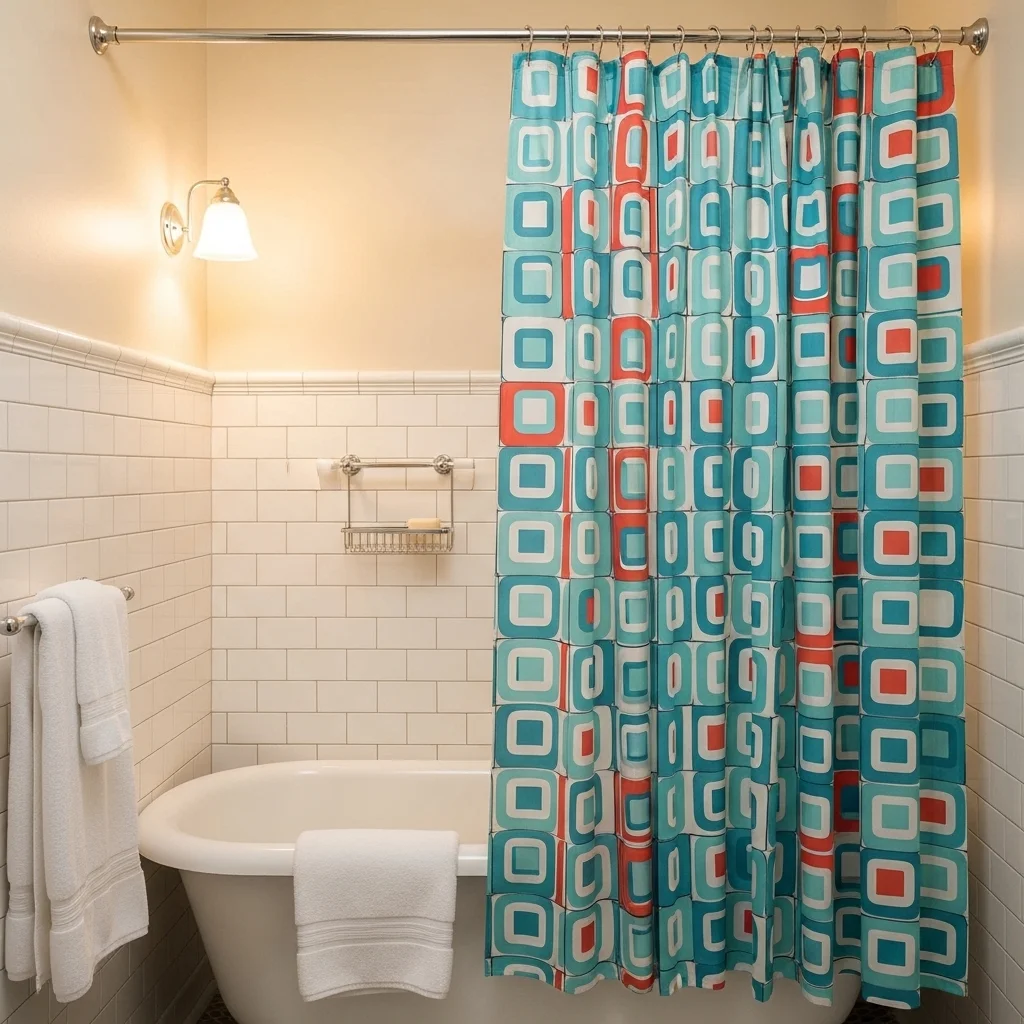
In bathrooms where a dedicated shower enclosure or alcove tub is present, the shower curtain is a highly visible decorative element that can either support or undermine the vintage design scheme. Period-appropriate shower curtains from the 1950s featured bold graphic patterns including wide stripes, abstract geometric shapes, tropical motifs, and repeated small-scale prints in two or three colors. Selecting a curtain in one of these patterns is an immediate and relatively inexpensive way to reinforce the retro character of the space.
Blend Retro Style with Modern Functionality
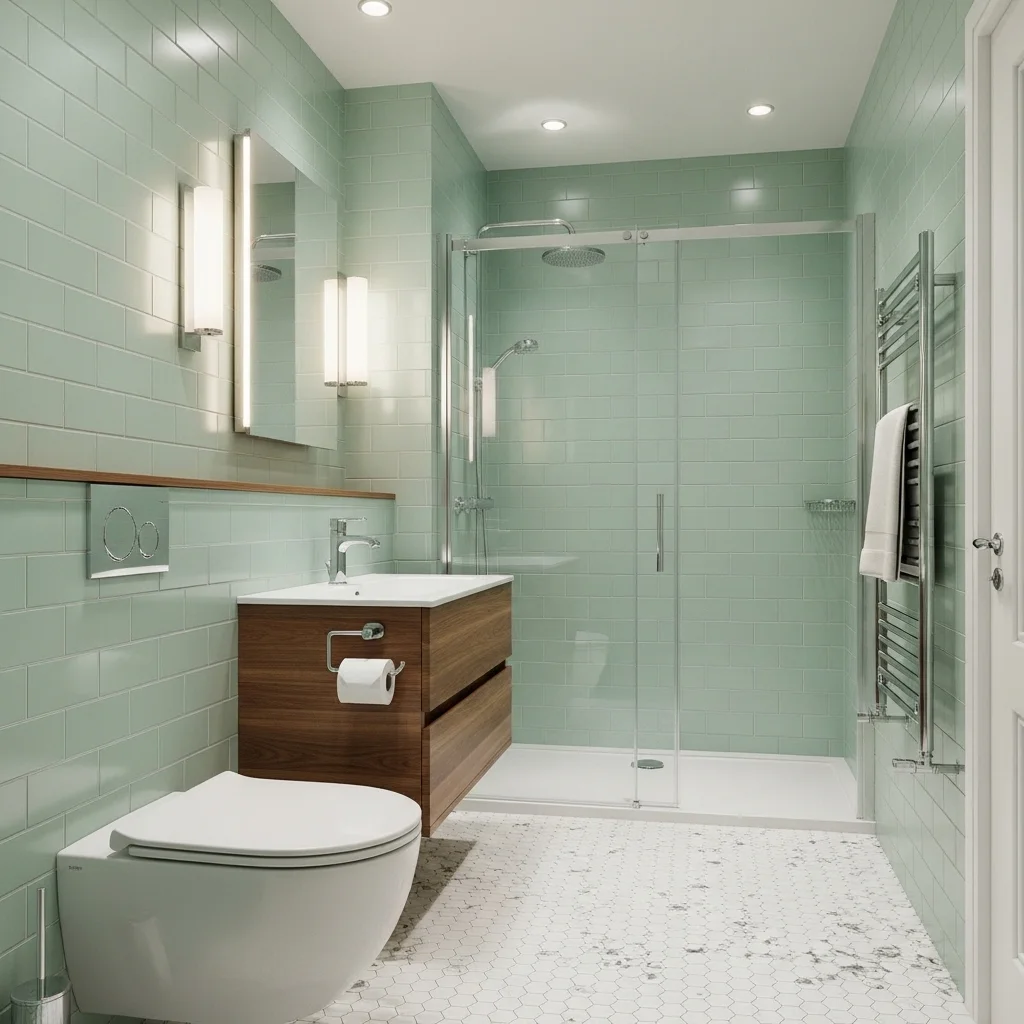
The most successful 1950 bathroom ideas are those that honor the visual language of the decade while accommodating the practical demands of contemporary life. This means choosing period-appropriate colors, tiles, and fixtures while incorporating modern plumbing technology, energy-efficient lighting, and adequate ventilation behind the scenes. The goal is a bathroom that looks and feels genuinely vintage but functions as reliably as any modern space.
.
Conclusion
The appeal of 1950 bathroom ideas lies in their confidence and joy. This was a decade that took color seriously, valued craftsmanship in everyday objects, and understood the bathroom as a space worthy of genuine design attention. Whether you adopt one or two of these ideas or commit to a full retro renovation, each element discussed here carries the potential to bring warmth, character, and visual interest to your home. The key is to approach the style with the same enthusiasm it was originally created with, choosing carefully, combining thoughtfully, and never underestimating the power of a well-chosen pastel or a gleaming piece of chrome hardware. The 1950s left behind a design legacy that continues to reward those willing to explore it.
Frequently Asked Questions
What are the most popular colors for 1950 bathroom ideas?
The most popular colors were pastel shades including pink, mint green, baby blue, soft yellow, and aqua. These were typically paired with white fixtures and chrome hardware to create a clean, cheerful aesthetic.
Can I incorporate 1950s bathroom style without a full renovation?
Yes. You can achieve a significant retro effect by swapping hardware to polished chrome, adding vintage-style accessories, hanging a retro-patterned shower curtain, and painting walls in a period-appropriate pastel color. These changes require minimal investment.
Where can I find authentic vintage bathroom fixtures from the 1950s?
Architectural salvage yards, antique dealers, estate sales, and online vintage marketplaces are the best sources for original fixtures. Many plumbing manufacturers also produce modern reproductions in retro profiles that are easier to install and maintain.
How do I balance retro 1950s design with modern bathroom functionality?
Choose fixtures and hardware in vintage-inspired profiles while selecting modern internal mechanisms, such as low-flow faucets and dual-flush toilets. Modern waterproofing and ventilation systems can be installed behind period-appropriate surfaces without affecting the visual outcome.
What type of flooring best suits a 1950s bathroom design?
Black and white checkered ceramic tile and small white hexagonal mosaic tile are the two most historically accurate flooring choices for a 1950s bathroom. Both are widely available today and pair naturally with the pastel color palettes and chrome fixtures of the era.